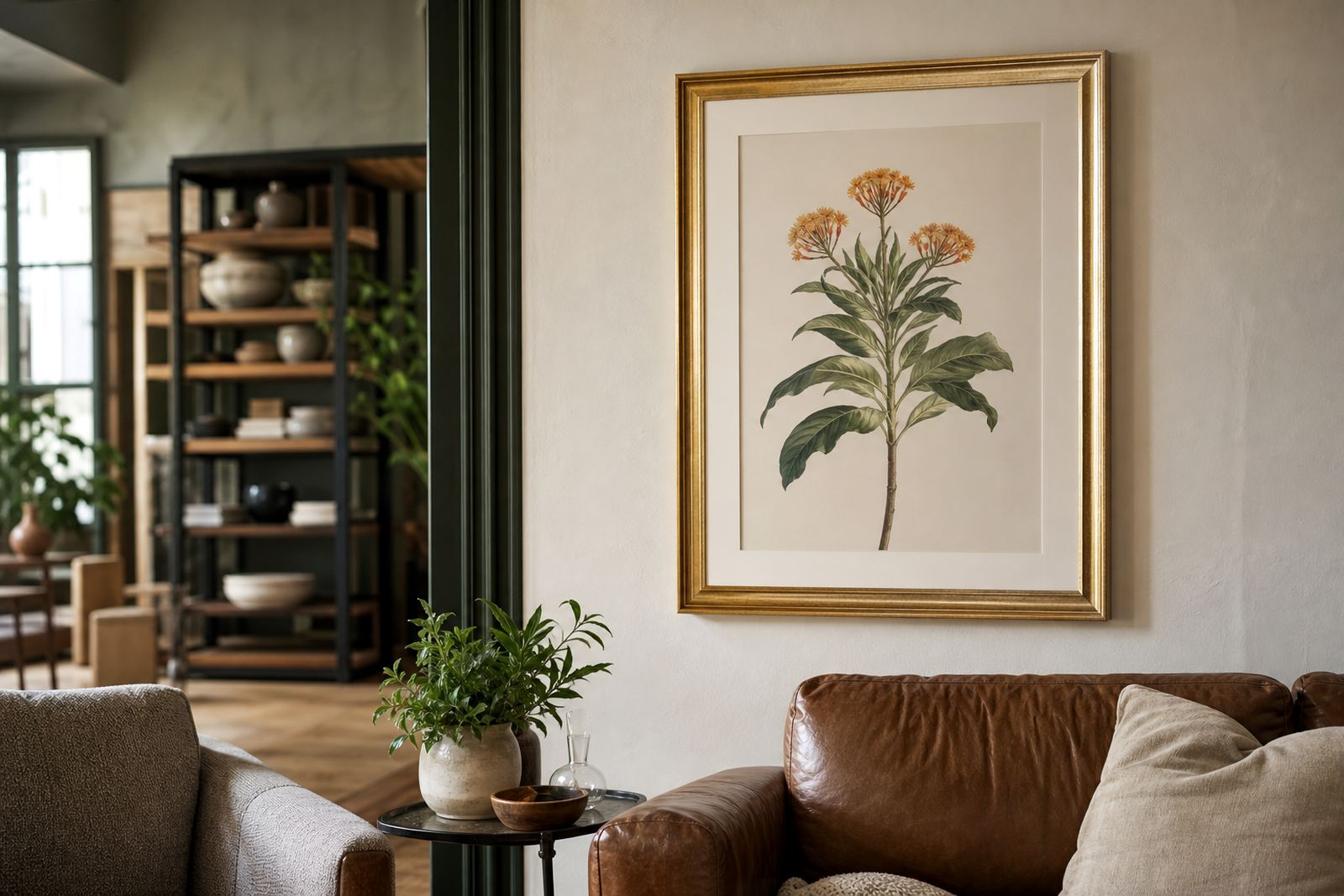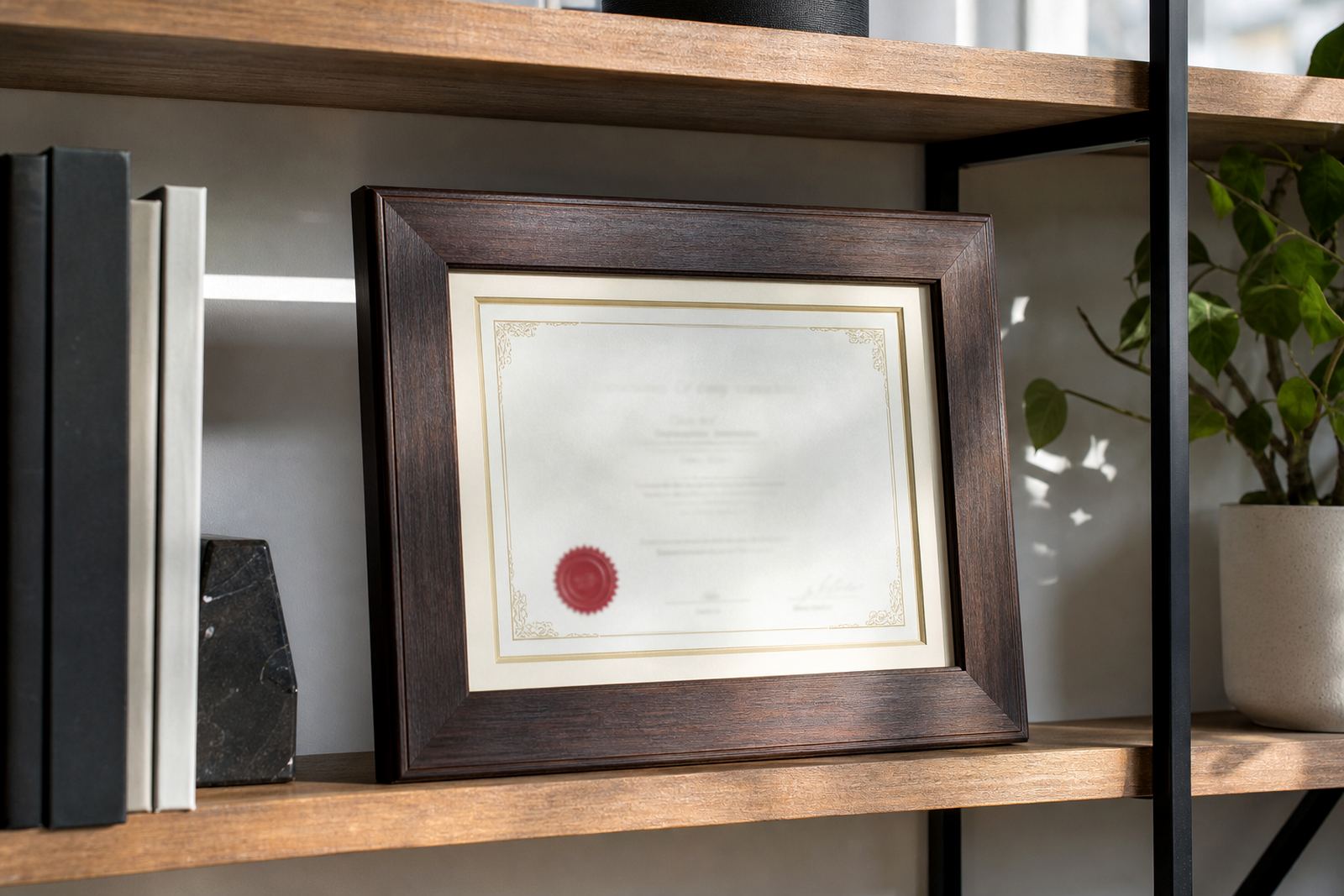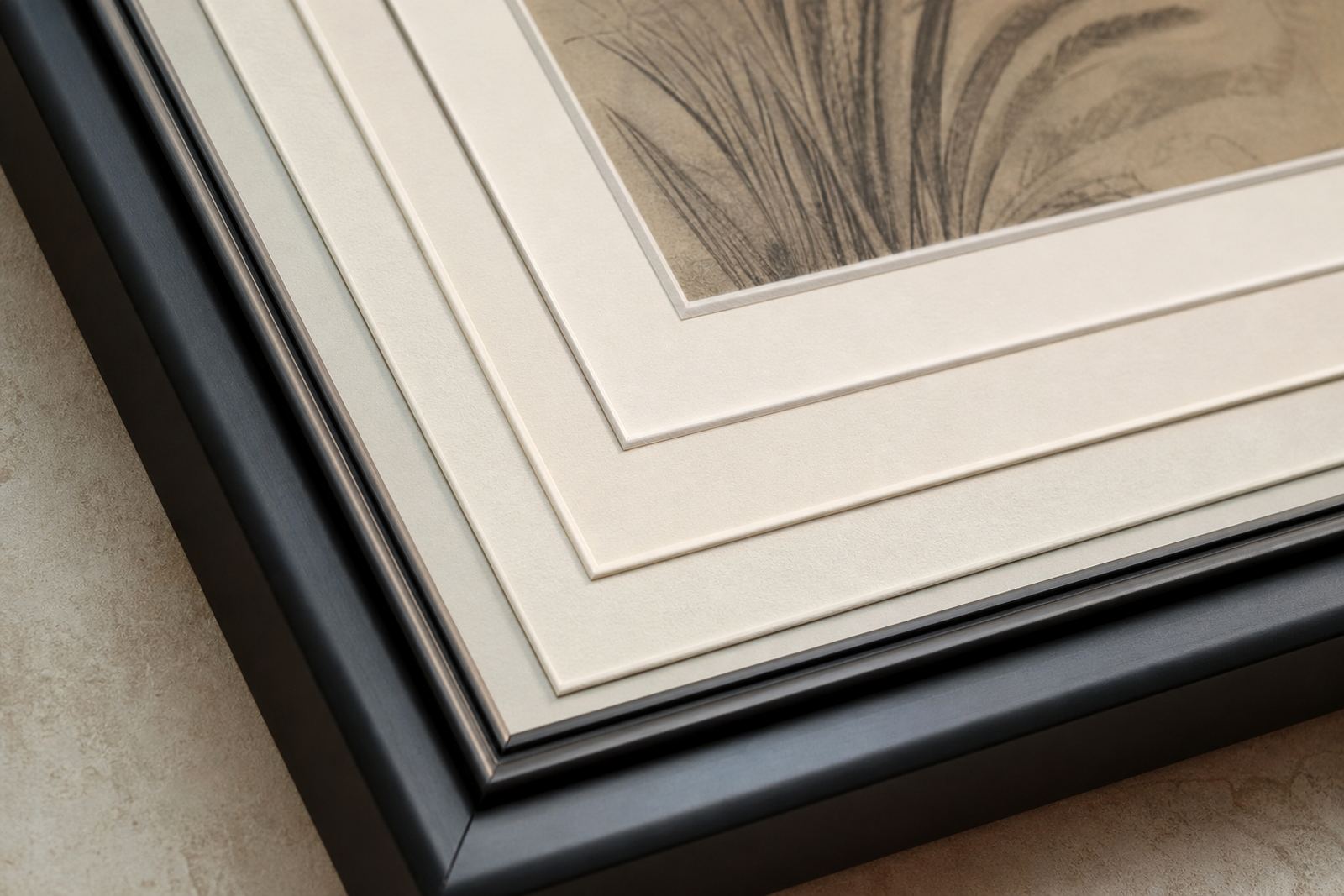

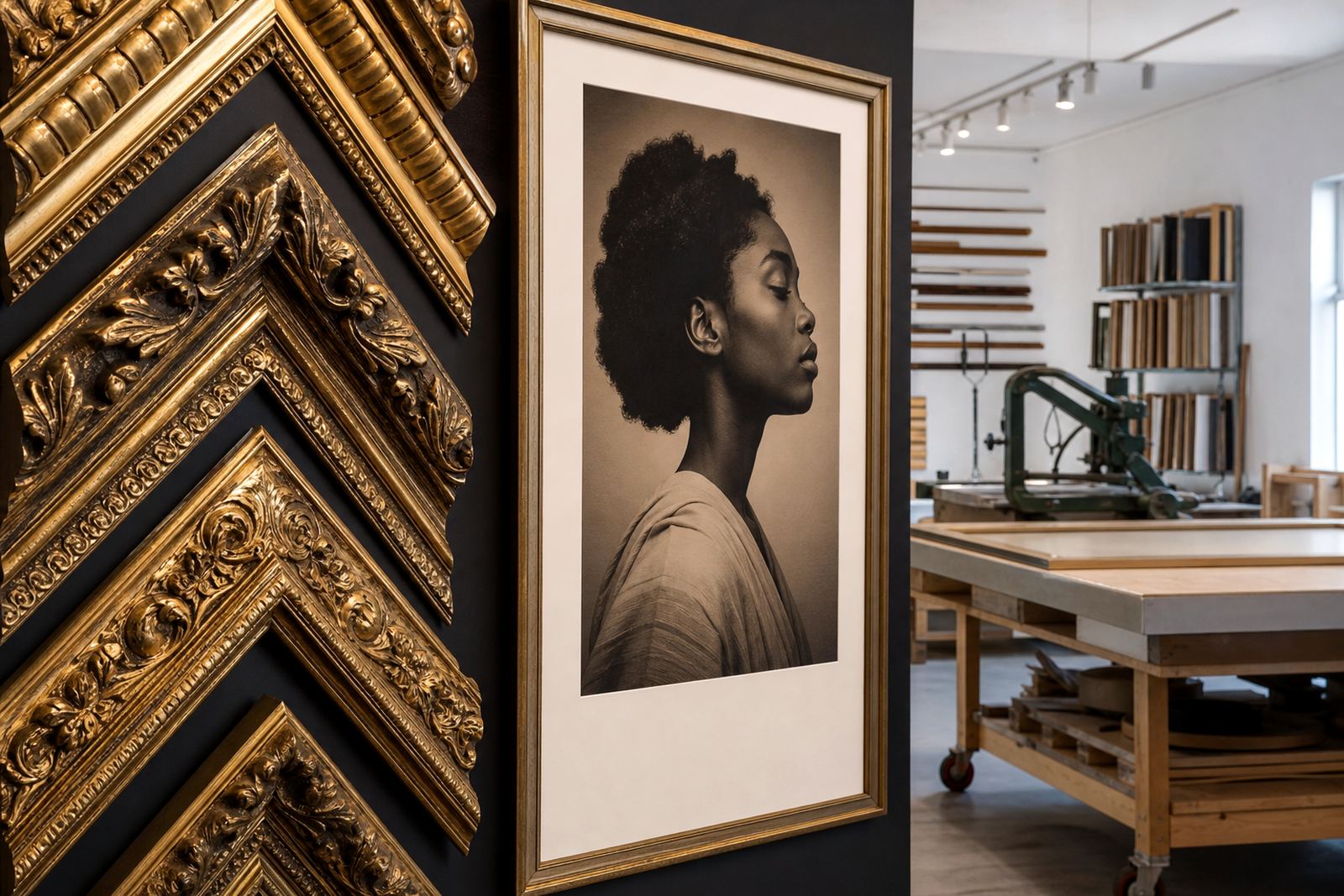
What Ornate Classic Frames are made for
Ornate Classic Frames are decorative timber or composite frames with carved, beaded or moulded profiles that give a stronger visual edge than a plain flat frame. They suit oil paintings, family portraits, heritage prints, diploma pieces and mirrors where the frame is part of the presentation, not just a border.
These frames work well when the artwork has warm tones, period furniture or a traditional setting. In a Johannesburg home with high ceilings or a gallery wall in Rosebank, the right ornate profile can make a small work feel more finished and a large piece feel properly anchored. We help match the moulding width, finish and glazing to the piece so the frame supports the artwork instead of competing with it.
- Suitable for portraits, mirrors, certificates and traditional fine art
- Available as custom framing or ready-made where the size suits
- Can be paired with mount board, conservation backing or mirror fitment
- Options for gold leaf look, antique black, walnut, white wash and painted finishes
Sizes, profile widths and finish options
Ornate frames are supplied in standard sizes and made-to-measure formats. Ready-made sizes are useful for common artwork dimensions, while custom sizing is better for items that need exact edge clearance, a specific mount opening or a mirror cut to fit an existing recess. For larger pieces, the moulding width matters as much as the outer size because a narrow frame can look lost on a big wall, while a very wide profile can overwhelm a small print.
Typical profile widths range from about 25 mm to 95 mm, depending on the look you want. Deeper profiles are often chosen for mirrors and larger canvases because they carry more visual weight and improve presence from across a room. We also help with corner style, glazing choice and whether you need a float mount, spacer or slip. If the frame is going into a coastal property in Durban or a humid area near the coast, finish selection becomes important too.
- Common outer sizes: 300 x 400 mm up to 1200 x 1500 mm and larger on request
- Profile widths: 25 mm, 40 mm, 55 mm, 75 mm and heavier statement profiles
- Finishes: antique gold, champagne gold, black, silver, walnut, cream and custom stain tones
- Glazing options: clear glass, low-reflection glass and acrylic for lighter handling
Where ornate framing suits best
Ornate Classic Frames are especially strong in formal rooms, reception areas, church spaces, private collections and gallery displays. They suit interiors with moulded cornices, wood furniture, Persian rugs or layered wall arrangements. In Pretoria and Sandton homes, they are often used for family portraits and landscape art. In Cape Town apartments, lighter antique finishes work well where you want the frame to stand out without making the wall feel heavy.
For galleries, ornate framing can help define a traditional body of work or create a strong contrast inside a mixed hanging. For homeowners, it is a practical way to turn a print, photograph or old certificate into a proper feature piece. If the artwork already has strong colour or texture, the frame should support it and not add too much noise, so to speak.
- Ideal for portrait walls, formal lounges and entrance halls
- Useful for mirrors in bedrooms, bathrooms and dining areas
- Works well with traditional art, older prints and framed textile pieces
- Suitable for gallery hanging where a classic look is needed
Installation, wall fitting and mirror use
Most ornate frames are fitted on-site or collected ready to hang, depending on size and weight. Heavier profiles and mirror units need the correct hangers, wall plugs and load support, especially on plasterboard, brick or older walls. In South African homes, we often see uneven walls and mixed surfaces, so fixing points need to be checked before installation. For large mirrors or framed works in offices and hospitality spaces, we recommend proper measuring and safe handling rather than a quick guess.
There are no power or gas needs for this product. What matters is the hanging method, wall condition and access for fitting. If the piece is going into a passage, stairwell or reception area, measure the turning space and lift height before ordering. For gallery hanging, consistent spacing and level lines matter because ornate frames show alignment problems very quickly if the layout is rushed.
- No electrical connection or gas supply required
- Check wall type, fixings and weight before installation
- Large mirrors may need two or more fixing points
- Installation can be arranged with collection and delivery where needed
Care, servicing and long-term protection
Ornate finishes need sensible care, especially in homes near the coast or in rooms that get direct sun. Dust with a soft dry cloth or a clean brush attachment used lightly. Avoid strong cleaners on painted or gilt-looking finishes because they can dull the surface. If the frame has glass, clean the glass separately and keep moisture away from the joins. In humid weather, a small amount of movement in timber is normal, but it should not open the corners or loosen the backing.
We also repair damaged mouldings, replace broken glass and reframe older pieces where the original structure has weakened. If the frame is for a valued artwork, ask for conservation materials and UV protection where suitable. A good ornate frame should age well, not go brittle or chip after a few seasons, and that is usually about choosing the right material from the start.
- Keep away from direct sun where possible
- Avoid household chemicals on decorative finishes
- Check corners, hanging wire and backing once or twice a year
- Reframing and repairs available for damaged or aged pieces
What to confirm before placing an order
Before ordering Ornate Classic Frames, measure the artwork or mirror accurately and decide whether you want the visible opening, the full outer size or a frame to suit an existing piece. Bring or send the item size, a photo of the décor, and any notes about colour, wall space or whether the piece will hang in a dry room, bathroom or coastal property. If you are framing a mirror, confirm whether you want plain glass, bevel detail or a deeper profile for extra presence.
We also recommend checking whether the piece needs acid-free mount board, UV glass, backing protection or special fixings. For framed work moving between Johannesburg, Pretoria or Durban, packaging and collection details matter too. The more exact the brief, the smoother the finish. It saves time and avoids a frame that is almost right but not quite.
- Confirm artwork size, visible opening and outer frame size
- Choose finish, profile width and glazing type
- Decide whether the item is for a wall, mirror use or gallery hanging
- Ask about delivery, collection and installation if the piece is large or fragile
Key facts
| Product type | Decorative classic frame for portraits, mirrors and traditional art |
|---|---|
| Material options | Timber, composite moulding and decorative finished profiles |
| Size range | From small certificate sizes to large statement pieces |
| Profile width | Approx. 25 mm to 95 mm depending on style |
| Finish options | Antique gold, black, walnut, cream, silver and custom tones |
| Power or gas needs | None |