
Why walnut framing works so well
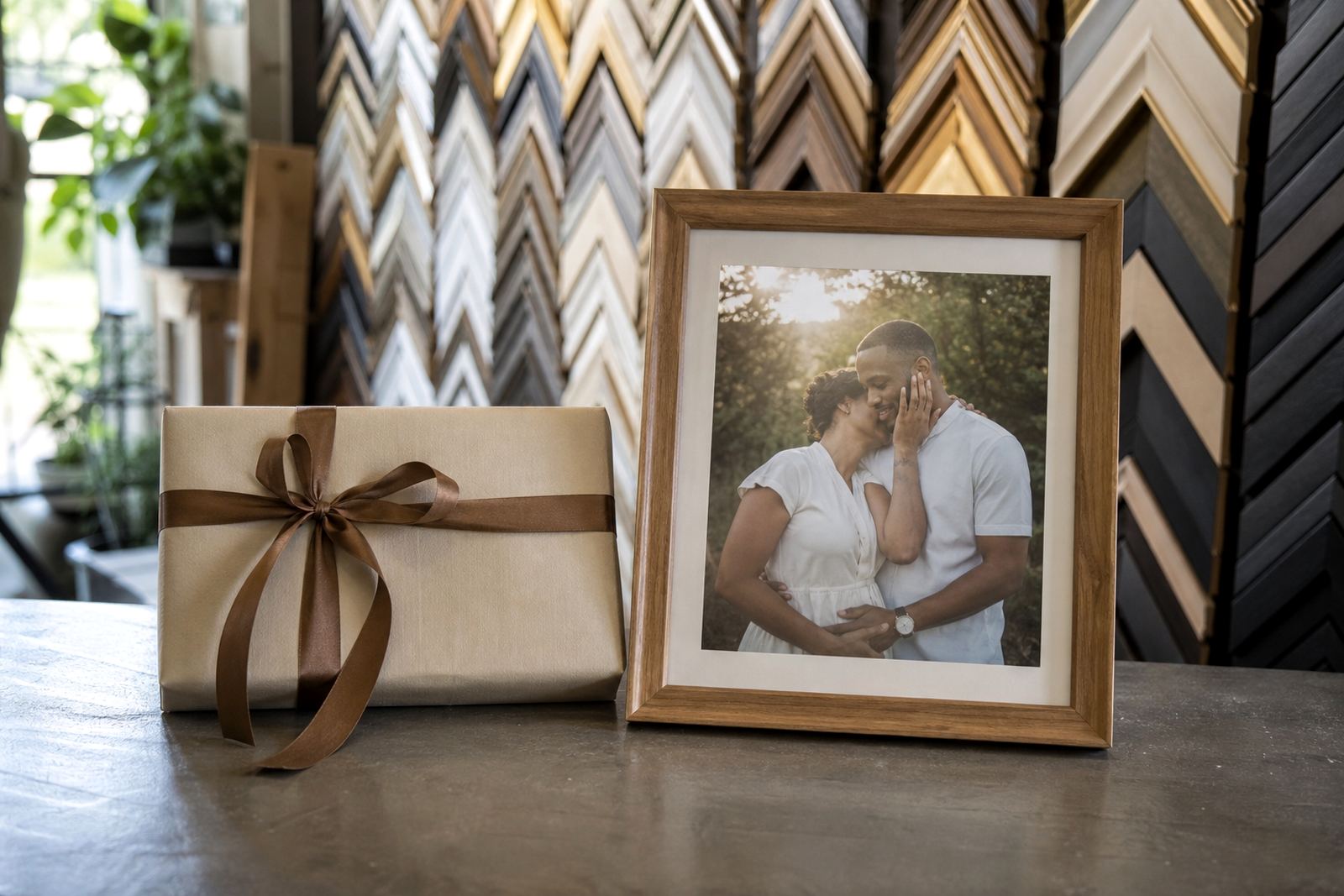
Walnut-toned frames are a good choice when you want warmth without a heavy dark edge. The colour sits somewhere between natural timber and a deeper brown finish, which makes it especially useful for family portraits, sepia photography, landscapes and fine art prints. It also works well in offices, reception areas and homes with wood furniture or neutral walls.
A walnut frame can make the image feel more settled, especially when the artwork has creams, blacks, greys or muted colours. For brighter prints, the timber tone gives a bit of contrast without looking too sharp. In practical terms, it is a steady option for clients who want something classic, but not overly ornate.
- Suitable for portraits, certificates, prints and mirror pieces
- Works with modern, traditional and mixed interior styles
- Pairs well with white mounts, cream mounts, or no mount at all
- Often chosen for homes, galleries and corporate spaces
Sizes, profiles and finish options
Walnut frames can be made in standard sizes or cut to measure for unusual artwork. Ready-made options are useful for common print sizes, while custom framing is better for items with odd proportions, wide borders or fragile surfaces. If you are framing a single piece or a series, we can match the look across all of them so they hang consistently on the wall.
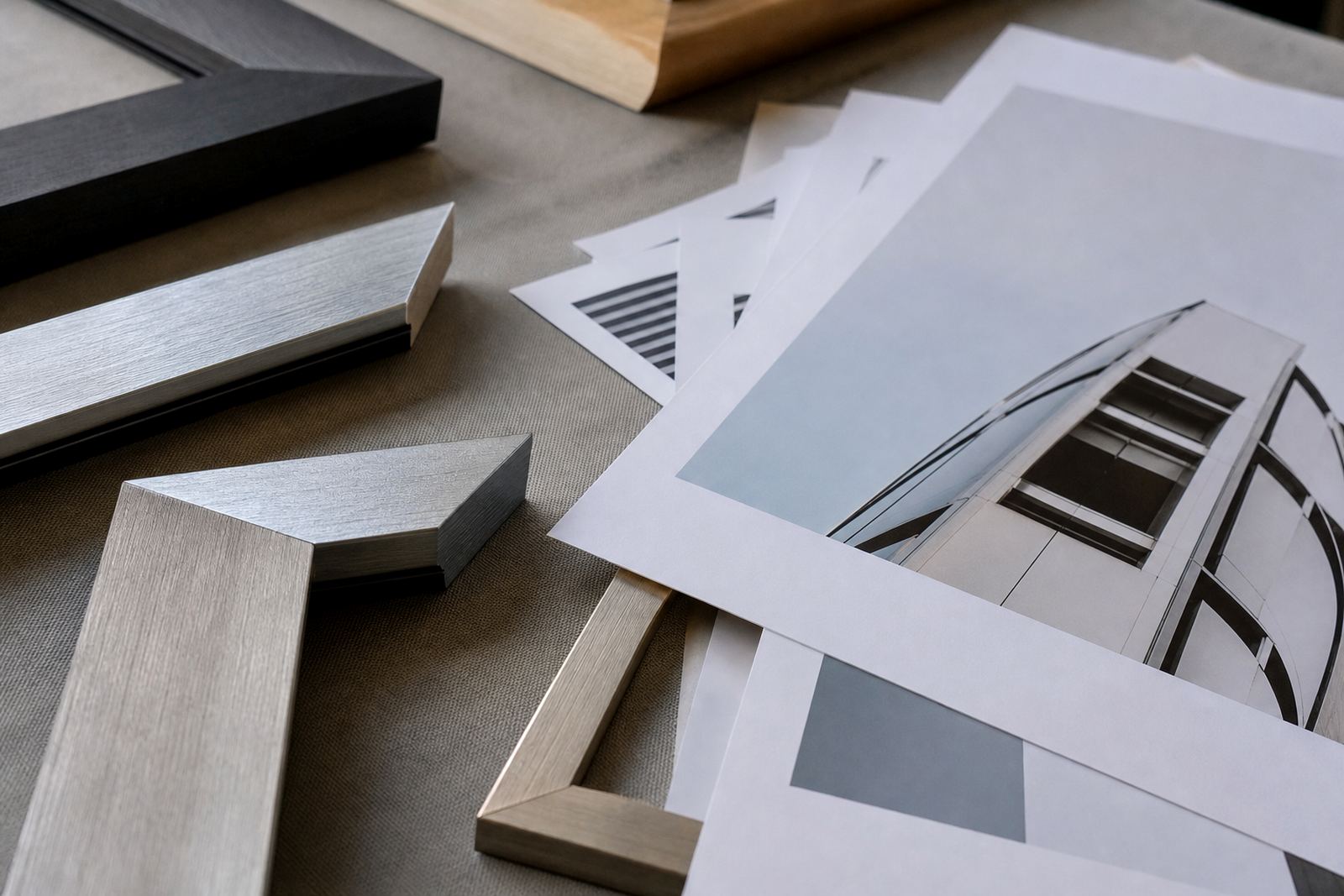
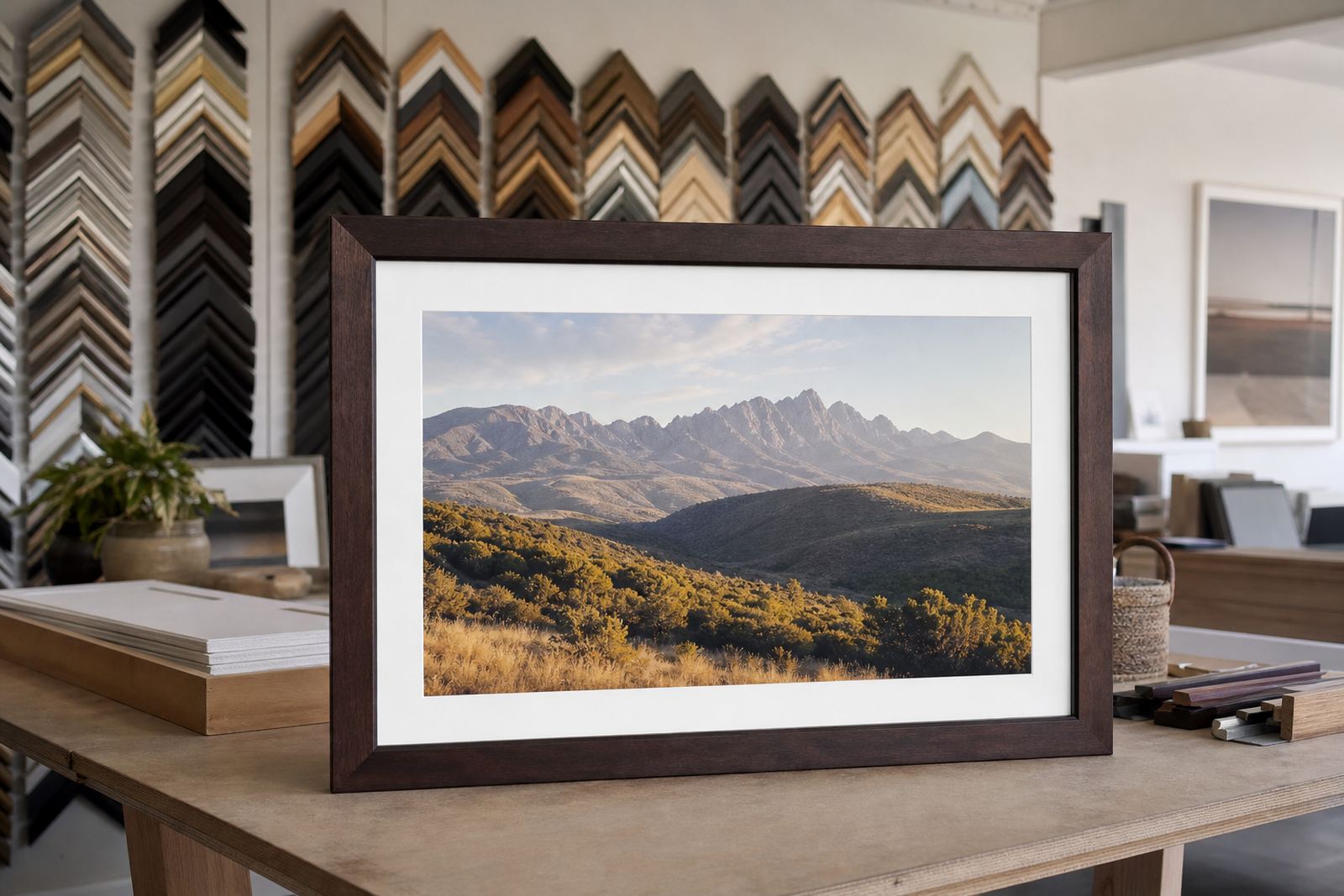
The profile matters as much as the colour. A slim walnut frame suits contemporary prints and small spaces. A wider profile gives more presence for larger art or statement pieces. For galleries and collectors, the depth of the moulding and the glaze choice both affect the final look. We also check whether the frame should sit flush against the wall, or stand out a little more for a stronger visual edge.
- Common sizes: A4, A3, 300 x 400 mm, 400 x 500 mm, 500 x 700 mm and custom sizes
- Profile choices: slim, medium and wider decorative timber-look profiles
- Finish choices: matte walnut, satin walnut and deeper brown walnut tones
- Glazing options: clear glass, non-reflective glass, and acrylic for lighter handling
What walnut frames suit best
This finish suits artwork that needs a calm border rather than a bright or glossy one. It is often used for family portraits, academic certificates, black and white photographs, watercolours and limited-edition prints. Walnut also works well where a room has timber floors, wooden shelving or darker furniture, because it ties the space together without matching too exactly.
In Johannesburg and Pretoria, many clients choose walnut for home studies, passage walls and boardrooms where the piece needs to look polished but not showy. In coastal areas like Cape Town and Durban, the finish can be a practical choice too, provided the backing and glazing are selected properly for humidity and sunlight exposure. If the room gets direct sun, we usually recommend a glazing option that helps reduce fading.
- Good for formal portraits and commemorative certificates
- Works well with monochrome photography and muted prints
- Helps soften very white walls and bright interiors
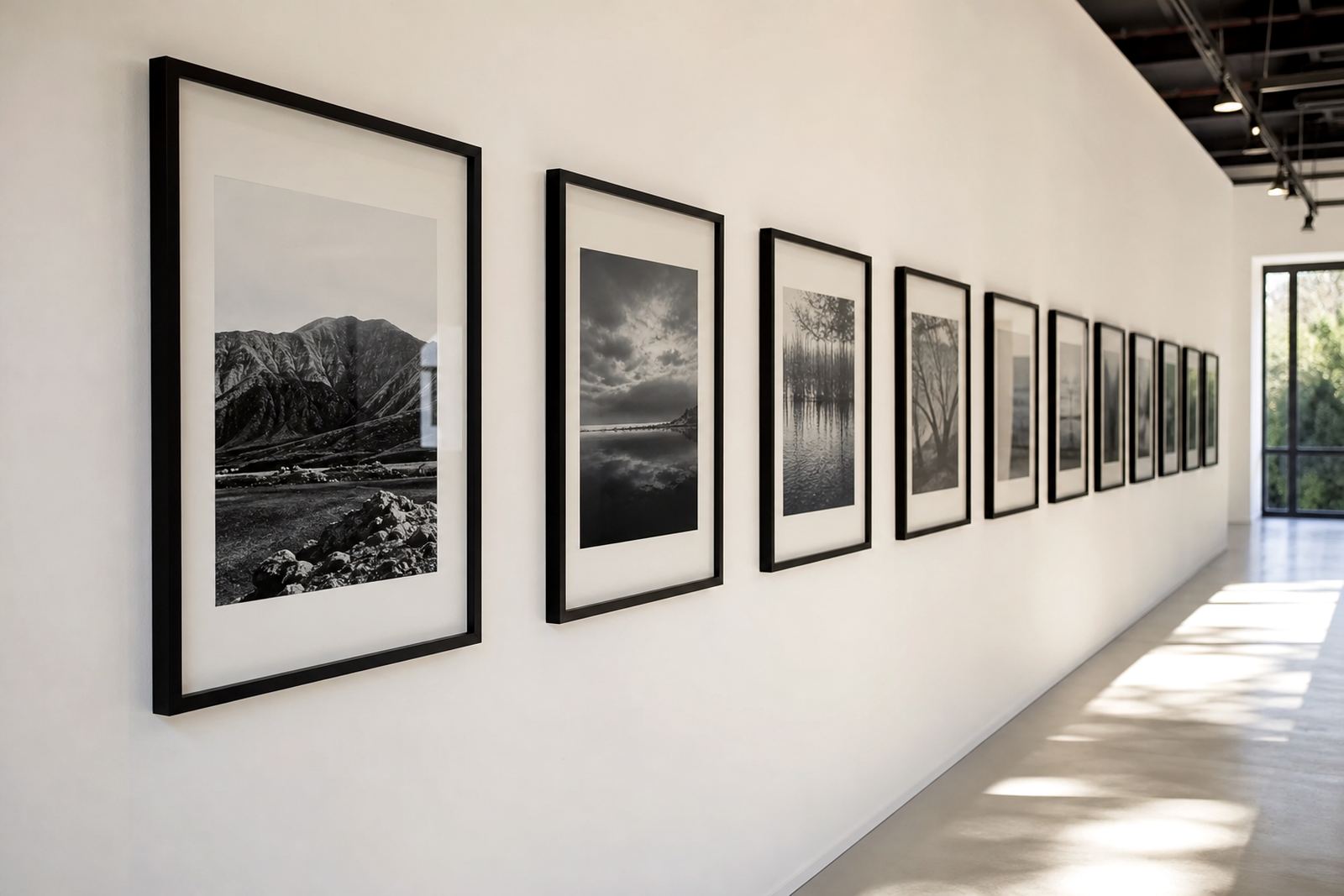
- Often used for gallery walls where the frames must stay consistent
Installation, hanging and site conditions
Walnut picture frames do not need power or gas, and there is no special utility connection required for installation. What matters is the hanging method, the wall type and the weight of the framed piece. A small frame on drywall is very different from a large framed canvas or mirror on brick, so we look at the fixings before anything goes up.
For homes, galleries and offices across Johannesburg, Midrand, Sandton and Rosebank, we can advise on safe hanging points and spacing. In older properties, walls are not always level, so it helps to check the surface before ordering a large custom size. In humid or coastal conditions, we also look at backing board, glazing and sealing so the frame stays in better condition. If the wall is near a window, aircon outlet or kitchen area, that should be mentioned at the start.
- Suitable for brick, plastered wall and standard partition walls with the correct fixings
- No power supply, plug point or gas connection needed
- Heavier pieces may need two hanging points or professional installation
- Best to avoid direct sunlight, damp walls and areas with frequent temperature changes
Care, cleaning and long-term upkeep
Walnut frames are not difficult to maintain, but they do benefit from regular care. Dust the frame with a dry, soft cloth and avoid harsh cleaners, especially near the joins and the glazing. If the piece is behind glass, clean the glass carefully and keep moisture away from the backing. Even with a good finish, excessive sun and damp can still affect the artwork and the frame over time.
For homes with load-shedding, the frame itself is not affected, but it is still worth checking areas near candles, heaters or backup lighting. Heat can dry out some materials over time, and soot can mark the glass or surface. If a frame has been moved, knocked or stored flat for too long, it may need a small adjustment or refit. We also handle frame repairs, reframing and glass replacement when a piece needs attention.
- Dust with a soft dry cloth only
- Avoid chemical sprays near the timber-look surface
- Keep away from damp walls and strong direct sun
- Check hanging hooks and wire after moving the frame
What to check before you order
Before ordering a walnut picture frame, measure the artwork carefully and decide whether you want a mount, glazing and a visible border around the piece. If the item already has an existing frame, bring it in or send clear measurements so we can confirm the new size. It also helps to know where the piece will hang, because that affects the colour depth, profile width and glass choice.
Clients often forget to check the artwork thickness, particularly with textured prints, canvas, medals or layered pieces. If the item is unusual, we can advise on mount cutting, reframing and the right depth of frame. For gallery work, it is also useful to confirm whether the piece will be shown singly or in a group, because a set should look balanced from a distance. The best results come when the frame is matched to the artwork, not just the wall.
- Measure the artwork, not only the space on the wall
- Confirm whether you want a mount, and how wide it should be
- Check the thickness if the piece is textured or raised
- Choose the finish based on where it will hang and how much light it gets
How Bright Frames handles walnut orders
At Bright Frames, we guide clients through the selection process so the final frame suits the work and the room. Our Parkhurst studio serves Johannesburg and nearby areas, and we also assist clients in Pretoria, Midrand, Sandton, Rosebank, Cape Town and Durban through enquiry on the contact page. If you need one piece framed or a group of works matched for a home or gallery wall, we can help with design advice, collection and delivery, and installation where needed.
Walnut picture frames are a solid choice when you want a tidy, timeless finish with a bit more warmth than plain black or white. They work especially well for personal pieces, gallery prints and framed gifts. If you are not sure which walnut tone or profile to choose, bring the artwork details and we will talk through the options one by one.
Key facts
| Product type | Walnut-toned picture frame for art, photos and prints |
|---|---|
| Available sizes | Standard sizes and custom cut dimensions |
| Profile options | Slim, medium and wider timber-look mouldings |
| Glazing options | Clear glass, non-reflective glass, acrylic |
| Typical use | Portraits, fine prints, certificates, mirrors and gallery pieces |
| Care | Dry dusting, careful glass cleaning, keep out of damp and strong sun |