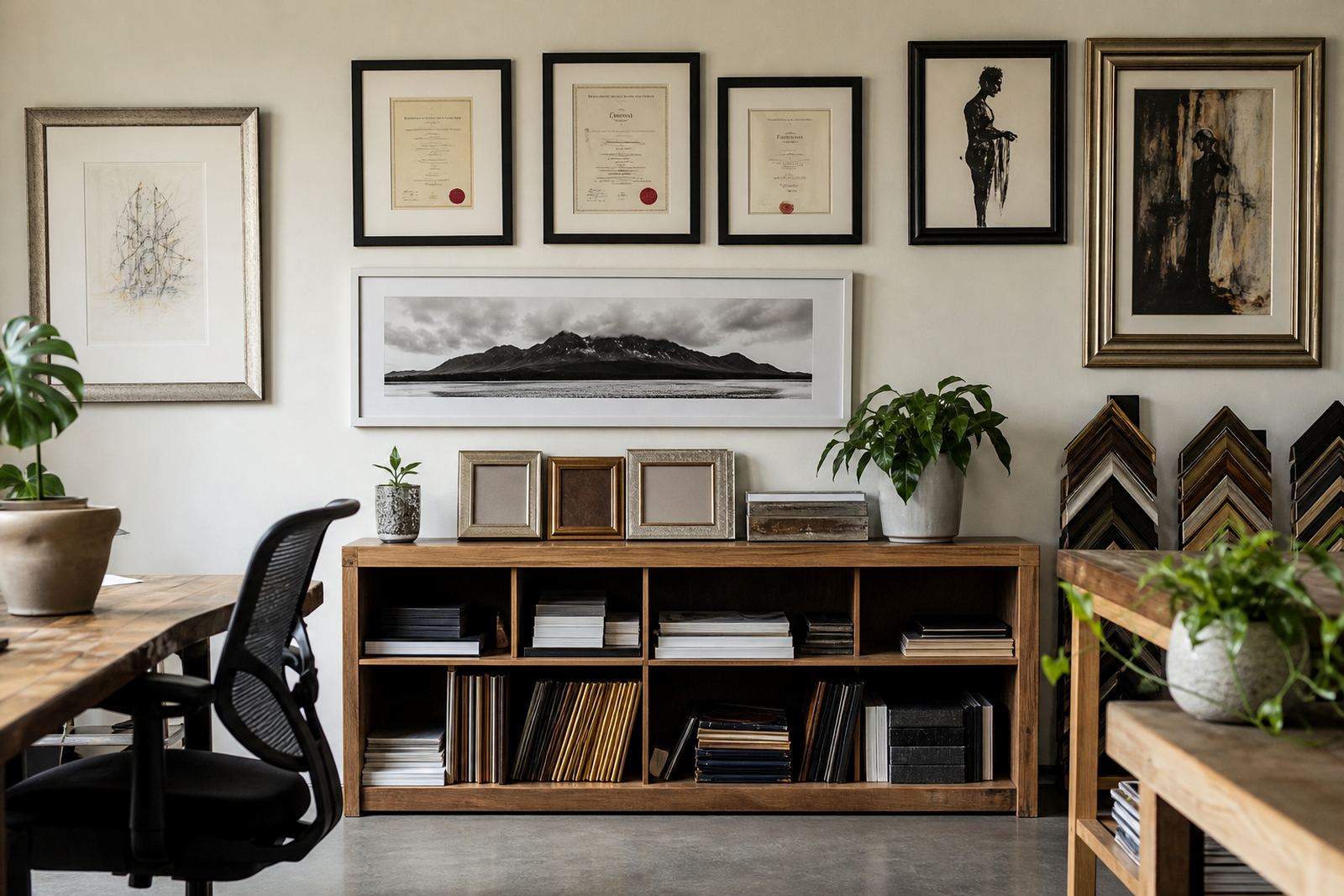


Start with the size and the shape of the certificate
Before you choose a frame, measure the certificate carefully and check whether it is A4, A3 or a custom size. Many certificates arrive with uneven margins, embossed seals or signatures at the edge, so the actual visible area matters just as much as the paper size. If the document is being framed with a border or mount, allow enough space so the text does not feel cramped.
In Johannesburg offices and school reception areas we often see certificates framed too tightly, which makes the page look heavy and can cause the edges to curl over time. A slightly larger frame with a clean mount usually gives a more formal result. It also helps if you keep the certificate centred, especially when the wording is important and needs to be read at a glance.
- Measure the full document and the printed area separately.
- Check for seals, stamps, signatures and embossed details.
- Allow extra space if you want a mount around the certificate.
- Keep the layout straight and centred for a formal look.
Choose a frame that suits the room and the document
Certificates work best in frames that do not fight for attention. A slim wood look, painted profile or neat metallic finish can suit a home study, gallery office or boardroom without overpowering the document. For professional spaces in Sandton or Midrand, many clients prefer a restrained frame colour that matches the wall and furniture rather than drawing the eye away from the wording.
The certificate itself should guide the style. Academic awards, trade licences and professional registrations usually suit simple lines and darker tones. Personal achievement certificates can take a softer finish if the room is more informal. The aim is to keep the presentation honest and neat, not overly decorative.
- Use a slim profile for formal documents.
- Match the frame colour to the room, not just the certificate.
- Choose a finish that will not date quickly.
- Keep decorative features light unless the room already has strong visual detail.
Why mount cutting makes a certificate look more official
A mount gives a certificate breathing room and helps the page sit neatly inside the frame. It is especially useful for diplomas, awards and professional registrations because it creates a clean border and reduces the chance of the paper touching the glass. A properly cut mount also improves balance when the certificate has a logo at the top or a signature panel at the bottom.
For a corporate office in Rosebank, a white or off-white mount can keep the look sharp and professional. In homes, a warmer cream tone often works well with timber furniture and softer wall colours. The important thing is to choose a mount that does not distract from the certificate. If the mount is too wide, the document can feel lost, too narrow and the framing starts to look rushed.
- Use a mount to create space around the certificate.
- Choose a neutral colour for a formal result.
- Keep the width even on all sides unless the design needs a bottom-weighted layout.
- Avoid bright colours unless the certificate is part of a display with other artwork.
Glass and backing should protect paper from heat and moisture
Paper certificates are sensitive to sunlight, heat and humidity. In coastal areas like Durban, moisture in the air can make paper ripple or mark the backing board if the frame is not sealed well. In Gauteng, strong afternoon sun through a window can fade ink and weaken paper over time. That is why the glass and backing matter as much as the frame itself.
For most certificates, clear glass is a practical choice, but where the frame will hang in a bright passage or near a window, it helps to use glazing that reduces glare. A stiff backing board and clean sealing also keep the certificate flat. If the document is valuable or old, it is worth discussing the best support method before it is mounted. A little care now prevents costly repairs later.
- Avoid hanging certificates in direct sun.
- Keep framed paper away from damp walls and unventilated rooms.
- Use a firm backing board to stop bowing.
- Seal the frame properly so dust and moisture do not creep in.
Think about where the certificate will hang
A certificate in a hallway needs different treatment from one in a gallery or reception area. At home, people often frame school achievements, professional qualifications or marriage certificates in spaces where visitors can see them. In an office, certificates are usually part of a wider wall display and should line up neatly with other framed documents. The position on the wall will affect the frame size, the amount of glare and even the colour choice.
For a Parkhurst client framing a professional registration certificate, we might suggest a simple dark frame with a narrow mount so it reads clearly above a sideboard or in a home study. For a gallery in Cape Town, the same certificate could be framed in a cleaner, more minimal style to sit with other works on the wall. Small details matter when the display has to feel orderly.
- Hang certificates at eye level where possible.
- Keep groups of frames aligned if you are building a wall display.
- Plan for glare from windows or overhead lights.
- Choose a frame that suits the room’s use, not just the document.
When to frame a certificate with a matching set
If you have more than one certificate, framing them as a set can create a tidy and professional result. This works well for professional practices, schools, training providers and home offices where multiple qualifications need to be displayed together. Matching frames make the wall look organised and reduce the clutter that can happen when each certificate is framed differently.
In Johannesburg and Pretoria, we often help clients create sets for reception walls, while in Durban and Cape Town the same approach is popular for studios and consulting rooms. The trick is to keep the borders, mounts and frame widths consistent even if the certificates are not identical in size. That way the display feels deliberate and not pieced together.
- Use the same frame colour across the set.
- Keep mount widths consistent where possible.
- Align top or bottom edges for a cleaner display.
- If sizes vary, use a common visual system rather than forcing every frame to match exactly.
A local example from Parkhurst to the wider country
A client in Parkhurst recently brought in a mix of university certificates, trade papers and a framed award that had started to yellow at the edges. The papers were valuable for both personal pride and professional use, so the brief was simple: keep them formal, protect them from further damage, and make the wall look neat in a small office. We used matched mounts, clear glazing and restrained frames so each certificate could be read without competing for attention.
That same approach works for clients across South Africa, whether the certificates are going into a home study in Midrand, a boardroom in Sandton or a practice wall in Pretoria. Good certificate framing is not about showing off. It is about proportion, protection and a finish that feels appropriate to the document and the room.
If you need help choosing the right size, mount or frame style, the enquiry form on our contact page is the easiest way to start. Bright Frames works from Parkhurst and assists clients in Johannesburg, Pretoria, Sandton, Rosebank, Midrand, Cape Town and Durban with custom framing, ready-made advice and careful finishing for documents that matter.