
A private Houghton brief with sentimental weight
The client was a private family in Houghton, Johannesburg, looking for a way to keep a set of medals, service photos and small mementos together instead of storing them in separate boxes. The items had meaning across different generations, so the display needed to feel ordered and respectful, not like a crowded collage. They wanted something suitable for a passage wall in a home that already had a mix of older furniture, framed art and softer neutral colours.
The main request was for a keepsake box frame that could hold depth safely. Some of the items were flat, while others sat proud of the backing board, so the structure had to allow for spacing without pressing anything down. The family also asked for a finish that would not fight with the room. They wanted the medals to remain the focus, with the photographs and written pieces supporting the story rather than pulling attention away. It was a practical brief, but there was a very personal side to it as well.
What we had to work around before the frame could be made
Projects like this often look straightforward until you start measuring every item. In this case the main constraints were item depth, mixed materials and the need to keep delicate surfaces from rubbing against glass. The medals had raised elements, one of the photographs had slight curling at the corners, and the smaller mementos varied in thickness. We also had to allow for future handling in case the family ever wanted to add a note or remove something for safekeeping.
- Limited wall space meant the overall size had to stay balanced and not overpower the room.
- The frame depth had to suit medals and keepsakes without crushing them.
- Mounting had to avoid visible fixings and keep the finished face clean.
- The family wanted low-reflection viewing because the display would sit near a window, and afternoon glare can be a problem in Johannesburg homes.
- Because the items were personal, the presentation needed to feel formal but still warm, not stiff or overly decorative.
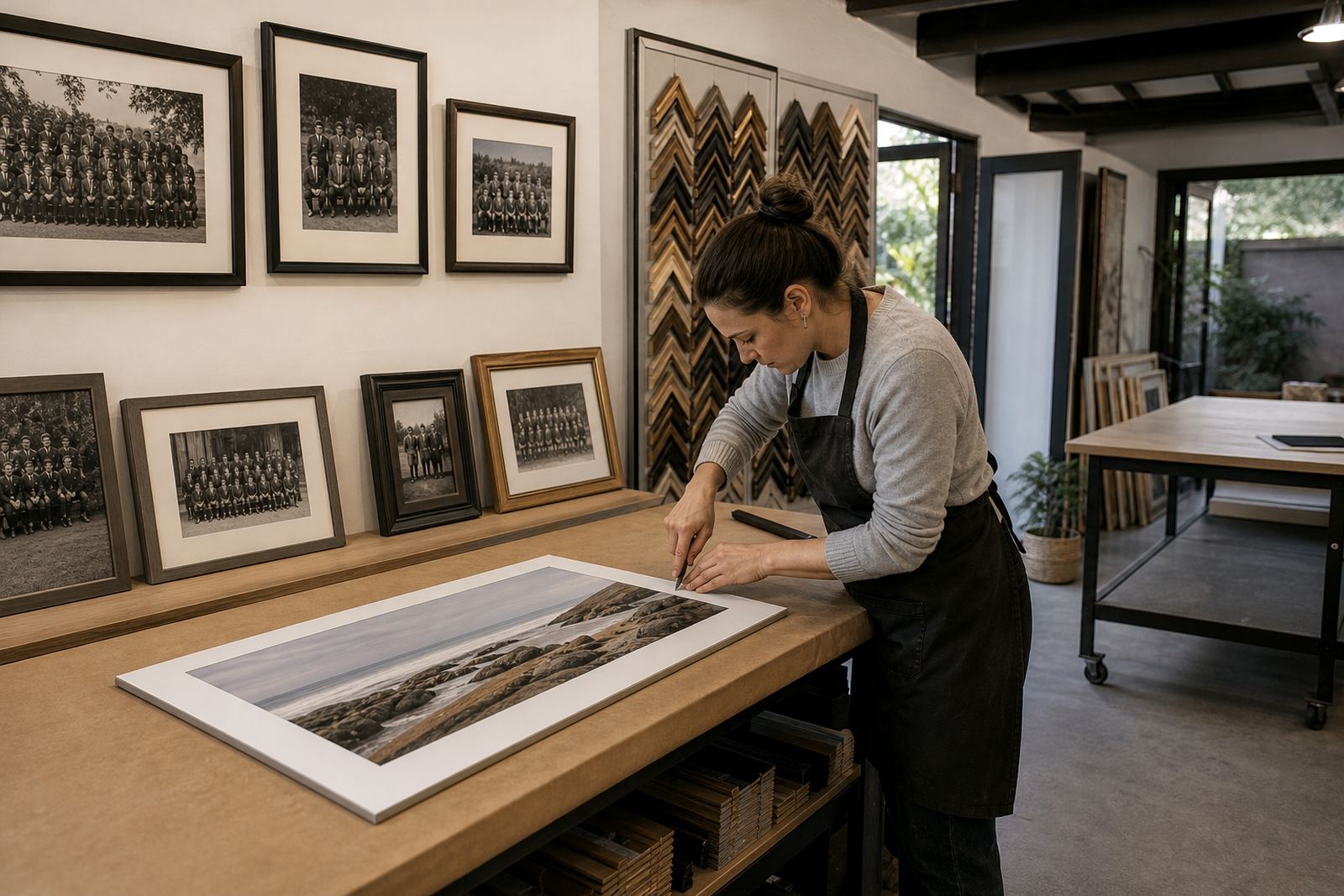
We measured each piece individually and mapped the layout on the bench before any cutting started. That saved time later and reduced the chance of waste. It also let us see how the story would read from left to right, which matters more than people think. A good memorabilia box should guide the eye naturally and not feel like a jumble.
Materials, spacing and protection chosen for long term display
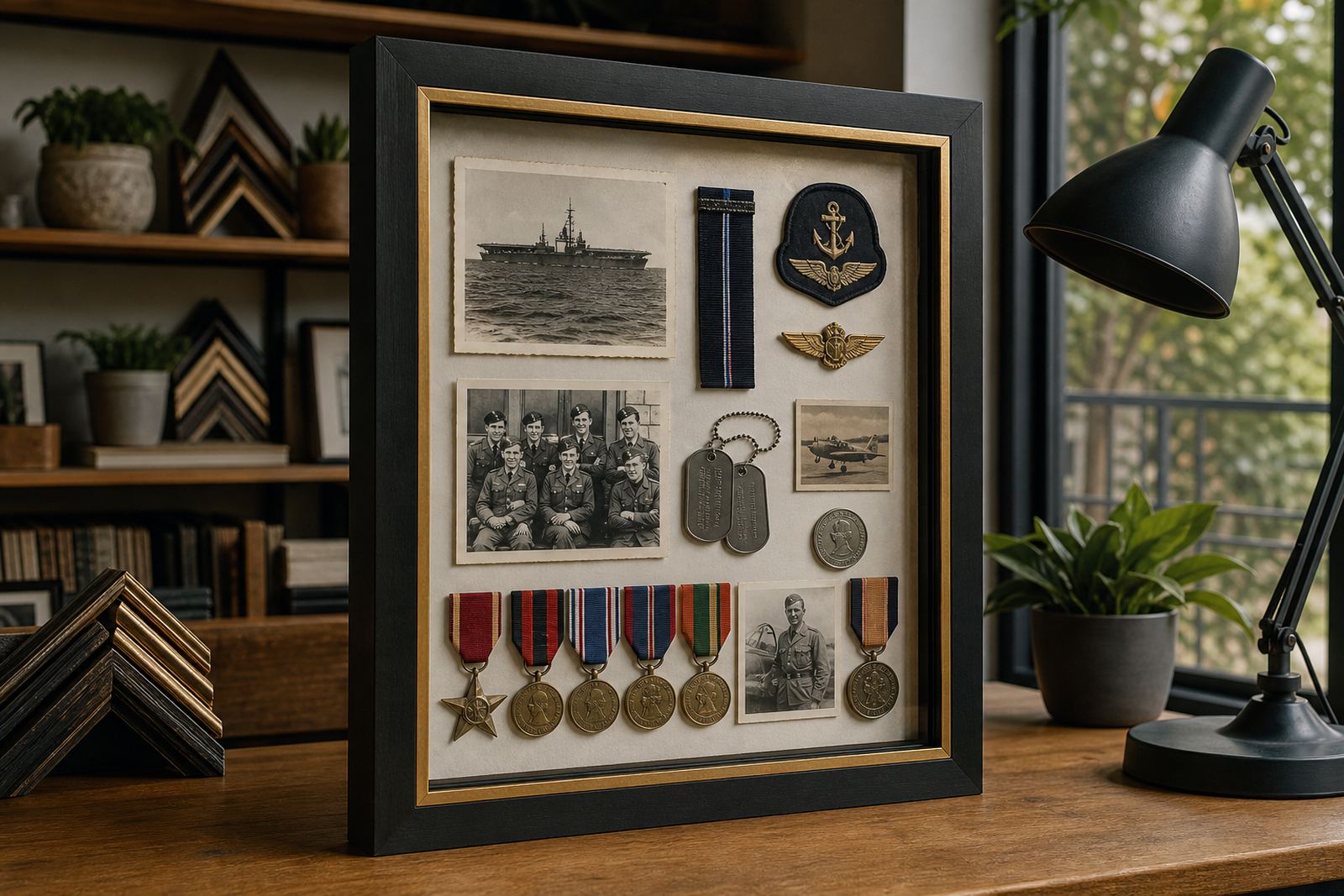
For this build we supplied a custom shadow box style frame with a deep profile, acid free backing and separate internal supports for the medals and mementos. The photographs were positioned with safe spacing so they sat flat and steady. We used a glazing option suited to reducing glare, which helps in bright rooms and is a sensible choice for homes that get strong sun through the day. The colours were kept calm, with the frame finish chosen to sit comfortably beside older timber and painted walls.
The interior composition was designed around balance. Heavier visual items such as the medals were placed where they would anchor the layout, while the photos and small keepsakes filled the surrounding space. The result was tidy, but not rigid. One thing we explained clearly to the client was that good framing is not only about appearance, it is also about movement, humidity and handling. In coastal towns this matters even more, but even in Johannesburg dust and temperature changes can affect exposed materials over time.
- Custom deep frame construction to suit mixed item thicknesses
- Acid free backing for better long term preservation
- Glare reducing glazing for clearer viewing near natural light
- Careful internal spacing so medals and photos do not press together
- Neutral finish chosen to suit a home interior rather than a gallery wall
Studio process and timeline from measure-up to fit off
The job took three weeks from first assessment to final fit off. In week one we confirmed measurements, discussed layout options and checked the condition of each item. In week two the frame components were cut, assembled and prepared, and the internal arrangement was built up in stages so the spacing stayed accurate. In week three we completed the glazing, final alignment and quality check before handing it over. That timeline worked well because the family was not in a rush, and it gave us time to make small adjustments without forcing the result.
Our process was hands-on from the start. The client did not have to guess how the finished piece would look, because we explained the options clearly and kept the choices practical. The frame was tested for stability before collection, and every item was checked again once the whole piece came together. A memorabilia box should feel simple when you see it on the wall, but the build behind it takes careful sequencing. If the order is off, even by a few millimetres, the whole presentation can feel out of line.
The finished display and how it changed the room
The final piece gave the family a single, clear display for what had previously been kept in separate places. The medals sat securely in the centre of the story, with the photographs and mementos arranged around them in a way that felt intentional. The box depth gave the composition room to breathe, so nothing looked pressed flat. The frame also gave the items a stronger presence on the wall, which suited the home setting and made the wall feel finished rather than temporary.
The client’s main feedback was that the piece now feels like part of the house instead of a box of memories waiting to be sorted. That is often the point with these projects. You are not just preserving objects, you are giving them a place where they can be seen every day. There was also relief that the display would not need constant adjusting. Once a memorabilia box is properly made and mounted, it should stay steady and tidy with only light dusting.
- One unified display instead of multiple loose items
- Better visual order for medals, photos and keepsakes
- Cleaner wall presentation for a home interior
- Safer storage of sentimental pieces in a framed format
What we would repeat for a similar project
If we were making this piece again, we would follow the same approach: measure everything first, build around the depth of the tallest item, and keep the layout focused on the story rather than packing the frame too full. That is the best way to avoid a cluttered result. We would also keep using a protective glazing option where light and glare are part of the room, especially in homes with strong afternoon sun.
For clients in Houghton, Parkhurst, Sandton, Rosebank or anywhere else in Johannesburg, memorabilia framing works best when the brief is handled with patience. Whether the items are medals from service, school memories, sports keepsakes or family photographs, the goal is the same. Keep the pieces safe, make the arrangement readable, and use materials that will hold up over time. It sounds simple enough, but it takes careful work to get it right, and a steady hand helps.
Key facts
| Project | Houghton Memorabilia Box |
|---|---|
| Client type | Private family home, Houghton, Johannesburg |
| Timeline | 3 weeks from measure-up to fit off |
| Format | Custom deep shadow box frame |
| Contents | Medals, photographs and small keepsakes |
| Protection | Acid free backing with glare reducing glazing |