
A family story that needed one frame
The client was a private homeowner in Morningside, Johannesburg who wanted a single feature piece for a passage wall in a family home. The brief was simple to say and not so simple to execute: bring grandparents, parents and children together in one layout, with enough breathing room between the images so each face still felt special.
They had a mix of older printed photographs, a few recent colour prints and one black-and-white portrait that had to sit comfortably with the rest. The family also needed the finished piece to suit a neutral interior with timber furniture, pale walls and a fair amount of natural light. Because the work was going into a family area, the frame had to look smart but not fussy, and it had to stand up to day to day handling.
From the first discussion, we treated it as a proper design job rather than just a framing order. That meant checking image sizes, deciding which photos should carry more weight, and making sure the final proportions would suit the wall space in Morningside without feeling too wide or too tall.
Brief, constraints and layout decisions
The main challenge was creating unity across photographs taken over different years and with different lighting. Some images were a little warm, some cooler, and the older prints had slight ageing at the edges. The family did not want anything overworked. They wanted a clean result that respected the originals and still felt personal.
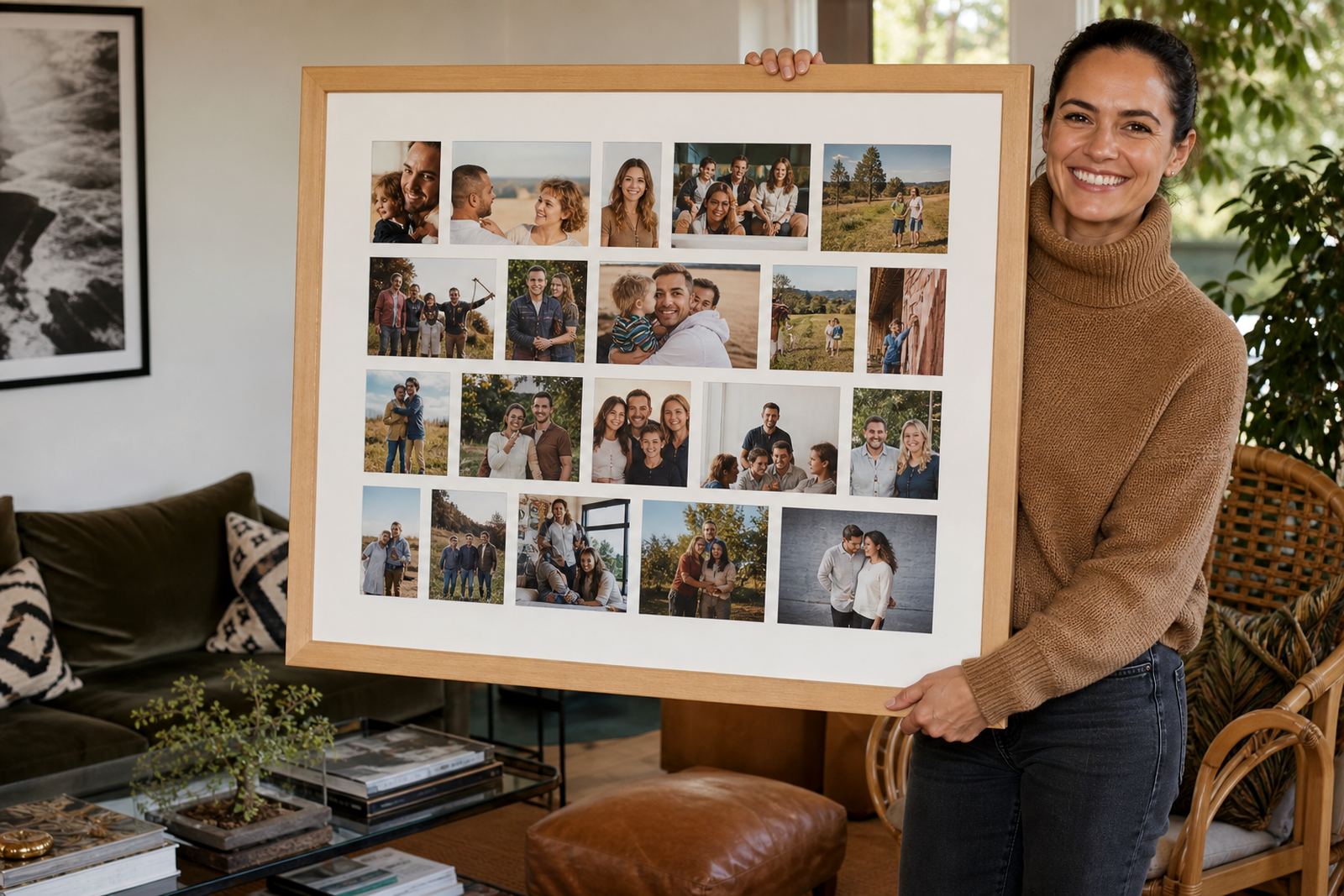
We proposed a multi-aperture collage with a restrained border so the eye could move naturally from one photograph to the next. The layout used a mix of portrait and landscape openings, which helped us accommodate different image ratios without cropping out important details. We also kept the margins generous enough to avoid the collage feeling cramped, especially once framed and hung in a hallway with regular foot traffic.
- Client type: private family home
- Area: Morningside, Johannesburg
- Layout: multi-aperture family collage
- Finish goal: elegant, neutral and easy to maintain
- Display area: interior passage wall with moderate daylight
Because Johannesburg homes can get quite bright in the afternoon, we also discussed glazing choices carefully. The family wanted protection without a heavy reflective finish, so the final recommendation balanced visibility with practical care. That sort of decision matters more than people think, especially when the piece will be viewed at an angle and not just head-on.
What we supplied and how we built it
We supplied a custom frame package built around acid-free mounting materials, a cut-to-size backing board and a multi-opening mat with precise aperture spacing. The frame profile was chosen to work with the home’s colours and the family’s photographs, with a calm timber look that would not compete with the images.
The production process included measuring each print, planning the aperture sequence, checking alignment against the final outer size and fitting the photographs so the visual weight was even across the whole composition. We also trimmed and squared the older prints where needed, then assembled the collage so the edges sat cleanly and the images remained secure.
- Multi-aperture custom mount cut to exact sizes
- Conservation-grade backing to help reduce long-term deterioration
- Careful spacing between apertures for a balanced look
- Frame profile selected for a warm, domestic finish
- Glazing chosen for practical viewing in bright indoor light
The finished piece was assembled in our Parkhurst studio and checked before release for clean corners, level spacing and overall symmetry. Little things matter here. A line that is even by 2 mm can make the whole piece feel wrong, so the final inspection was done slowly and by eye as well as by measurement.
Timeline from first call to delivery
The project ran over two weeks from first consultation to final handover. That included the design discussion, layout approval, production, finishing and delivery to the client in Morningside. The turnaround was planned carefully so the family could hang the piece before a weekend visit from relatives.
Week one was used for image assessment and layout development. We compared print sizes, tested the visual flow and confirmed the border widths. Week two was used for cutting, assembly and final quality checking, followed by collection and delivery arrangements. The timeline was steady rather than rushed, which helped protect the detail work and kept the result neat.
- Week 1: consultation, photo assessment and layout planning
- Week 2: production, finishing and final checks
- Delivery: arranged to suit the family’s schedule
- Total turnaround: 2 weeks
For families with busy schedules, this kind of measured pace often works best. It gives enough time to make sensible design decisions, while still keeping the project moving. We also kept communication direct and practical, which the client appreciated because there were no surprises and no unnecessary back and forth.
The finished result in the home
Once installed, the collage gave the passage wall a clear focal point and turned a group of separate photographs into one family story. The different generations now sit together in a way that feels intentional, not crowded. The black-and-white portrait anchored the composition, while the colour images added warmth and a sense of movement.
The family reported that visitors noticed the frame straight away, but the piece still felt at home in the room rather than like a formal gallery item. That balance is often the hardest part. You want the photographs to matter, but you also want the frame to live comfortably with the rest of the house. In this case, it did both.
The result also suited the practical side of family life. The glazing and mount choices made the collage easier to keep clean, and the structure was built to handle regular indoor use. For a home in Johannesburg, where dust and bright light can be part of everyday life, those details count.
What we would do again for a similar project
If we were doing the same kind of collage again, we would follow the same approach: start with the photographs themselves, then build the frame around the story they tell. That gives the best results because the layout is shaped by the images and not forced into a fixed template.
We would also keep the aperture mix flexible, especially where the family has prints from different years and different sources. A good family collage needs a bit of judgement. Too many identical openings can make it feel flat, while too much variation can make it look untidy. The right answer usually sits somewhere in between.
- Start with the story, not the frame size
- Allow for a mix of photo orientations
- Use calm finishes for long-term display
- Check wall proportions before final production
- Leave enough margin so the collage can breathe
For clients across Johannesburg, Pretoria, Midrand, Sandton, Rosebank, Cape Town and Durban, this is the kind of project where personal service makes a real difference. Whether the piece is for a family home, gallery wall or gift, we guide the layout carefully so the finished frame feels considered from the start.
Key facts
| Project | Morningside Family Collage |
|---|---|
| Client type | Private family home in Morningside, Johannesburg |
| Format | Custom multi-aperture collage frame |
| Timeline | 2 weeks from consultation to delivery |
| Materials | Acid-free mounting, custom backing and protective glazing |
| Finish | Timber-look frame with balanced portrait and landscape apertures |