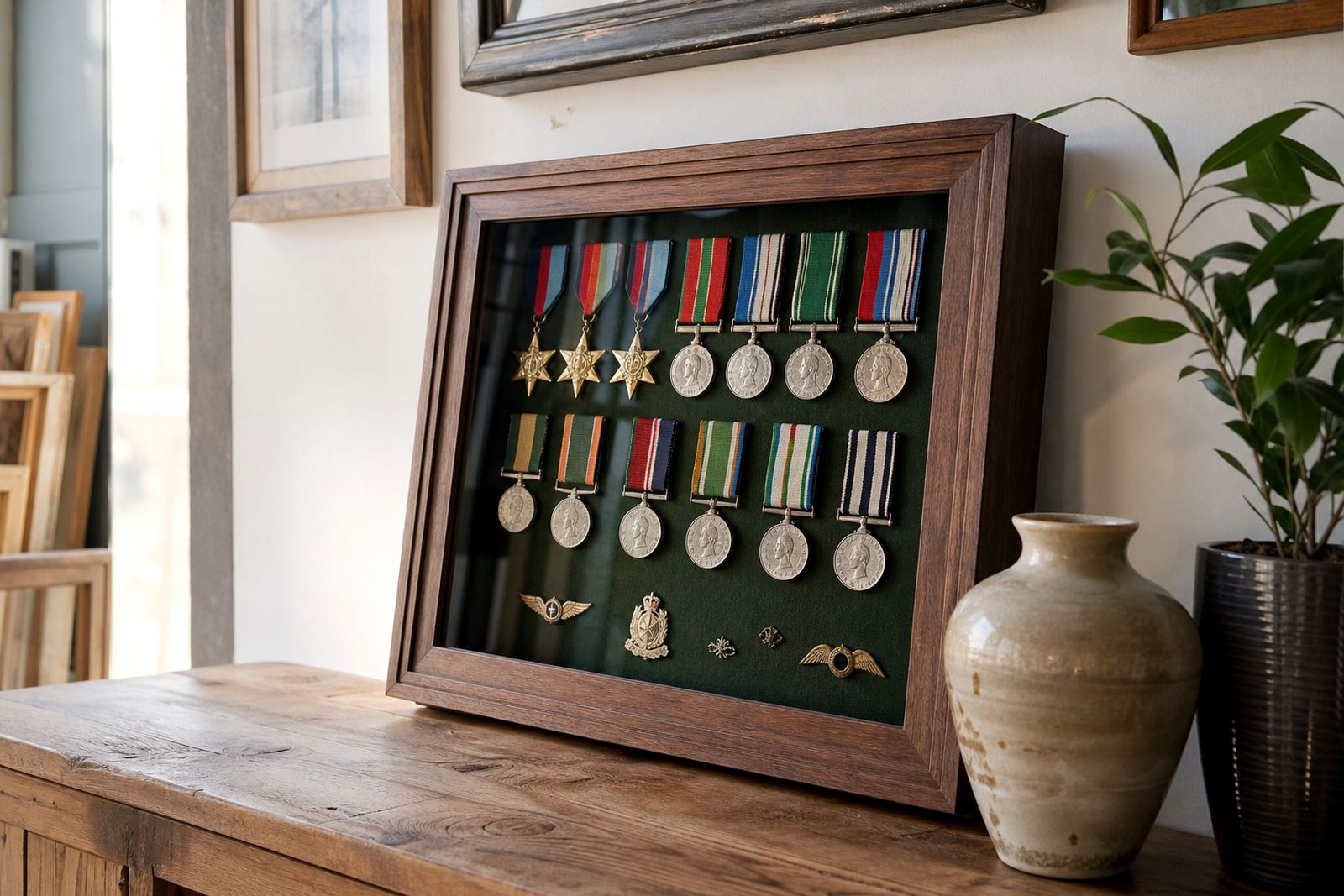


What acrylic glazing does for a framed piece
Acrylic glazing is a clear protective sheet used instead of glass in selected frames. It is lighter to carry, safer if a frame is moved often, and easier to use for larger pieces where weight matters. For many homes, offices and galleries, it gives good visual clarity while reducing the risk of breakage during transport or hanging.
We recommend acrylic glazing where the piece needs to be lighter on the wall, where there are children nearby, or where the frame may be installed in a place with regular movement such as a passage, reception area or exhibition wall. It is also a sensible option for oversized artworks, mirrors and framed prints that would otherwise become too heavy with glass. The finish can be supplied with standard clear acrylic or with reduced-glare options, depending on how the artwork is viewed.
Acrylic is not a one size fits all answer. Some artworks need specific handling because of surface texture, paper type or the value of the work. That is where a proper framing consultation helps, so the glazing is matched to the piece and the room it will live in.
Sizes, sheet types and framing options we supply
We cut acrylic glazing to fit custom frames and selected ready-made frame sizes. It can be used for photographs, prints, certificates, posters, diplomas, fabric pieces and some light textile items. For larger formats, acrylic is often preferred because it reduces the load on the wall and on the hanging hardware.
- Custom cut to the artwork or mount opening
- Available for standard sizes and large-format pieces
- Clear glazing for maximum visibility
- Reduced-glare options for bright rooms and shopfronts
- Suitable for single items, multi-aperture layouts and framed mirrors
- Can be paired with conservation mounts and backing boards
We also advise on the right frame profile, because a narrow frame may not support the same depth or stiffness as a deeper moulding. For pieces going to Cape Town or Durban, or into coastal humidity, we look carefully at the full frame build so the result stays neat in changing weather. If the piece is being mounted in a gallery or home with strong afternoon sun, we can discuss glazing choices that suit the viewing angle and reduce reflections.
Where acrylic glazed frames suit best
This type of glazing suits homes, galleries, schools, offices, reception spaces and retail interiors where safety and handling are important. It is especially useful for larger works in Johannesburg and Pretoria flats, where staircases, lifts and narrow passages can make glass awkward. In Midrand and Sandton office fit-outs, acrylic is often chosen because frames are moved more often during refurbishments or tenant changes.
It is a practical option for the following uses:
- Children's rooms and family areas
- Busy public spaces and waiting rooms
- Exhibition walls with regular changeovers
- Large prints, posters and photography displays
- Travel pieces and works that are taken to shows
- Rooms where a lighter frame is easier to hang safely
If your artwork has a delicate surface, old paper, or a medium that should not touch the glazing directly, we will advise on spacing, mounts and backing to allow for airflow and protection. In some cases, a spacer is needed so the sheet sits away from the artwork. That detail matters more than people often think, and it helps avoid marks or sticking over time.
Installation, hanging and practical site needs
Acrylic glazed frames do not need power or gas. There are no electrical requirements at all. What matters is correct hanging support, especially with larger formats or multi-frame walls. Our studio can prepare the frame for picture hooks, D-rings, security fixings or gallery hanging systems, depending on where it will be installed.
Before ordering, check these points:
- Wall type: brick, drywall, partition or tiled surface
- Finished size allowed by passageways, lifts and staircases
- Whether the frame will sit in direct sun or strong light
- How often the piece will be moved or cleaned
- Whether the artwork needs a spacer or conservation mount
- Any body corporate, office or gallery hanging rules
For clients across South Africa, we can arrange collection and delivery where suitable. In apartment blocks around Rosebank or Parkhurst, we often work around access times and security rules. For gallery installs, we can also discuss hanging height, spacing between works and the safest sequence for installation so the wall looks balanced and the frame is secure. If the piece is especially large, it is worth allowing enough time for proper handling, because trying to rush a heavy frame is where trouble starts.
Care, cleaning and long term servicing
Acrylic should be cleaned gently. Use a soft microfibre cloth and a cleaner suitable for plastics, then wipe without pressure. Do not use abrasive pads, household scourers or harsh solvents, as these can scratch or cloud the surface. If you live near the coast, wipe the frame regularly so salt and fine dust do not build up on the edges and fittings.
When storing or moving an acrylic glazed frame, keep it upright and avoid resting it against rough surfaces. Protective film should only be removed once the frame is ready for hanging, and if the piece is going into storage, it should be kept away from heat and direct sunlight. In dry winter conditions or during load-shedding periods when rooms cool down quickly, framed pieces should still be checked occasionally for dust ingress and loose fittings.
We also offer repairs and reframing if a frame is damaged, the backing board has shifted, or you want to change from glass to acrylic. If a client is updating a gallery wall or moving house, we can assess whether the existing frame can be adapted or whether a new build is the better option. A neat frame is only as good as the way it is maintained, so proper aftercare matters.
What to confirm when placing your order
Good framing starts with the right measurements and a clear brief. Bring the artwork, photo or mirror in where possible, or send exact sizes if you are ordering remotely. If you are framing a valuable piece, mention whether it is original, signed, limited edition or a sentimental item that cannot be replaced. That helps us guide the glazing and mounting choice properly.
- Artwork size and whether it includes a mount
- Whether you want clear or reduced-glare acrylic
- Frame colour, width and finish
- Landscape, portrait or square orientation
- Expected location, lighting and humidity
- Any special handling, installation or delivery needs
At Bright Frames, our team in Parkhurst works with homes and galleries across Johannesburg, Pretoria, Cape Town, Durban and Midrand. Sipho Maseko and the studio team will help you match the frame to the room, the work and the practical reality of where it will hang. The aim is simple: a frame that looks right, hangs safely and suits the piece for years to come.
Key facts
| Glazing material | Clear acrylic sheet for selected framed pieces |
|---|---|
| Typical use | Photos, prints, certificates, posters, mirrors and light artworks |
| Size range | Standard sizes and custom cut formats up to large display pieces |
| Finish options | Clear or reduced-glare, subject to suitability |
| Installation needs | No power or gas required; hanging hardware matched to wall type |
| Care | Soft cloth cleaning only; avoid abrasives and harsh solvents |