
What a canvas tray frame does for the artwork
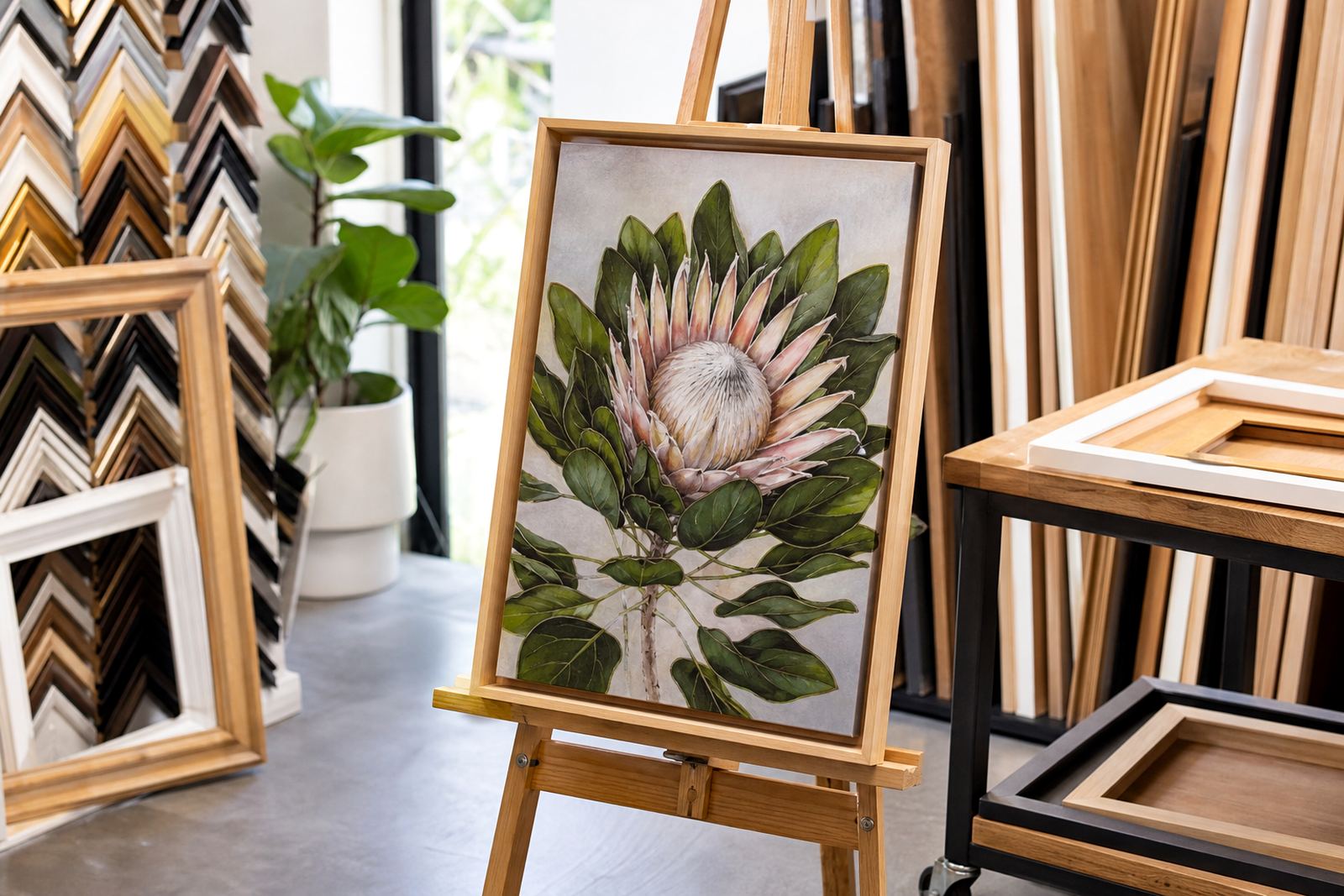
A canvas tray frame is a slim timber or composite frame built to sit around a stretched canvas without covering the painted surface. It creates a shadow line between the artwork and the frame, which helps the piece read cleanly on the wall and gives it a more finished look. The canvas remains visible from the front, so the brushwork and edges stay part of the display.
This style suits contemporary paintings, portrait canvases, abstracts, prints on canvas and mixed media pieces that need a neat border without a full traditional frame. It is often chosen when the artwork already has strong colour or texture and does not need a heavy surround. In Johannesburg homes, galleries and offices, tray frames work well because they handle changing light, dust and aircon conditions better than many open-edge hanging methods.
We guide clients through the size, depth and finish choices so the frame sits properly around the canvas, with enough space for the stretcher and any uneven edges. A careful fit matters, especially when the canvas has texture or the sides are painted and should remain visible.
- Leaves the face of the canvas open and visible
- Adds a clean border with a floating look
- Suitable for stretched paintings and canvas prints
- Can be made in plain, stained or painted finishes
Size options, depth and finish choices
Canvas tray frames are measured to suit the exact outer size of the stretched canvas. Common sizes include smaller pieces around 300 x 400 mm, mid-size works around 600 x 900 mm, and large statement pieces above 1000 x 1500 mm. We also frame custom sizes, which is often the case with local artists, photographers and gallery exhibitions. The tray needs to allow for the depth of the stretcher bar and the full edge profile of the canvas, so accurate measurement is important.
We can match the look to the room or collection. A natural timber grain suits warm interiors and traditional artwork. Matte black is often used for galleries because it gives a clear outline without drawing attention. White, charcoal and custom colour finishes are also available for brighter spaces, kids rooms or coastal homes where lighter tones work better. In humid coastal areas such as Durban, finish choice and material selection matter more, because moisture can affect cheaper frame stock over time.
- Depths commonly suit standard and deep stretcher bars
- Visible border widths can be kept slim or made wider
- Finishes can be natural, stained, painted or colour-matched
- Works with square, rectangular and some oversize formats
When ordering, it helps to know whether the canvas has painted sides, raw edges or wrapped edges. That affects the gap between the artwork and the tray, as well as the overall look once it hangs. A slight mis measurement can change the final alignment, so we check every detail before production.
Where tray frames suit homes, studios and galleries
Tray frames are a practical choice for spaces where the artwork should feel polished but not overly formal. In homes, they suit lounges, passages, dining rooms and stairwells where a canvas needs to stand out without looking heavy. In offices and hospitality spaces, they help keep artwork tidy and presentable in busy areas with regular traffic.
For galleries in Johannesburg, Pretoria, Cape Town and Durban, tray frames are especially useful for shows that mix different artists and canvas sizes. They help create consistency across the wall even when the artworks vary in tone and format. They are also a good option for artists preparing work for sale, because the piece can be presented cleanly without losing its original character.
For properties in Sandton, Rosebank, Midrand and Parkhurst, we often supply tray frames for both new commissions and existing works that need a better finish. They are also a strong option for new build homes where the interior has sharp lines, floating shelves and large wall surfaces that call for clear framing.
- Homes with contemporary or minimal décor
- Gallery walls and exhibitions
- Corporate reception areas and boardrooms
- Artist presentation for sales and shows
Installation, hanging and practical fitting notes
Tray frames must be fitted so the canvas sits square, secure and level. The hanging method depends on the size and weight of the piece, the wall type and whether the canvas is going into plasterboard, brick or a solid feature wall. For larger works, proper wall anchors and spacing are important, especially in older Johannesburg homes where wall surfaces are not always even.
Most tray framed canvases do not need power or gas. However, if the artwork is part of a larger display with lighting, the installer may need to allow for picture lights, track lights or nearby electrical points. In commercial spaces we also check access for installation through lifts, stairwells and narrow passages, because a big canvas can be awkward to move once framed.
Collection and delivery can be arranged, and for larger or higher-value pieces we recommend professional installation. That reduces the risk of corner damage, rubbing on the edges or an uneven hang. If the canvas is going above furniture, measured spacing is worth planning in advance so the final position does not feel too high or cramped.
- No power supply is required for the frame itself
- No gas, heat or special utility connection is needed
- Wall type and anchor choice should be checked before hanging
- Large pieces are best fitted by an experienced installer
Care, cleaning and servicing over time
Canvas tray frames are straightforward to care for, but the frame and the artwork both benefit from regular attention. Dust can be wiped from the outer frame with a soft dry cloth. Avoid damp cloths on raw timber finishes unless the surface has been sealed for cleaning. For the canvas, a light brush or gentle dust removal is usually enough. Do not use household sprays directly on the artwork or the frame joins.
In dry inland areas such as Johannesburg and Pretoria, heating and aircon can cause movement in timber over time. Near the coast, humidity can affect the canvas and any untreated material. If the canvas loosens, the corners lift, or the frame begins to rub against the painted edge, a recheck is sensible. We handle frame repairs, reframing and glass replacement where needed, although tray frames are often best maintained before the damage becomes visible.
For older pieces, especially works that have travelled between homes or been stored for a while, we can inspect the stretcher, the edge clearance and the hanging points. Small issues are easier to correct early. A frame that was fitted too tightly can leave marks, while one that is too loose can shift during transport.
What to check before placing an order
Before ordering a canvas tray frame, it helps to have the exact canvas size, the thickness of the stretcher bar and a clear idea of the finish you want. If the artwork has painted sides, ask whether you want those sides visible inside the tray or hidden behind the border. You should also decide if the frame is for a single room, a gallery wall or a series of matching works, because that affects the width and colour choice.
We recommend checking the wall space where the piece will hang, especially if the canvas is large. Measure the available width, height and nearby furniture. If the work is going in a gallery or commercial setting, confirm whether the display needs the same frame on multiple works for consistency. It also helps to know if the piece needs collection and delivery, and whether installation will happen on brick, plasterboard or another surface.
- Canvas outer size in millimetres
- Stretcher depth and whether the edge is painted
- Preferred finish and border width
- Where the piece will hang and how it will be installed
If you are unsure about any of these details, our team at Bright Frames can talk you through the options and help you choose a tray frame that suits the work and the room, with a clean finish that lasts.
Key facts
| Product type | Canvas tray frames for stretched paintings and canvas prints |
|---|---|
| Typical sizes | From small single pieces to oversize gallery works, made to order |
| Frame depth | Matched to standard and deep stretcher bars |
| Finish options | Natural timber, stained, painted or colour-matched |
| Best suited to | Homes, galleries, offices, studios and hospitality spaces |
| Service area | Parkhurst, Johannesburg and nationwide across South Africa |