
What a floating canvas frame does
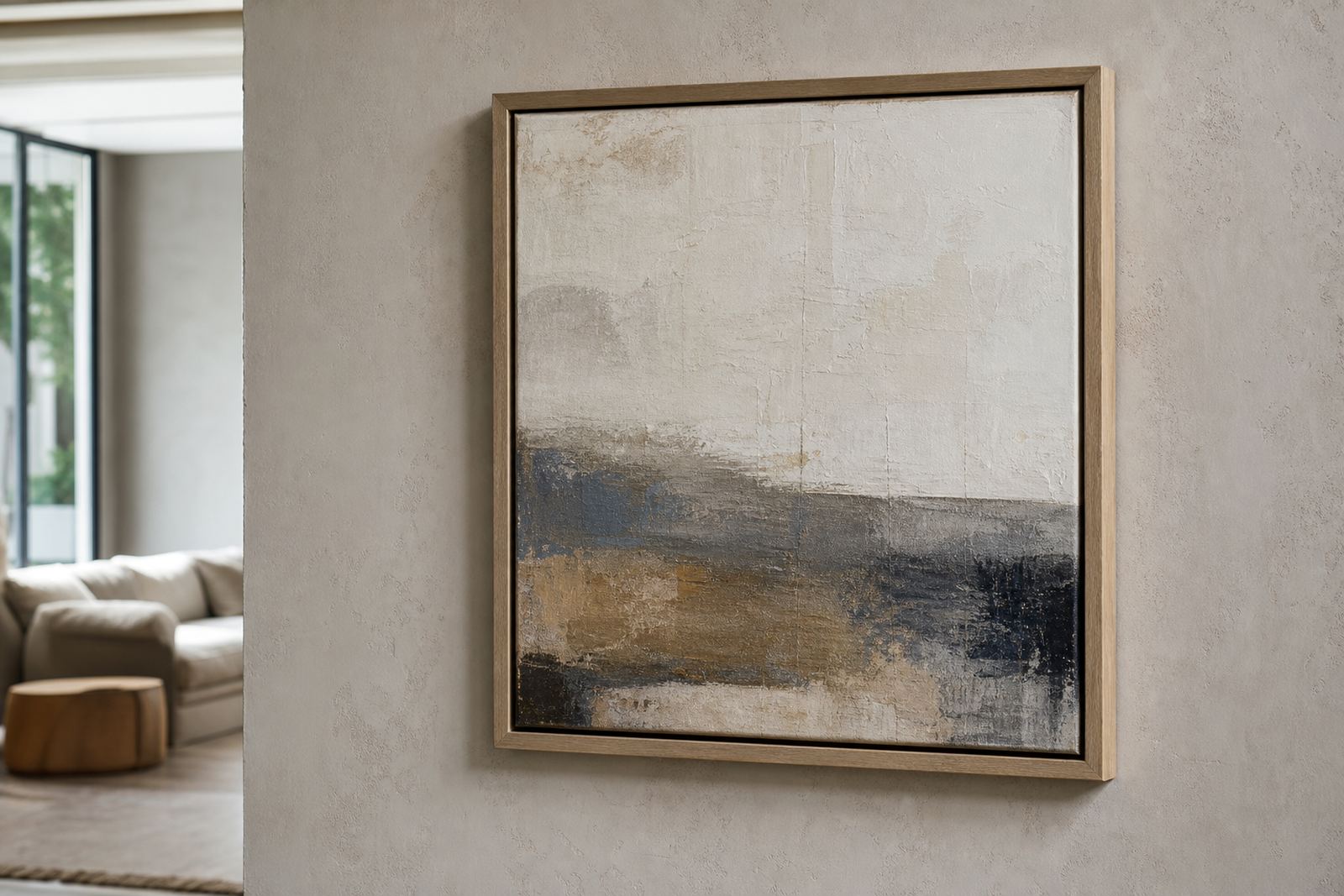
A floating canvas frame is made to sit around a stretched canvas with a small gap between the canvas and the frame lip. That gap creates the floating look, so the artwork appears to sit inside the frame rather than being pressed under it. It works well for oil paintings, acrylic pieces, printed canvases and photographic canvas wraps where the edge treatment forms part of the presentation.
For many clients, the main benefit is simple: the edge stays visible and the work still looks finished. It gives the piece definition without hiding brush marks, wrapped imagery or side printing. In a Parkhurst studio or a gallery wall in Sandton, that clean border can change how a work reads from across the room.
Sizes, depths and frame options
Floating canvas frames are made to suit common stretch depths and custom sizes. We work with small home pieces, mid-size prints and large statement canvases for gallery and hospitality spaces. Most floating frames are ordered to suit the exact outer size of the stretched canvas, with the depth chosen to match the stretcher bar and the look you want.
- Standard canvas depths often range from 20 mm to 50 mm
- Common finished sizes include 300 x 300 mm, 600 x 900 mm and 1200 x 1200 mm
- Frame gaps are usually set at 3 mm to 6 mm for a true floating effect
- Timber and composite frame profiles can be used depending on finish and budget
- Matte, stained, painted and natural finishes are available in selected styles
If you are framing a wide panorama, a square set or an oversized piece for a corporate foyer, we can advise on proportion so the frame supports the work instead of overpowering it. Some clients want a narrow profile, others prefer a deeper look for added presence, and both can work well.
Where floating frames suit best
These frames suit spaces where the artwork needs breathing room. They are popular for living rooms, reception areas, boutique stores, restaurants and gallery walls because the form is neat and easy to live with. A floating frame also helps when the canvas has painted or printed edges that should remain visible, or when the piece needs extra visual lift on a plain wall.
They are a practical choice in Johannesburg and Pretoria homes where modern interiors often use large open walls, and they also work well in coastal homes in Cape Town or Durban where clients want a clean finish that does not clutter the room. If the artwork will hang above a couch, in a passage, or in a commercial boardroom, the frame can be chosen to suit the scale of the space and the colour of the wall.
- Best for stretched canvases with finished edges
- Useful for art that must be seen from a distance
- Suitable for both contemporary and classic interiors
- Often chosen for gifts, exhibitions and home collections
How fitting and installation are handled
Fitting a floating canvas frame is a careful job because the canvas must sit square, secure and evenly spaced. Our studio checks the canvas depth, stretcher condition and corner accuracy before the frame is made or selected. If the piece is being installed at home or at a venue, the hanging method is matched to the weight and size of the framed work.
No gas or electrical supply is needed for the frame itself. For installation, only standard wall fixings and hanging hardware are used, but the wall type matters. Drywall, brick, concrete and partition walls each need different fixings, and in many Johannesburg offices we also check for cable routes, aircon lines and other services before hanging. If the work is going into a gallery or retail space, we can advise on spacing, sight lines and the safer way to mount larger pieces.
- Check whether the canvas is already stretched tight and square
- Confirm wall type before ordering installation hardware
- Allow for the full outer size including the frame lip
- Ask about delivery and collection for larger pieces
Care, cleaning and long term servicing
Floating canvas frames are low maintenance, but they still need sensible care. Keep the piece out of direct harsh sun where possible, especially in rooms with strong afternoon light. Coastal humidity can affect timber movement over time, so a stable indoor environment is always better than a damp wall or a closed patio that gets wet in summer. In winter, avoid placing the work too close to heaters or braai smoke, as that can mark both the canvas and the frame.
Dust the frame lightly with a soft dry cloth. Do not use household cleaners on the canvas edge or let liquid run into the joint. If the frame gets bumped, starts to sit unevenly or the hanging point loosens, it should be checked and adjusted. Bright Frames also handles frame repairs, reframing and glass replacement for other works, so if a canvas needs fresh support after years on display, we can look at that too.
What to check before placing an order
To make sure the floating frame fits properly, it helps to have a few details ready. Measure the stretched canvas, not just the image area, and note the depth from the wall-facing back edge to the front of the canvas. If the artwork already has damage, loose corners or bowing in the stretcher bars, mention it before the frame is made. That small step can save time and avoid a poor fit, which is a pain to sort later.
- Exact width and height of the stretched canvas
- Canvas depth, including any raised stretcher bar
- Whether the edges are painted, printed or plain
- Colour preference for the frame finish
- Where the piece will hang and how much light it gets
- Whether you need delivery, collection or installation
For galleries, photographers and home owners across Parkhurst, Rosebank, Midrand, Sandton and further afield, a clear brief makes the process straightforward. If you are unsure, our team can guide you through the options and help you choose a frame that suits the work and the room.
Key facts
| Product type | Floating frame for stretched canvas artworks |
|---|---|
| Typical canvas depth | 20 mm to 50 mm |
| Common gap setting | 3 mm to 6 mm from canvas edge |
| Size range | Small home pieces to large gallery canvases |
| Finish options | Natural, stained, painted and matte profiles |
| Service areas | Parkhurst, Johannesburg, Pretoria, Midrand, Sandton, Rosebank, Cape Town and Durban |