
What Mirror Framing Is And Why It Matters
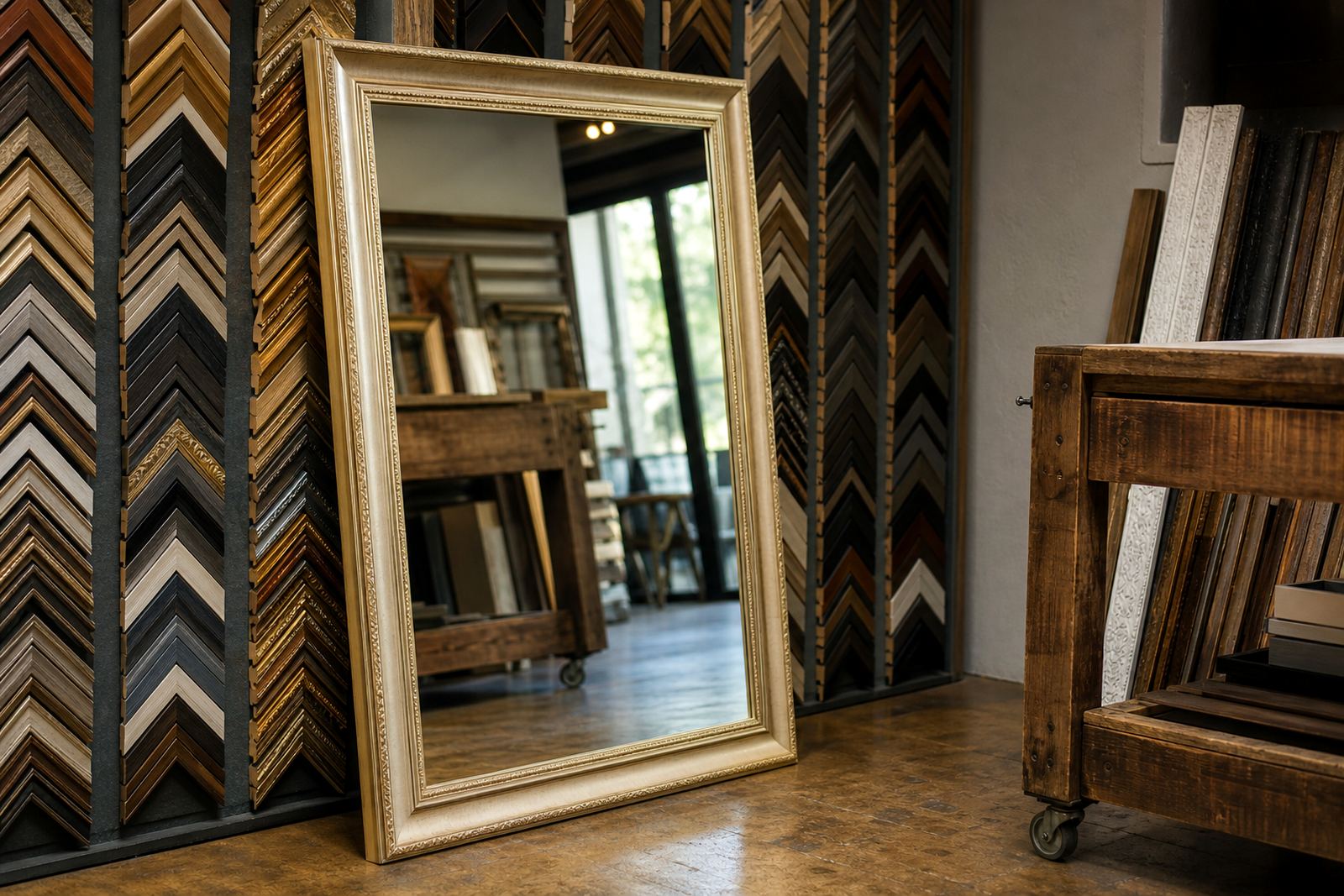
Mirror framing is the process of fitting a mirror into a custom frame so it looks intentional rather than like a plain sheet on the wall. It can turn a simple bathroom or passage mirror into a feature piece, and it also helps cover raw edges, chips or uneven cuts around the glass. For homeowners in Johannesburg, Pretoria, Cape Town, Durban and Midrand, this is a practical way to match mirrors to existing furniture, wall colours and flooring without replacing the mirror itself.
We frame new mirrors as well as mirrors that already have a bevel, antique finish or special shape. The frame can be clean and narrow for a modern apartment, or wider with more detail for a classic room. In gallery settings, mirror framing is also useful for dressing rooms, foyer spaces and display areas where the finish needs to look neat and durable. Because we work from Parkhurst, we understand the mix of light, dust and daily wear that comes with South African homes and business spaces.
Sizes, Shapes And Frame Options We Can Make
Mirror framing can be done for small powder room pieces, full-length mirrors, oversized entrance mirrors and wall mirrors used in hospitality or retail spaces. The main limit is usually the size of the mirror itself, the wall space available and how the mirror will be mounted. We help customers choose a frame that suits the scale of the room so the mirror does not feel too heavy or too plain.
Common options include square, rectangular, round, arch-top and custom cut shapes. Frames can be made slim for a light visual line, or deeper for more presence. For coastal areas like Durban and Cape Town, we often recommend materials and finishes that handle humidity better, while in dry inland areas a wider choice of timber-look and painted finishes works well. If the mirror is very large, we check the weight and suggest a stronger backing and fixing method.
- Custom sizes for bathrooms, bedrooms, passages and entrance halls
- Round, arched, oval and rectangular mirror framing
- Plain, painted, textured and timber-look finishes
- Frame widths from slim profiles to wider decorative styles
- Options for new mirrors or existing mirrors brought in for framing
Best Places To Use Framed Mirrors At Home Or On Site
Framed mirrors work well in entrances because they give guests a clear first impression and make narrow spaces feel brighter. In lounges, a framed mirror can reflect natural light and help balance artwork, sofas or sideboards. Bedrooms benefit from full-length framed mirrors near wardrobes or dressing areas, while bathrooms need a frame choice that can cope with regular moisture and cleaning. Some clients also use them in home offices, salons and retail fitting rooms where presentation matters.
For commercial spaces, a framed mirror can tie together reception areas, waiting rooms and private suites. In galleries and studios, mirror framing can be used for decor pieces, special installations or retail displays. If the mirror is being hung in a space that gets afternoon sun, we advise on positioning so the mirror does not create glare where people sit or move through the room.
- Entrances and passage walls
- Lounges and dining rooms
- Bedrooms and dressing areas
- Bathrooms and guest loos
- Salons, boutiques and reception areas
Installation, Fixings And Power Needs
Most mirror framing jobs need careful measuring, secure mounting and a wall surface that can carry the final weight. In many cases, no power or gas is needed at all, since the work is a framing and installation job rather than a powered fitting. If a mirror is being installed above a vanity, in a feature wall or over a console table, we check the wall type first so the right fixings are used for plaster, brick or tiled surfaces.
For larger mirrors, especially in homes in Sandton or office spaces in Pretoria and Midrand, we often recommend an on-site assessment or at least clear measurements and photos before production. This helps avoid issues with plugs, light fittings, skirting, alarm sensors and uneven walls. If the mirror is in a bathroom, we look at splash zones and ventilation too. The final installation should leave the frame level, secure and sitting cleanly against the wall, not pulling away at one corner.
- Wall type checked before fixing: brick, plaster, tile or drywall
- Appropriate hanging points chosen for the mirror weight
- Allowance made for switches, plugs, lights and accessories
- No power or gas usually needed for standard mirror framing
- On-site fitting available for larger or awkward pieces
Care, Cleaning And Ongoing Servicing
A framed mirror should be cleaned gently so the glass stays clear and the frame finish lasts. Use a soft cloth and a mild glass cleaner sprayed onto the cloth, not directly onto the mirror edge. Too much moisture can creep behind the frame on poorly ventilated bathroom walls, especially in humid areas along the coast. For painted or timber-look finishes, avoid abrasive cleaners and rough sponges that can mark the surface.
If a frame gets knocked, chipped or loose over time, we can inspect it for repairs or reframing. Mirrors in busy spaces such as salons, guest houses and retail changing rooms may need checking more often because of repeated cleaning and movement around the wall. A small issue caught early is usually easier to fix than a cracked corner or bowed frame later on. We also advise clients to keep an eye on the hanging points after any renovation or repainting work.
- Wipe with a soft lint-free cloth
- Keep moisture off the frame edge where possible
- Avoid harsh chemicals and scrub pads
- Check fixings after painting, plastering or wall repairs
- Ask for repairs if the frame loosens or the mirror shifts
What To Check Before You Order A Mirror Frame
Before ordering, measure the mirror itself, not just the wall space. We need the exact height and width, plus whether the corners are square, rounded or cut to a special shape. If the mirror is already fitted to a backing board or has a bevel, let us know because that affects the frame profile and the way the opening is made. It helps to share a photo of the room so we can match the finish to the décor and natural light.
Also think about how the mirror will be used. A passage mirror that only gets occasional use can have a different finish to a bathroom mirror used every day. If the wall is uneven, if there is a light switch close by, or if the mirror needs to be carried upstairs, those details matter. For larger pieces, please check access through gates, lifts, stairwells and narrow passages before finalising the order. It saves time and avoids extra handling, which is always better for the glass.
- Exact mirror size, including any bevel or special edge
- Shape and corner detail
- Room location and exposure to moisture or sun
- Desired finish: plain, painted or textured
- Access details for delivery and installation
- Any nearby lights, plugs or wall fittings
Key facts
| Product type | Custom mirror framing for homes, galleries and commercial interiors |
|---|---|
| Common sizes | Small bathroom mirrors to oversized feature mirrors |
| Shapes available | Rectangular, square, round, oval, arched and custom cut |
| Finish options | Plain, painted, textured and timber-look |
| Service area | Parkhurst, Johannesburg plus Pretoria, Midrand, Sandton, Rosebank, Cape Town and Durban |
| Installation needs | Secure wall fixing, measured clearance and suitable mounting for the mirror weight |