
What a natural wood frame gives your artwork
Natural wood frames bring warmth to a room without taking over the piece inside it. They suit watercolours, photographs, line drawings, family portraits and prints with muted or organic tones. In Parkhurst homes, Rosebank apartments and gallery walls across Johannesburg, they are often chosen where the finish needs to feel honest and simple rather than glossy or flashy.
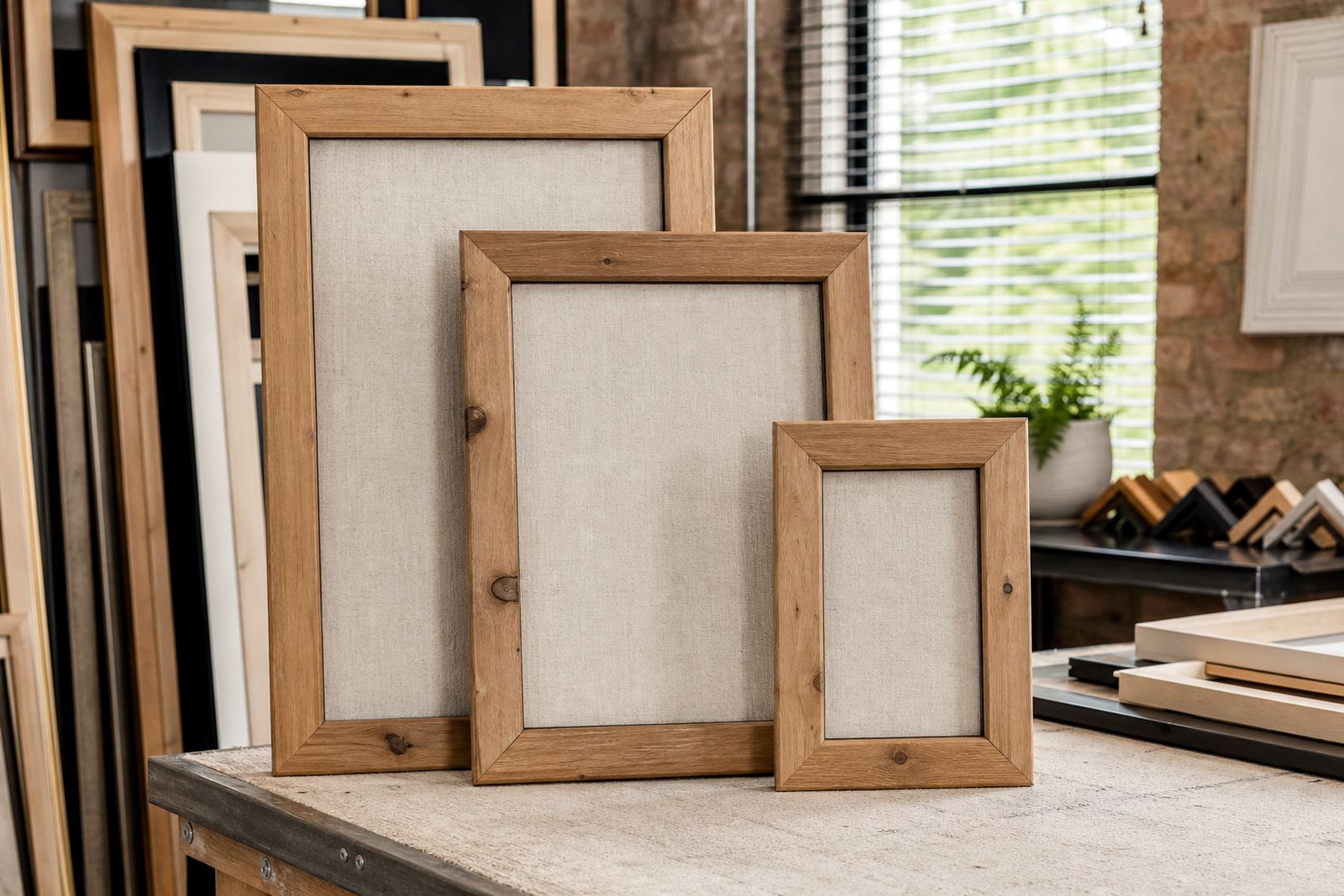
These frames are made from timber with a visible grain, so each piece has its own character. Some clients prefer a light oak look, others want a darker walnut tone or a rawer finish with less polish. Because the wood is a natural material, small colour changes and grain movement can occur, which is part of the appeal. It also means matching two frames exactly is not always possible, so allow for slight variation when ordering more than one.
- Best for art with earthy, muted or textured colour palettes
- Works well in homes, studios, reception areas and gallery settings
- Can be made as a plain profile or with a deeper shadow line
- Suitable for single works, series pieces and family photographs
Sizes, profiles and glazing choices that fit the job
Natural wood frames can be supplied in standard ready-made sizes or made to fit a custom artwork exactly. Common sizes include A4, A3, A2, A1 and A0, as well as square formats and bespoke measurements for certificates, prints and canvases. For larger rooms or commercial spaces, deeper profiles help the frame sit well on the wall without looking too thin.
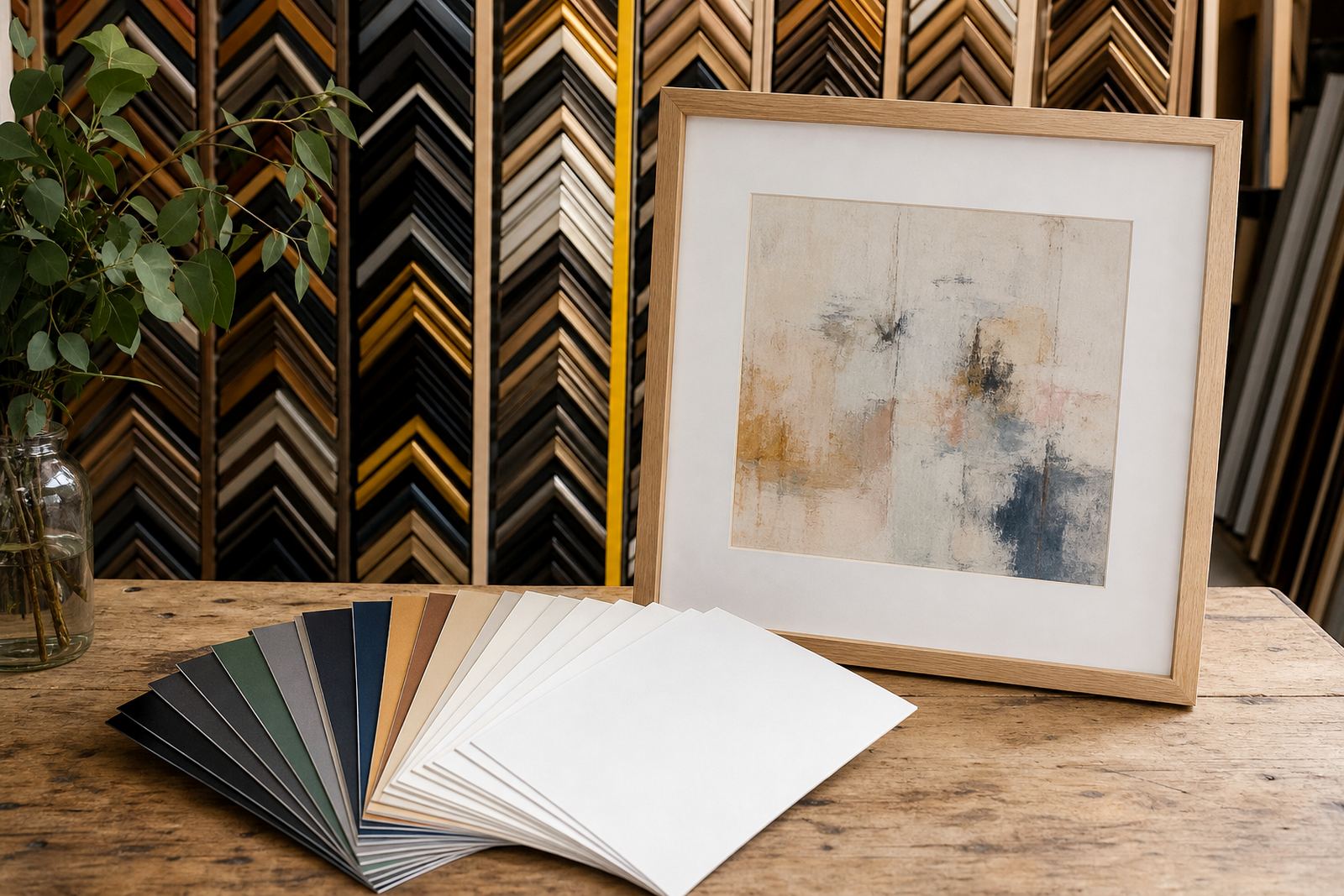
When ordering, think about the size of the artwork, the amount of border you want to show and whether a mount is needed. A mount gives breathing room around the piece, which is useful for smaller artwork and works on paper. Glazing can be clear glass, non-reflective glass or acrylic, depending on weight and where the frame will hang. For transport between Pretoria and Cape Town for example, lighter acrylic may be easier for larger pieces, but glass gives a more traditional finish.
- Standard sizes and made-to-measure options available
- Profile choices from slim to medium-depth timber sections
- Mount cutting available for single or double mounts
- Glass or acrylic glazing depending on size, weight and location
Where natural timber works best in South African interiors
Natural wood frames are a good choice for interiors that already use timber, linen, stone, cane or neutral paint colours. They work well in living rooms, entrance halls, studies and gallery corridors, and they are often used in hospitality spaces where a calmer finish is wanted. In coastal areas like Durban or Cape Town, the timber finish also pairs well with lighter interiors and ocean tones, but the frame should be kept away from direct moisture and constant sun.
For offices and client-facing spaces in Sandton or Midrand, these frames can soften formal rooms and make framed certificates, branding pieces or photographic art feel more inviting. In homes with darker floors or built-in cabinetry, a lighter natural frame can stop the wall from feeling too heavy. If the room gets strong afternoon sun, ask for glazing and placement advice so the artwork and wood both last longer.
- Good for Scandinavian, contemporary, coastal and organic interiors
- Suited to homes, studios, cafés, reception areas and galleries
- Helpful where a quieter frame is needed around detailed work
- Can be combined with white or cream mounts for a cleaner look
Fitting, hanging and what the frame needs on site
Natural wood frames do not need any power or gas supply. The only requirement is correct hanging hardware and a sound wall. For light pieces, picture hooks and proper wall plugs are usually enough. Heavier framed artworks may need two fixing points, especially if the piece is large or if the wall is plasterboard. In some older homes, it is worth checking for uneven plaster, damp spots or loose brick before installation.
Where a frame is being installed in a gallery or commercial property, the hanging line should be checked across the full wall so the spacing stays level. If the work is going above a console, in a stairwell, or in a room with aircon vents, height and airflow should be considered. We also handle gallery hanging and artwork installation, which helps when a collection needs to be placed in one go with consistent spacing and line-up.
- No electrical connection required
- Use proper wall fixings suited to brick, concrete or drywall
- Allow for wall condition, height and sunlight exposure
- Installation advice available for homes and galleries
Care, servicing and how timber holds up over time
Natural timber frames are straightforward to care for. Dust the frame with a soft, dry cloth and avoid wet cleaners, rough sponges or polish containing silicone. If the frame has a clear finish, wipe gently rather than scrubbing the grain. Keep it out of direct contact with water, steamy bathrooms and areas with very high humidity, especially near the coast where moisture can build up faster than expected.
If a frame becomes chipped, loose at the corners or marked by handling, repair is usually possible. We can assist with frame repairs, glass replacement and reframing if a piece has shifted or the artwork needs a new presentation. For older works, the backing and mounts should also be checked from time to time, especially if the piece has been in storage or hung near a window for years. A quick check now can save a much bigger problem later.
- Dust only, with no harsh cleaning chemicals
- Keep away from damp areas and direct heat sources
- Reframing and repair available if corners loosen or finish wears
- Inspect backing, mounts and glazing every so often
What to confirm before you place an order
Before ordering a natural wood frame, measure the artwork itself and decide whether the glass will sit flush over the work or whether a mount is needed. Check the colour of the room, the finish of nearby furniture and whether you want the timber tone to blend in or stand out. If the artwork is valuable or sentimental, ask for guidance on glazing, spacers and backing so the piece is protected properly.
It also helps to know where the frame will be used. A hallway in Parkhurst may need a different finish from a bright gallery wall in Cape Town, and a family photo in Pretoria might call for a warmer tone than a commercial corridor in Sandton. If you are matching more than one frame, confirm the full set at the same time so the grain and colour sit well together. It’s a small step, but it makes the wall look far neater.
- Artwork size, including any borders to be shown
- Desired timber tone and profile depth
- Need for mount, spacer, glass or acrylic
- Where the frame will hang and how much light it gets
Key facts
| Material | Natural timber with visible grain and sealed finish options |
|---|---|
| Available sizes | Standard sizes from A4 to A0 plus custom measurements |
| Profiles | Slim, medium and deeper frame profiles |
| Glazing | Clear glass, non-reflective glass or acrylic |
| Use cases | Homes, galleries, offices, receptions and hospitality spaces |
| Service areas | Parkhurst, Johannesburg, Pretoria, Midrand, Sandton, Rosebank, Cape Town and Durban |