
Framing made for shirts, medals and signed sports items
Sports memorabilia framing is built around one thing, keeping a prized item looking good and held safely in place. Shirts, bibs, medals, race numbers, tickets and signed photographs all need different support, so the frame is planned around the object not just the size of the opening. That means proper backing, clean spacing and a finish that suits the room where it will hang.
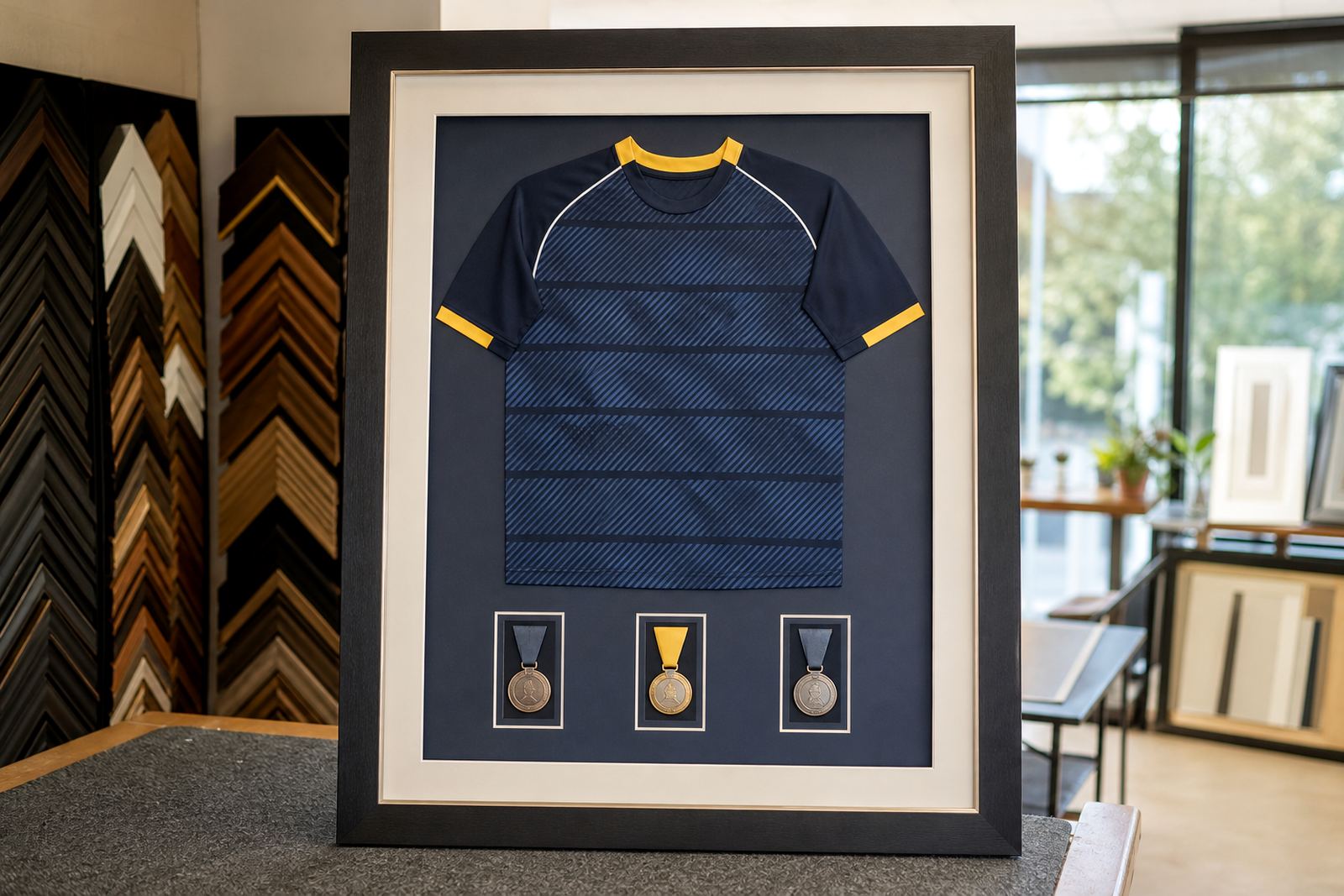
For a framed shirt, the mount is cut to suit the collar, sleeves and any lettering or signatures. Medals and pins can be laid out with small spacers and fixed mounts so they do not move when the frame is lifted. Signed items usually need extra care with placement, because a signature should stay visible and not sit too close to glare from the glass.
- Shirts with names, numbers and sponsor marks
- Medals, race numbers and presentation items
- Signed photos, certificates and event tickets
- Small sports balls, armbands and club badges
We work from the item in front of us, which helps when the piece has folds, stitched logos or mixed materials. If something is already damaged, we can advise whether a repair or reframing is the better choice.
Sizes, layout choices and frame specs
There is no single standard size for sports memorabilia frames, because a junior rugby shirt, a marathon bib and a full-size signed jersey all need different treatment. We make frames to suit compact keepsakes and larger feature pieces for lounges, study walls and reception areas. The most common request is a shirt display with a deeper box build, but smaller medal frames are also popular for gifts and club awards.
Typical options include portrait or landscape layout, shallow or deep frame depth, and single or multi-item compositions. If you want the shirt folded neatly with the number showing, or the medals grouped beside a photo and caption plate, the layout can be set before cutting starts. For coastal homes, we often recommend materials that cope better with humidity and shifting temperatures. It helps in Durban and other humid areas where paper and fabric can move a bit over time.
- Standard shirt frame depth: about 40 mm to 70 mm
- Large jersey display size: often 800 mm x 1000 mm or larger
- Medal and certificate frames: from small A4 format to custom oversize
- Glazing options: clear glass, low-glare glass or acrylic where weight is a concern
Frames can be finished in plain black, white, timber tones or a style that fits a club room or gallery wall. If the piece will hang in a bright room, low-glare glass is worth considering because it reduces reflections from windows and downlights.
Best rooms for display and where it works well
Sports memorabilia frames suit homes, offices, clubhouses, pubs, schools and gallery walls. In a home, they often work well in a passage, TV room, study or games room where the piece can be seen without crowding the space. In an office or reception area, a framed jersey or medal collection can show team history, sponsorship support or personal achievement in a tidy way.
For commercial spaces, the finish should suit the traffic and the mounting surface. A large frame in a busy foyer needs secure fixing, and if the wall is plasterboard or brick the hanging method must match the surface. In Johannesburg, Pretoria and Midrand we often work on office walls where size and weight matter, while in Cape Town and Durban the question is often more about light, humidity and keeping the item stable.
- Family homes and entertainment areas
- Clubhouses, gyms and changing rooms
- Corporate offices and reception walls
- Schools, sports academies and trophy rooms
Because these pieces are often sentimental, the display should feel personal rather than overdone. A clean frame with a well planned mount usually gives a better result than too many extras.
Installation, hanging and on site handling
Most sports memorabilia frames arrive ready to hang, but installation still needs care because many items are large and heavier than they first seem. A framed jersey or multi-item display can place real load on a wall, so the hanging points and fixings must suit the frame size and wall material. If the wall is uneven or the piece is oversized, extra support may be needed.
We can help with collection and delivery, and for larger installs we can advise on position, height and safe fixing. For gallery-style walls, it is best to decide the sightline first so the frame sits level with nearby artwork or furniture. A slightly low hanging point can make a shirt frame feel cramped, while a piece that is too high loses detail. It sounds simple, but it makes a big difference.
- Check wall type before hanging: brick, plasterboard or concrete
- Allow clear space around the frame for viewing and cleaning
- Use suitable anchors for heavy frames, especially oversize pieces
- Keep clear of direct stove heat, damp corners and strong afternoon sun
No power or gas is needed for the frame itself. If the display is being installed in a lit cabinet or reception area with other fittings nearby, we can work around those conditions without changing the framing spec.
Care, cleaning and long term protection
Sports memorabilia frames are meant to be looked after with simple regular care. Dust the frame edges with a dry soft cloth, and avoid wet cleaners on timber or painted finishes. If the glazing is glass, a light wipe on the outside is fine, but do not spray directly onto the frame where liquid may creep under the edge. For acrylic glazing, use only suitable cleaner so it does not mark.
Inside the frame, the main risks are sunlight, moisture and rough handling. Direct sun can fade fabric and signatures over time, especially in west-facing rooms. Coastal humidity can also affect fabric and backing boards, so it helps to keep the piece away from bathrooms, open windows and places with condensation. In dry interiors with load-shedding and temperature swings, a snug sealed frame is still the safer option. It keeps the item from shifting when rooms heat up and cool down.
If a frame has been stored for years or moved between towns, it may need servicing. That can include cleaning the inside, tightening the mount, replacing damaged glazing or reframing the item into a better size. If the piece has sentimental value, bring it in before any further damage happens.
What to check before you place an order
The best results come when you bring the item, or clear measurements, and a few details about how you want it displayed. If the shirt has buttons, badges or a thick collar, we need to know that before the mount is cut. For medals, it helps to say whether they should be pinned, laid flat or grouped with a photo and caption. Small details like these can change the whole layout.
It also helps to think about where the frame will live. A home display in Parkhurst may need a softer timber tone, while a club wall in Sandton or Rosebank may suit a cleaner black finish. If the frame is going into a bright room, mention glare. If it will travel between cities or be delivered to Cape Town or Durban, tell us so we can plan the packing and protection. A bit of planning now saves trouble later.
- Exact item size and whether it is folded, stretched or loose
- Any signature areas that must stay fully visible
- Preferred frame colour and whether you want glass or acrylic
- Where the frame will hang and how much wall space is available
If you are unsure, our team can talk you through the options and help you settle on the right spec. A good sports frame should protect the item, suit the room and feel like it belongs there.
Key facts
| Product type | Custom sports memorabilia framing for shirts, medals, signed items and presentation pieces |
|---|---|
| Common sizes | From A4 medal frames to oversize jersey frames around 800 mm x 1000 mm and above |
| Depth options | Approx. 40 mm to 70 mm for most shirt and multi-item displays |
| Glazing | Clear glass, low-glare glass or acrylic where weight or transport is a concern |
| Mounting | Custom-cut mounts, fixed supports, backing board and secure hanging points |
| Care | Keep out of direct sun, damp corners and strong heat; dust with a soft dry cloth |