
Framing standards that suit exhibitions, not just walls
For galleries, the frame has to do three jobs at once: support the artwork, present it cleanly and hold up under repeated handling. That means thinking about acid-free mounts, straight corners, safe glazing choices and a finish that matches the artist’s intent. In Parkhurst and across Johannesburg, we often help curators and gallery owners plan framing sets for mixed exhibitions where works arrive in different sizes and mediums.
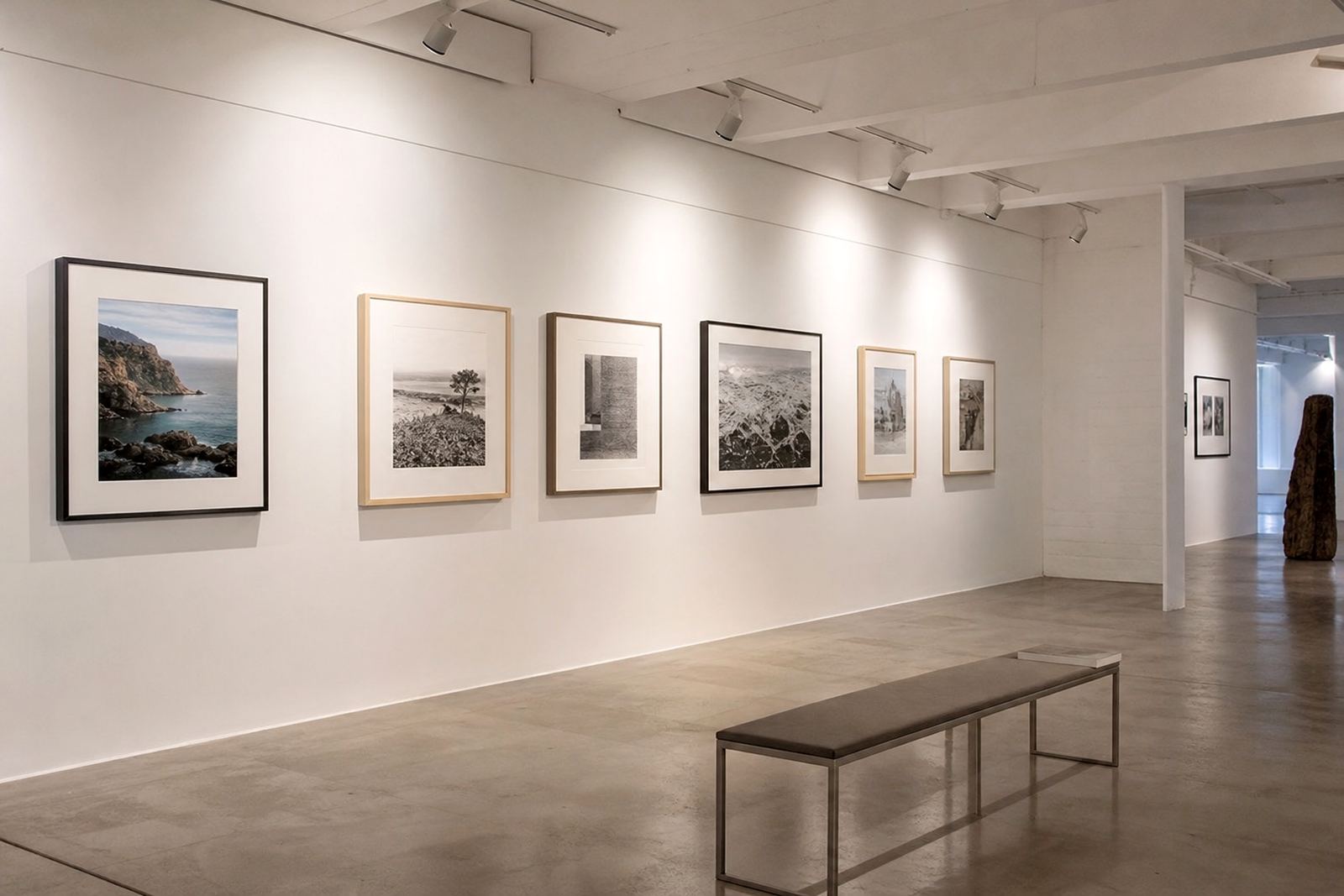
Good gallery framing is usually less about decoration and more about consistency. A room of framed pieces should feel ordered, even when the works themselves vary. That is why many galleries choose a limited frame profile, a repeatable mount width and a standard glazing spec for a whole show.
- Paper works and photographs often need mount cutting for a clean border and safe spacing.
- Canvases may need stretching before framing or a float frame for a lighter look.
- Works on board, textile pieces and mixed media may need spacer details to keep the surface clear.
The usual framing set for gallery walls
A typical gallery setup might include slim wooden frames, aluminium frames, conservation mounts, non-glare glass or clear safety acrylic, backing boards, hanging hardware and protective corners for transport. For larger pieces, mirror framing methods can also be adapted where the object calls for a neat wrapped edge and firmer support. In humid coastal areas like Durban, we often recommend checking for moisture movement in the frame package before the work leaves the studio.
For South African galleries, practical details matter. In Cape Town, salt air can affect metal fittings over time. In Pretoria and Midrand, strong sun through windows can cause fading if the glazing is not suited to the display position. For load-shedding periods, galleries also need to think about security during transport, lift use and the timing of install days when access control may be disrupted.
- Standard small works: 300 x 400 mm to 500 x 700 mm
- Medium exhibition pieces: 600 x 800 mm to 900 x 1200 mm
- Large statement works: custom sizes above 1 m on the longest side
Planning the layout before the frames are cut
Before any frame is made, it helps to map the room. Measure wall lengths, ceiling height, sight lines and the distance from the floor to the centre of the work. In gallery spaces, the spacing between pieces is just as important as the frame colour. Too little gap and the wall feels crowded. Too much gap and the exhibition loses rhythm.
We usually suggest grouping works by format or theme, then confirming the frame size and mount width in one sitting. This saves time and cuts down on repeat changes later. If the gallery is hanging a show with a deadline, keep a small buffer in the schedule for approvals, glass lead times and any rework if one piece arrives slightly off-size.
- Set a standard hanging height for the exhibition, then keep it consistent.
- Choose one or two frame finishes so the room reads as a single collection.
- Confirm whether the works will be moved between venues, which affects weight and glazing choices.
Avoid these common gallery framing mistakes
The most common mistake is choosing a frame that competes with the art. Bold profiles, shiny finishes and mixed colours can distract from the work on the wall. Another issue is using the wrong glazing for the light level in the space. In a bright front room or street-facing gallery, glare can make viewing difficult and reduce sales because clients cannot see the work clearly.
We also see problems when works are framed too tightly. Without proper spacing, paper can touch the glazing and canvas can rub against the inside edge, especially during transport. Poor backing and weak hanging fittings are another risk, particularly for heavier pieces or exhibitions that travel between Johannesburg, Pretoria and Sandton. A frame that looks fine on day one should still sit straight after a few weeks on the wall.
- Do not mix hanging hardware across a series unless there is a clear reason.
- Do not use household tape or ordinary board inside valuable works.
- Do not ignore weight limits when ordering large frames for high walls.
Budget ranges for galleries in Rand
Gallery framing budgets depend on size, finish, glazing and volume. A simple ready-made frame for a small print may start from about R250 to R600, while custom gallery framing for a single framed print or photograph often sits between R750 and R1 800. Works that need conservation mounts, larger formats or special glazing can move into the R2 000 to R4 500 range per piece.
For a full exhibition wall, many galleries set a working budget per artwork rather than per room. That makes it easier to compare pieces of different sizes. If a show includes canvases, framed prints and mirrors, the total can vary a lot. Collection and delivery also helps with budgeting, especially when works need to be moved across Johannesburg, Midrand or further afield.
As a rough guide, a small exhibition of 10 to 15 works can range from around R8 000 for a basic presentation to R35 000 or more for a more refined finish with mixed sizes and protective glazing. The best approach is to confirm the art list first, then price the set as a group so the gallery can keep the look consistent and the spend under control.
How Bright Frames supports curators and gallery owners
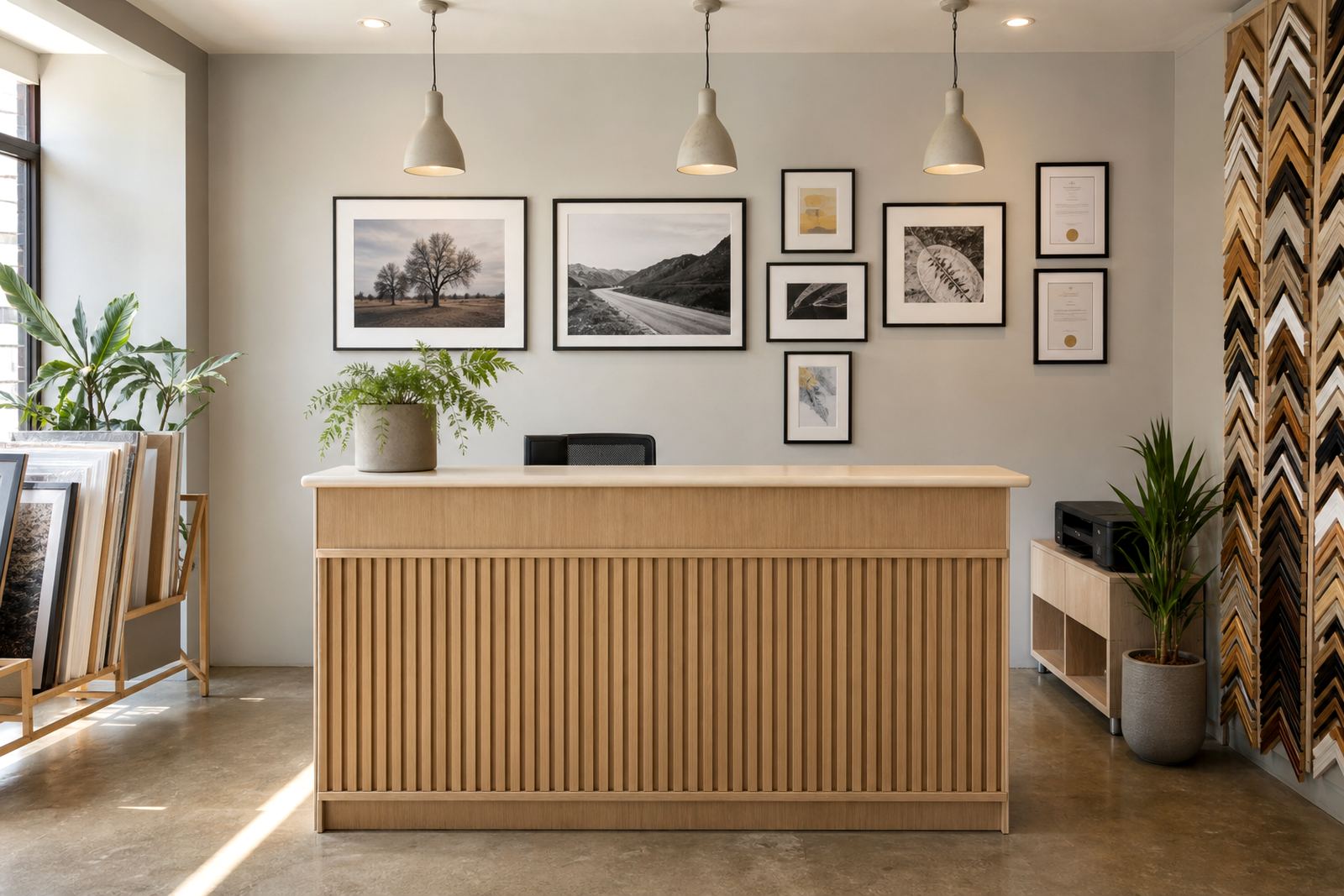
Our Parkhurst studio works with galleries, artists and collectors who need a careful, practical approach. Sipho Maseko leads the business, with Naledi Khumalo managing the studio flow, Pieter van Wyk handling specialist framing details and Ayesha Patel guiding design choices when a work needs the right proportion or finish. Thabo Ndlovu oversees production and Lerato Molefe keeps client communication clear from quote to collection.
Clients across Johannesburg, Pretoria, Midrand, Sandton, Rosebank, Cape Town and Durban can use the enquiry form on our contact page to send through sizes, images and any hanging notes. We can help with custom framing, ready-made advice, mount cutting, canvas stretching, frame repairs, reframing, glass replacement, artwork installation, gallery hanging, collection and delivery, design consultation and mirror framing service. For galleries, that means one point of contact and a cleaner process when the opening date is close.
If you are preparing a solo show or a group exhibition, it helps to start with the full artwork list, wall plan and deadline. That way we can advise on frame consistency, budget and the best materials for the space without last-minute changes.