
When event framing makes sense
Event framing is the right choice when you need pieces to look finished for a single day or for a lasting display after the occasion. That might be signed prints for a product launch, seating plans for a wedding, photos from a family celebration, certificates for an award evening, or artwork for a corporate dinner. In Parkhurst and across Johannesburg, many clients come to us with tight timing and a clear brief, then need framing that can move between a venue, a home and later a boardroom or gallery wall.
The most useful approach is to frame for the setting first. A frame for a marquee in Midrand is not the same as a frame for a humid coastal venue in Durban. If the pieces will be handled by ushers, mounted on easels, or moved between storage and display, the construction needs to suit that use. We guide the choice so the framing works for the event and still looks right afterwards.
Typical pieces and framing set-ups
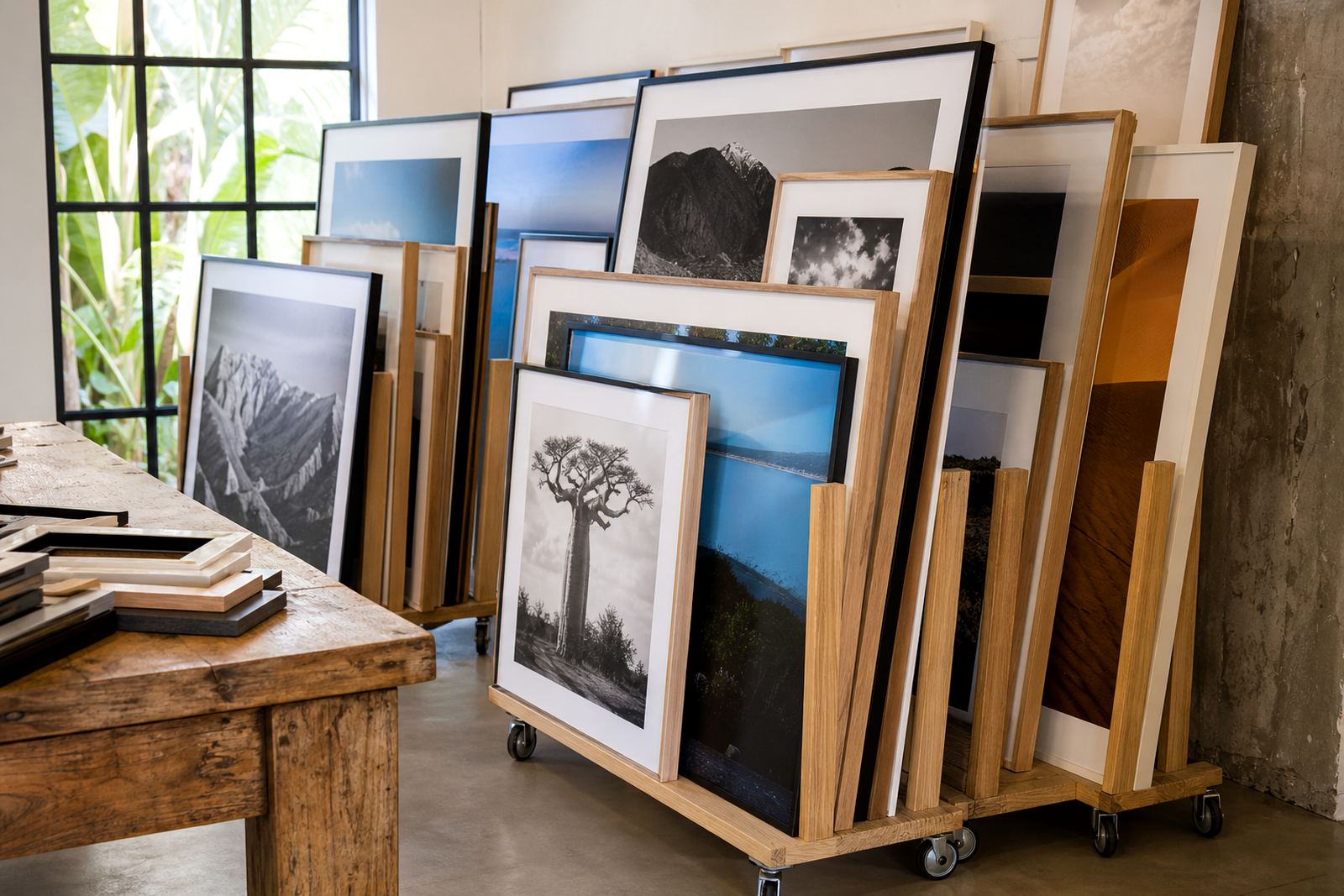
Event work usually involves a mix of framed and mounted items. Some pieces are temporary display boards, while others are meant to stay on a wall long after the celebration is over. The equipment set depends on the size of the artwork, the venue rules and whether the item must travel safely after the event.
- Mounted photographs for welcome tables, memory walls and gift displays
- Framed certificates, menus and printed programmes
- Guest signatures on boards or prints that need protective glazing
- Canvas pieces stretched for ceremonies or photo backdrops
- Mirror framing for entrance areas and styled rooms
- Glass or acrylic glazing for delicate artworks and signed items
- Secure hanging hardware for gallery-style installation
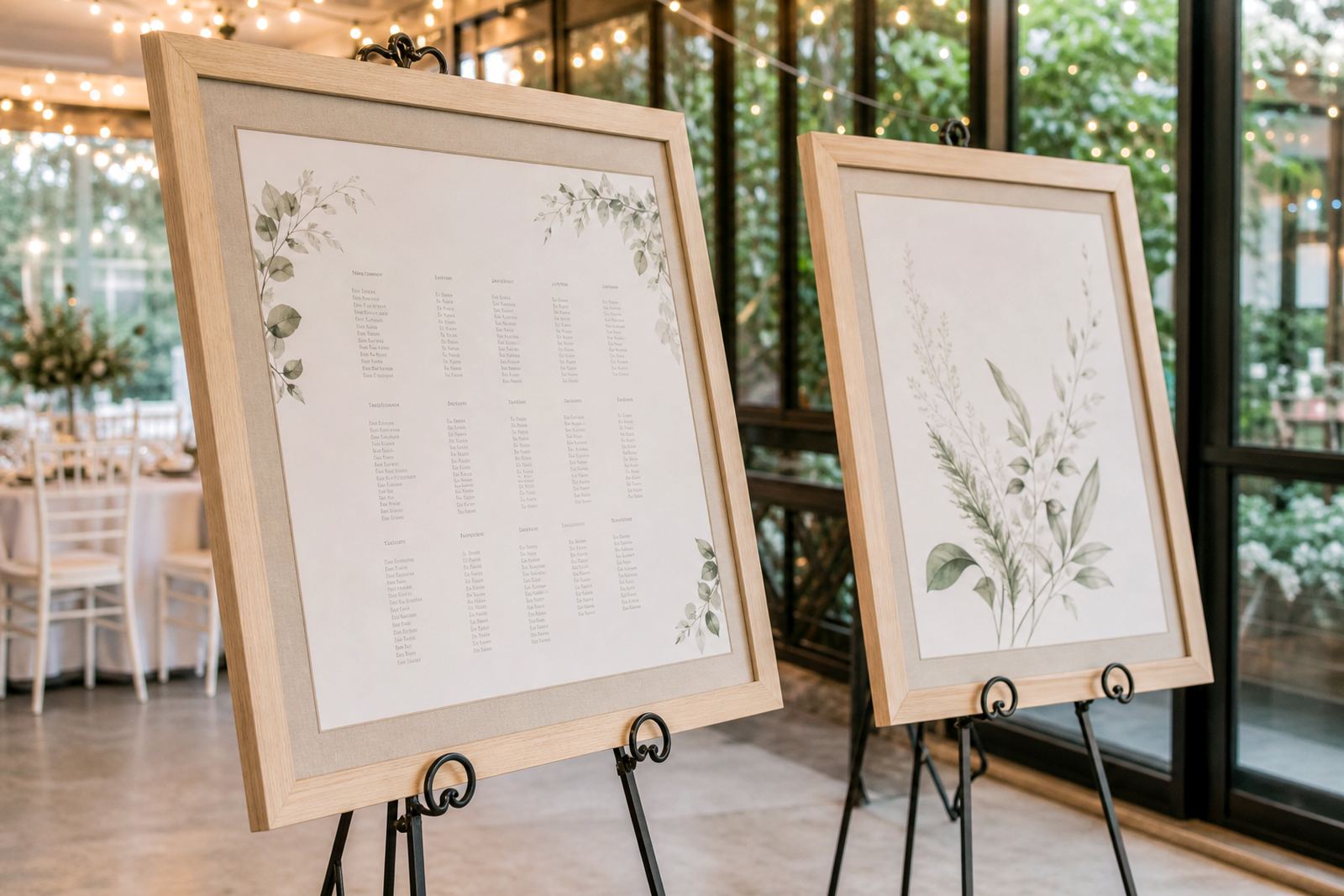
For a wedding in Pretoria, for example, a seating chart may need a slim frame with clear glazing and discreet hanging points. For a brand launch in Sandton, a larger framed graphic may need anti-glare glazing and a strong backing so it can stand safely through the evening. If the piece is going back to the office afterwards, we can use materials that are easier to transport and rehang.
Planning the layout before the venue fills up
Good framing starts before the event setup begins. We look at where the piece will sit, how people will move around it, and what the lighting will do. A frame under bright uplighting can reflect badly if the glazing is not selected properly. In a room with a lot of natural light, colour can shift during the day, so mount colour and frame tone matter more than many clients expect.
For larger events, it helps to plan the frame sizes alongside the floor plan. If the venue has narrow entrances or a lift with limited space, oversized pieces may need to be made in sections or fitted after arrival. In Johannesburg and Cape Town venues with strict loading times, a clear collection and delivery schedule can prevent last-minute stress. We also recommend checking the wall surface, because plaster, brick and temporary partitioning each need different fixings.
- Confirm the final sizes before printing or stretching artwork
- Check whether the frame will be wall-mounted, freestanding or on an easel
- Choose glazing based on glare, transport and touch handling
- Allow time for artwork drying, mounting and quality checks
- Plan where items will be stored before guests arrive
Common mistakes that cause avoidable damage
Many event problems come from leaving framing to the last minute. A rushed job can mean warped boards, fingerprints on glazing, loose fixings or frames that do not match the event style. Another common issue is choosing a decorative frame that is too heavy for the wall or the stand, especially if the piece is going to be moved between locations. That can be a problem at hotels, private homes and function venues alike.
We also see damage caused by moisture, especially in coastal areas and in air-conditioned rooms where temperature changes quickly. Paper curls, mounts can shift and adhesives may fail if the materials are not selected properly. For high-value items, avoid cheap tape at the back and do not pin artwork directly to the substrate. If the event is in a busy setting, such as a trade show or public exhibition, ask for protective glazing and stronger backing so the piece can handle more touching and movement.
When a client needs repeated use, such as a travelling exhibition or a set of corporate awards, we can advise on a frame that can be reused without losing its finish. That saves money over time and keeps the display consistent.
Budget ranges for event framing in Rand
Event framing budgets vary a lot depending on size, materials and turnaround time. Small framed prints and mounted pieces can be quite affordable, while large gallery-style presentation work costs more because of the size, glazing and finishing involved. If you need same-week work, expect the price to move up because the studio has to prioritise production and scheduling.
As a guide, many simple event pieces fall between R350 and R900 per item. Mid-range framed items for weddings, launches and commemorative displays often sit between R900 and R2 500. Larger presentation pieces, custom mounts, specialty glazing or installation work can range from R2 500 to R8 000 and above, depending on size and complexity. Mirror framing, canvas stretching and installation are usually quoted separately when they form part of the event package.
If you are planning several pieces at once, it is often more cost-effective to standardise the sizes and frame finishes. That makes transport easier and keeps the overall look consistent across the venue.
How we handle short timelines and multi-venue events
Events often run on fixed dates with no room for delay. Our team in Parkhurst works with clients who need one framed piece for a private dinner, or a full set of displays for venues in Johannesburg, Pretoria, Midrand, Sandton, Rosebank, Cape Town and Durban. We can help with collection and delivery, and if the work needs to move between venues or from studio to site, we plan the sequence carefully.
For multi-venue work, it helps to separate the items into groups by size and priority. The welcome piece should be finished first, then the signed commemorative items, then the decorative pieces that can be installed later. That keeps the main display ready even if one element changes at the last minute. Load-shedding can affect production and venue access, so allowing a little extra time is sensible, especially for work that needs final inspection or installation on site.
Clients usually contact us through the enquiry form on our contact page with the event date, item sizes, venue location and any reference images. From there we can advise on the best frame style, the likely turnaround and the budget range that fits the brief.
After the event: keep the piece looking good
Once the celebration is over, the framed piece may move into a home, office or gallery wall. That is where proper framing pays off. If the item was made for temporary display, we can still build it so it keeps its shape and appearance after transport. If it is meant to stay on show, we can recommend materials that are easier to maintain and less likely to mark in everyday use.
For commemorative work, store framed pieces away from direct sunlight and damp walls. In homes near the coast, check the backing and glazing from time to time for signs of moisture. If the item was handled during the event, a quick clean and inspection afterwards can prevent small issues from becoming bigger repairs later on. A good event frame should not only look neat on the day, it should still feel worth keeping years later.