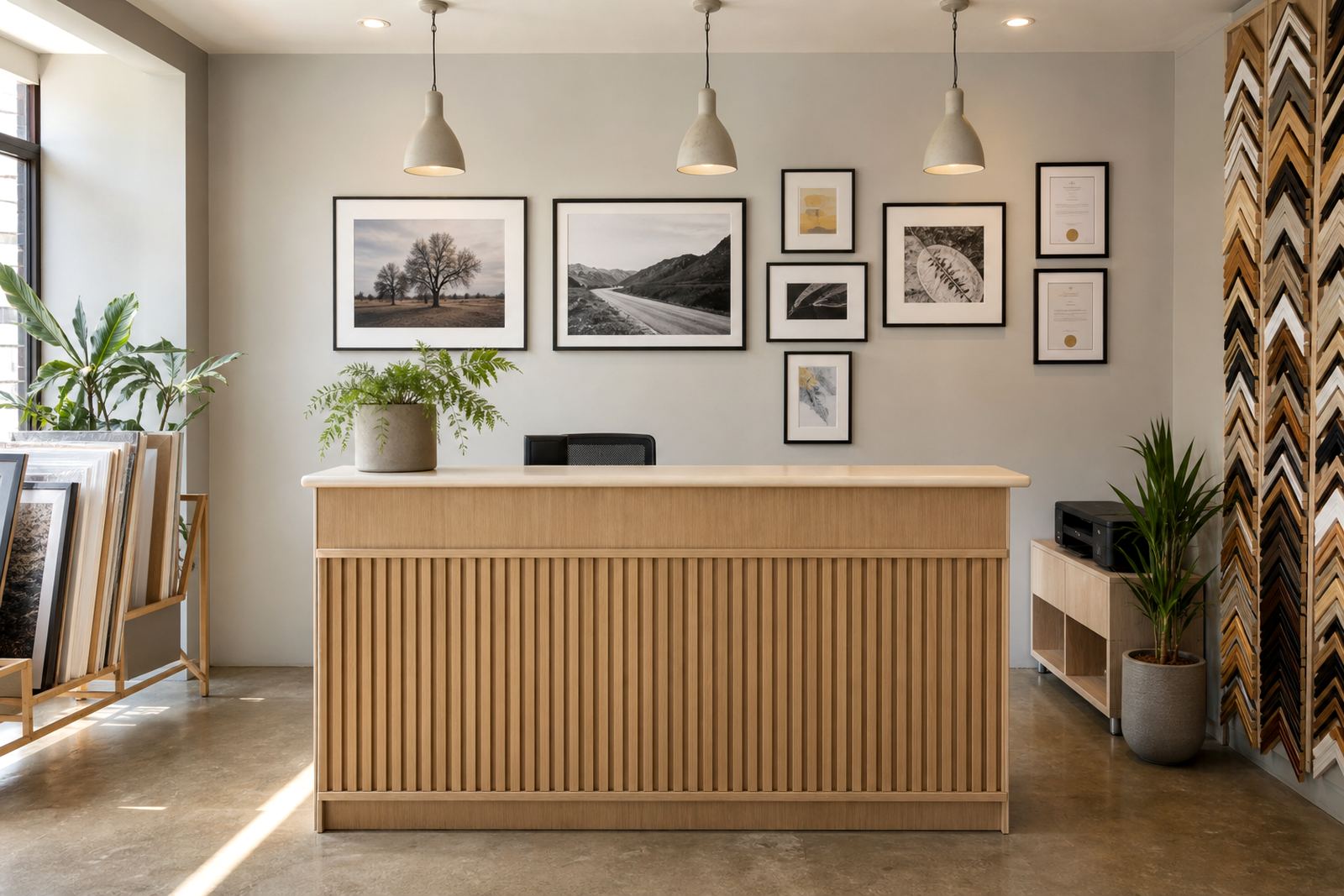

Framing That Matches the Print, Not Just the Wall
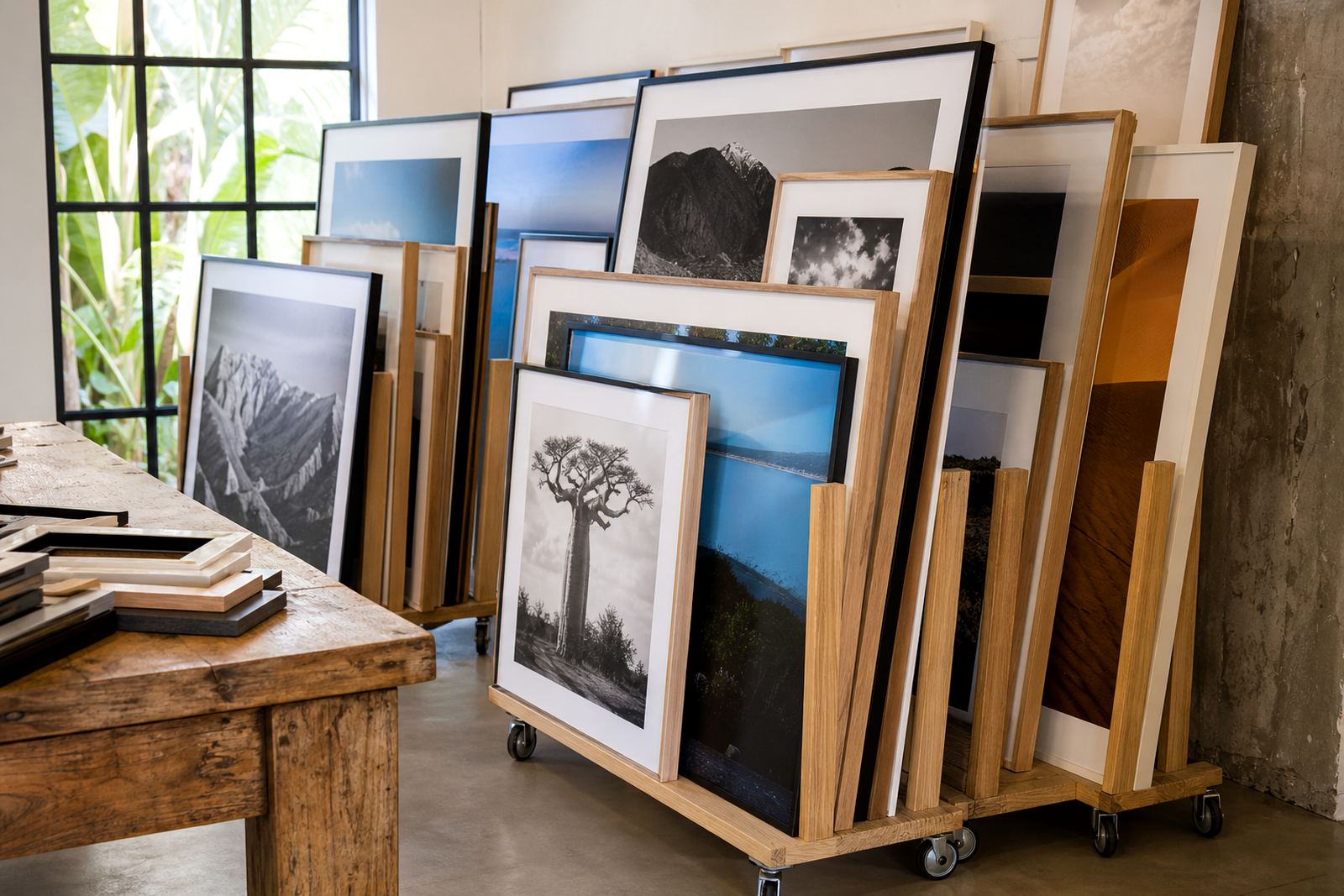
Photographers usually bring in a mix of work: fine art prints, fibre-based paper, canvas wraps, mounted exhibition pieces and test prints that are worth keeping. The right frame should protect the image and also support the tone of the photograph. A soft black frame can quiet a high contrast image, while a natural timber finish works well with warm portraits, landscapes and documentary work.
In Parkhurst, Johannesburg we often help clients compare a few samples under natural light before making a choice. That matters because a glossy print can read differently in a bright gallery than it does in a home in Midrand or a showroom in Sandton. Coastal humidity in Cape Town and Durban also affects the choice of backing materials and glazing, especially for work that will be handled often.
- Fine art prints suit narrower profiles and clean sightlines.
- Portraits often benefit from a wider mat to create breathing room.
- Busy, colour-heavy images usually work better with simpler frames.
- Black and white work can carry a stronger profile or a deep mount.
Typical Framing Setups For Photographers
The best setup depends on the print size, paper type and where the piece will hang. For exhibition runs, many photographers prefer a consistent frame family so the whole series feels joined even when the images vary. For client portraits or limited editions, a more personal finish may be better. We also help with reframing older work when an image needs a cleaner presentation for resale or re-display.
Common equipment and finishing combinations include mounts cut to exact window sizes, acrylic or glass glazing, backing board, hanging wire and conservation tape where required. For larger pieces, canvas stretching and mirror framing can also be useful in a studio or hospitality setting. If a print has already been mounted, we can often work around the existing format and improve the final look without changing the image size.
- Archival mount board for prints that must stay flat and clean.
- Spacer systems for work that should not touch the glazing.
- UV glazing for pieces exposed to strong light.
- Shadow gaps or deep frames for a modern gallery feel.
Layout And Series Planning For Exhibitions
When photographers are preparing a series, layout matters as much as the individual frame. A good rule is to decide the visual language first, then keep it consistent across the body of work. This means choosing one or two frame finishes, one mount width and a repeatable sightline. It helps the viewing flow and keeps the installation tidy, especially in municipal or gallery spaces where hanging rules can be strict.
For a wall of ten or more images, we normally suggest measuring the wall and planning the spacing before production starts. That avoids expensive rework and keeps the collection balanced. If you are hanging in a home office in Rosebank or a reception area in Pretoria, think about sightlines, glare from windows and where people will stand. A piece at eye level may need different glazing and border widths than work placed higher up a wall.
- Keep horizontal and vertical spacing consistent across the series.
- Use a single frame finish when the images are linked by subject or tone.
- Allow for safe handling space if the work will be rotated often.
- Check the wall colour before confirming mat and frame colour.
Common Framing Mistakes We See With Photographers
One common mistake is choosing a frame before considering the paper. A cotton rag print, for example, often needs more room and better support than a standard photographic print. Another issue is glare. A glossy front can look good in the studio but become difficult to view in a gallery with strong light or near a window. We also see print edges pressed too tightly, which can mark the image over time.
Another error is overcomplicating the finish. When the photograph already has strong colour or texture, too much pattern in the frame can distract from the work. It is also worth checking the hanging hardware before collection. A heavy frame on a large print needs proper support and it should be installed correctly the first time, not after the wall has already been patched.
- Do not match every print to the same frame without considering the image.
- Avoid cheap glazing on work meant for long-term display.
- Do not forget how lighting changes the finish during the day.
- Do not size a mount by eye, measure it properly.
Budget Ranges For Single Prints And Small Runs
Budget depends on size, glazing, mount depth and frame finish. In South African Rand, a simple ready-made solution for a smaller photograph can start around R350 to R750, depending on size and finish. A custom framed print with a mount and standard glazing often sits in the R900 to R2 500 range. Larger exhibition pieces, conservation materials or deep frames can move beyond R3 000, especially if the work needs specialist handling or installation.
For photographers framing a small run of images, it can help to group the work and decide on one standard structure. That often reduces waste and keeps production cleaner. If you are doing a gallery show in Cape Town, a hospitality install in Durban or client portraits in Midrand, ask for a quote that covers framing, collection and delivery, and hanging if needed. It is also sensible to allow a little extra for replacements, since one damaged print or cracked pane can hold up the entire set.
- Small ready-made frame: R350 to R750
- Custom framed print with mount: R900 to R2 500
- Large or specialist exhibition frame: from R3 000 upwards
- Collection, delivery and installation quoted separately where needed
How Bright Frames Supports Photographers Across South Africa
Our Parkhurst studio works with photographers from Johannesburg, Pretoria, Sandton, Rosebank, Midrand, Cape Town and Durban. Some clients come in with one print, others arrive with a full exhibition set and a tight deadline. Either way, the process is the same: talk through the image, measure properly, choose a frame that suits the work and confirm the finish before production starts.
Sipho Maseko and the team keep the service practical. Naledi Khumalo manages the studio flow, Pieter van Wyk oversees the framing detail, and Ayesha Patel helps with design choices when a piece needs a more careful eye. Thabo Ndlovu handles production, while Lerato Molefe keeps clients updated through the enquiry form on our contact page. If your work needs a clean presentation for a show, portfolio, home or gallery wall, we can help you frame it properly the first time.
Photographs deserve a frame that respects the image and the paper. Get that right and the print will hold its own, whether it is going into a home in Parkhurst or a gallery wall in Cape Town.