

Why artists come in with more than just a picture
Framing for artists is usually about presentation, protection and saleability at the same time. A paper work on cotton rag, a limited edition print, a mixed media piece or a stretched canvas all need different handling. Some works need the frame to disappear, others need a stronger border so the image can breathe. In Johannesburg, where dust and dry air are common for much of the year, the right build also helps keep the work cleaner for longer.
We work with artists who are preparing pieces for a group show, a gallery submission, an open studio weekend or a collector sale. The choice often comes down to how the work should read from 1 metre away, then again from across a room. That is where frame width, mount colour, glazing and spacing matter. One small decision can change the whole look of the piece, and sometimes the final price too.
- Works on paper usually need mount board, glazing and a neat sealed backing.
- Canvas pieces can be stretched, framed float-style, or left unglazed depending on the finish.
- Mixed media may need extra depth, spacer strips or a custom internal build.
- Large works should be checked for transport weight and wall support before framing.
The usual set-up: mounts, glazing, stretchers and backing
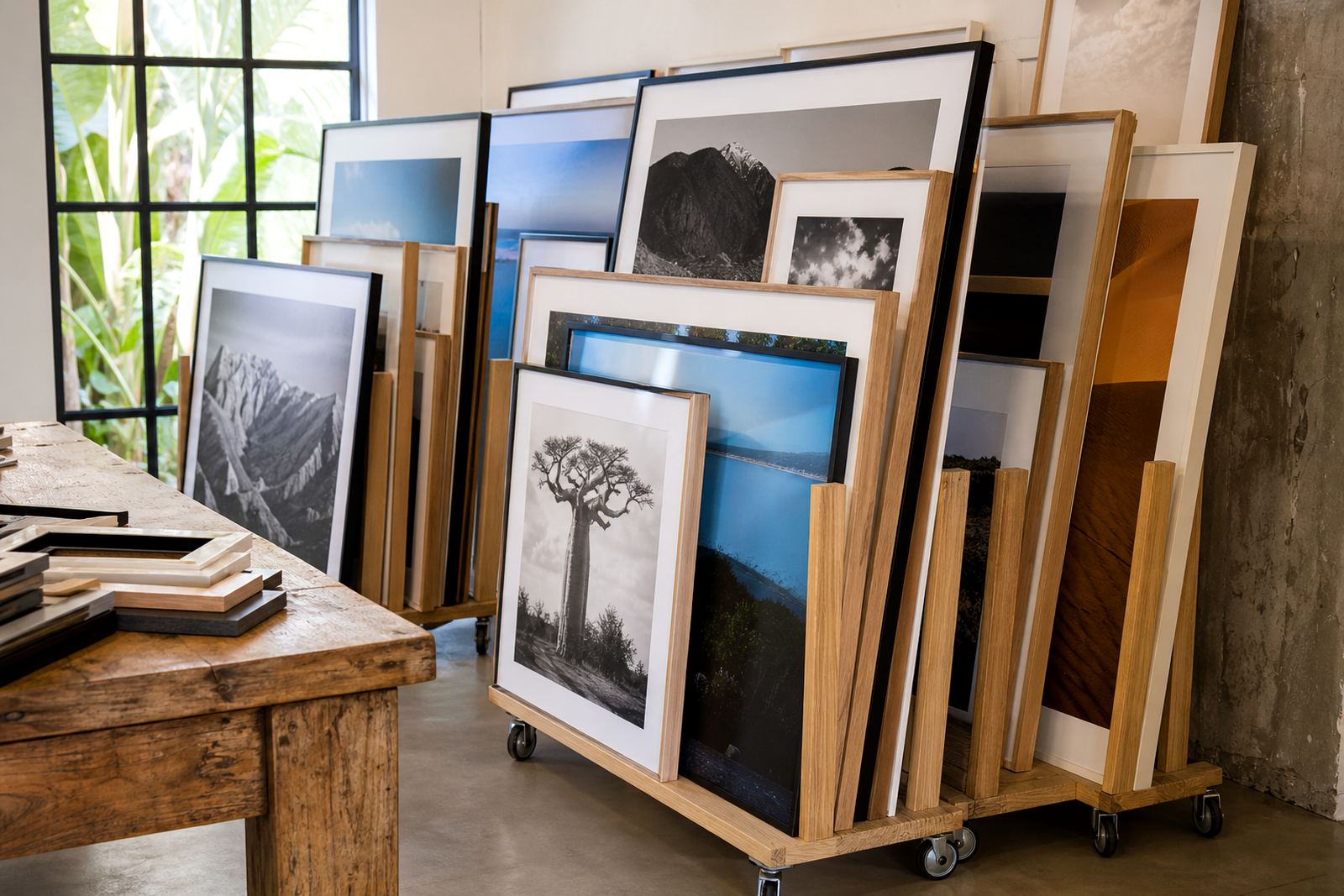
A typical artist framing set-up might include a frame profile, conservation or standard mount board, acrylic or glass glazing, hanging hardware, backing board and corner support. For paper artworks, we often start with mount cutting so the opening suits the image exactly. For canvases, the first question is whether the work needs stretching, re-stretching or a float frame. If the canvas has slack edges, we can tighten it before the frame is fitted.
When a work is going into a gallery, the finish has to look clean from every angle. That means the back of the frame matters as much as the front. We seal dust out where needed, check the hanging point, and make sure the package is ready for a quick install. For coastal areas like Durban or Cape Town, we also talk about moisture and corrosion, because salty air can affect fittings over time.
- Mount cutting for prints, drawings and photographs
- Canvas stretching and re-stretching on timber bars
- Frame repairs for damaged corners or loose joints
- Glass replacement for broken or scratched glazing
- Mirror framing service for studio, office or home display pieces
Choosing the right frame style for the work
The best frame is the one that supports the artwork without fighting it. A thin black profile can suit a charcoal portrait or a minimalist print. A natural timber finish often works well for warm colour palettes, still life work or pieces with handmade texture. If the artwork has a strong edge detail, a float frame may be better than a deep mount. For bright contemporary work, a clean white border can help with contrast and give the eye somewhere to rest.
We usually ask where the piece will live. A work for a bright Sandton apartment may need a different finish to one destined for a gallery wall in Rosebank or a reception area in Midrand. The wall colour, light levels and viewing distance all matter. If the room gets hard sunlight, we may suggest glazing that helps reduce reflection. If the piece will travel around South Africa for exhibitions, we think about weight and durability too.
- Keep bold frames for work that can carry them, not every piece needs a strong border.
- Use deeper profiles for canvases and textured art so the work sits properly.
- Choose neutral mounts if you want the artwork to stay the focus.
- Ask how the piece will be lit, because glare can ruin a good finish.
Common mistakes artists make before framing
The biggest mistake is waiting until the last minute. Framing takes planning, especially if there are several works for one show or if the pieces are not all the same size. Another common issue is bringing in artwork with no measurements, loose edges or no clear idea of how it will be hung. That slows the process and can affect the finish. We also see artworks framed with mounts that are too narrow, which makes the piece look cramped and unfinished.
Another problem is choosing a frame only from a sample photo, then realising the colour clashes with the work in daylight. In studio lighting a finish may look fine, but under natural light it can shift. Artists sometimes overlook how much a mount colour changes the balance of the whole piece, especially with white paper or pale backgrounds. If a work is going into a public space, check the installation method as well, because weak hanging hardware is not worth the risk.
- Bring the artwork flat, clean and signed off before framing starts.
- Measure the outer size and the visible image area, not just the sheet size.
- Plan for framing lead time before exhibition dates.
- Do not assume every frame suits every medium.
Budget ranges for artist framing in Rand
Costs depend on size, materials and the level of finish. A simple ready-made frame with basic mounting may suit smaller prints and study pieces. Custom framing for original works, framed editions or exhibition pieces will cost more because of the cut, labour and material choices. As a general guide, smaller framed works can start from around R450 to R950, mid-size custom pieces often fall between R1 200 and R2 800, and larger or more detailed jobs can run from R3 000 upward.
If you are framing a series, it helps to standardise the sizes. That keeps costs easier to manage and can make hanging simpler in a gallery or home setting. For artists selling work, the frame cost should be matched to the sale price and the audience. A piece going to a collector in Pretoria may justify a more polished finish than a quick display piece for a student show. We can talk you through the trade-offs before anything is cut.
- Simple ready-made options work well for prints, proofs and short-term display.
- Custom mounts, glazing and float builds increase the price.
- Large works, mirror framing and specialist finishes need a higher budget.
- Collection and delivery can be arranged for framed work going to studios or galleries.
Planning a framing run for a show or studio wall
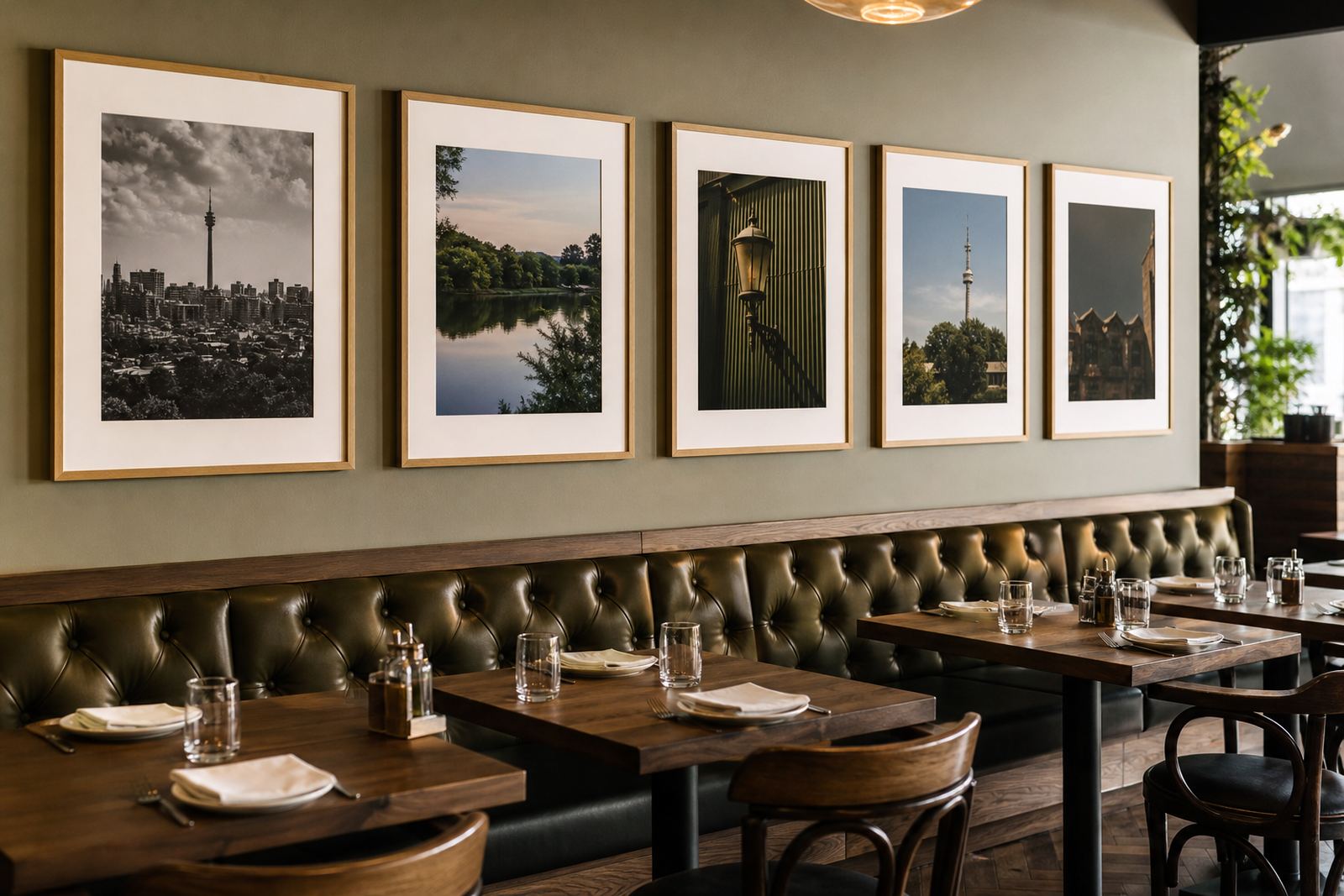
When artists are preparing several works at once, the layout should be planned before the first frame is cut. Think about which works belong together, which sizes repeat and whether the whole set should share one frame colour. That can save time and create a stronger presentation on the wall. We often help with gallery hanging and artwork installation, so the framing can be planned with the final wall in mind from the start.
For studios across Johannesburg, Pretoria, Midrand, Sandton, Rosebank, Cape Town and Durban, the easiest process is to send the measurements and a clear note on the medium through the enquiry form on our contact page. From there we can advise on frame style, mounting and finish, then plan collection or delivery. If you are framing for a show in a city with load-shedding, it also helps to avoid leaving work unprotected near windows or damp storage areas during prep. A little planning saves a lot of stress, and usually a few Rand too.
- Group similar works by size to keep the hanging line consistent.
- Choose one or two frame finishes for a cleaner overall presentation.
- Allow time for repairs, stretching or re-mounting if the work needs it.
- Keep the wall plan and the frame plan aligned before delivery day.