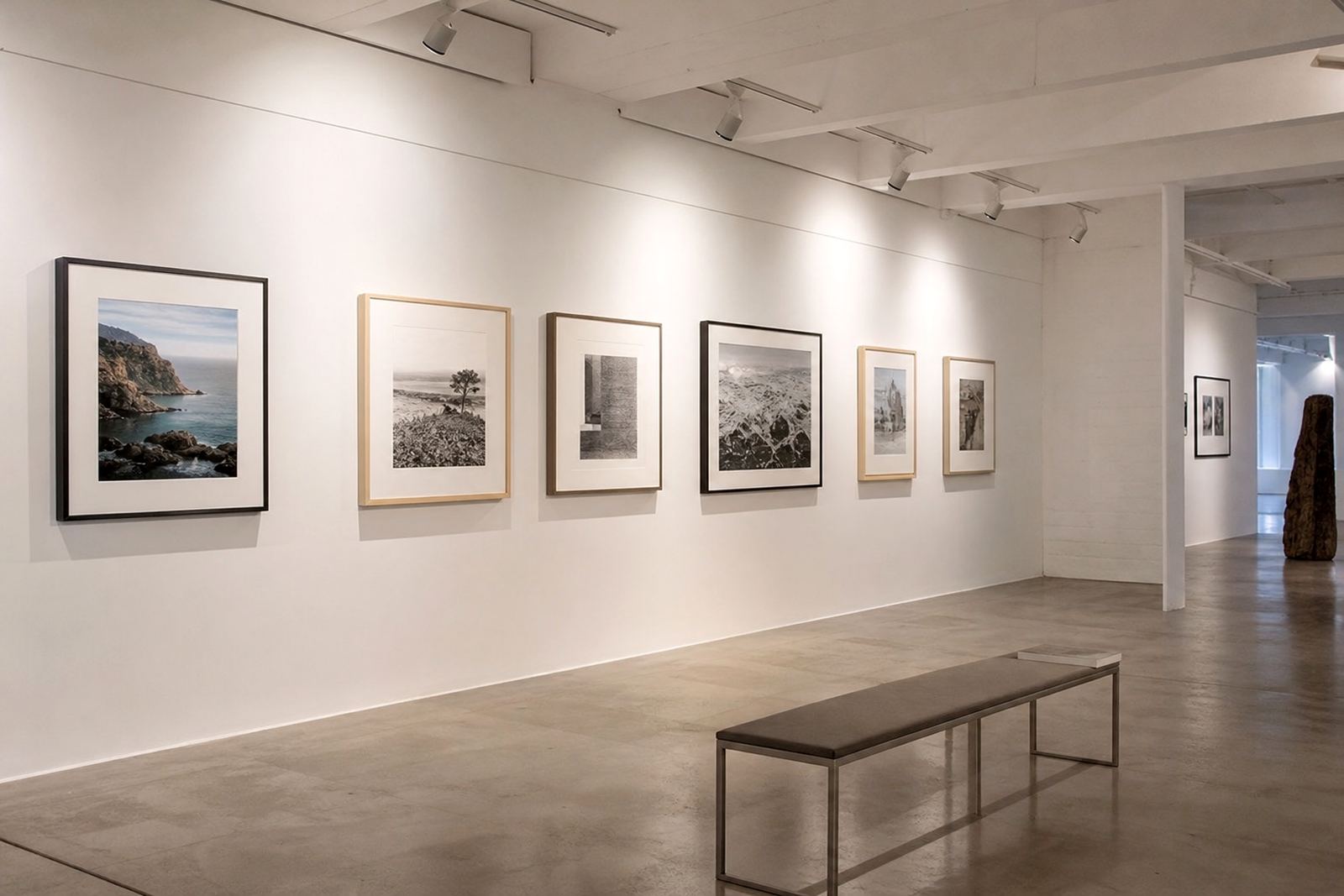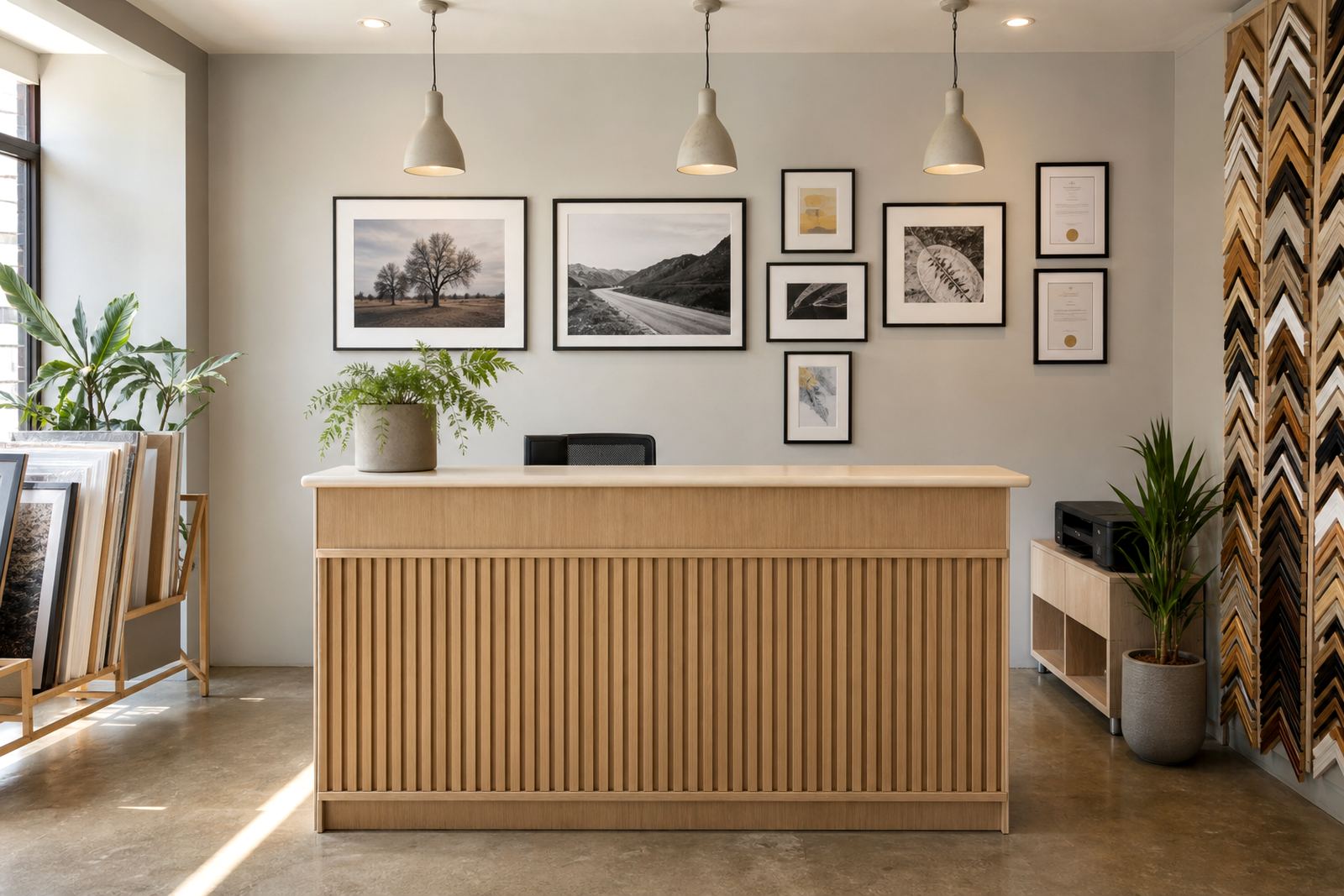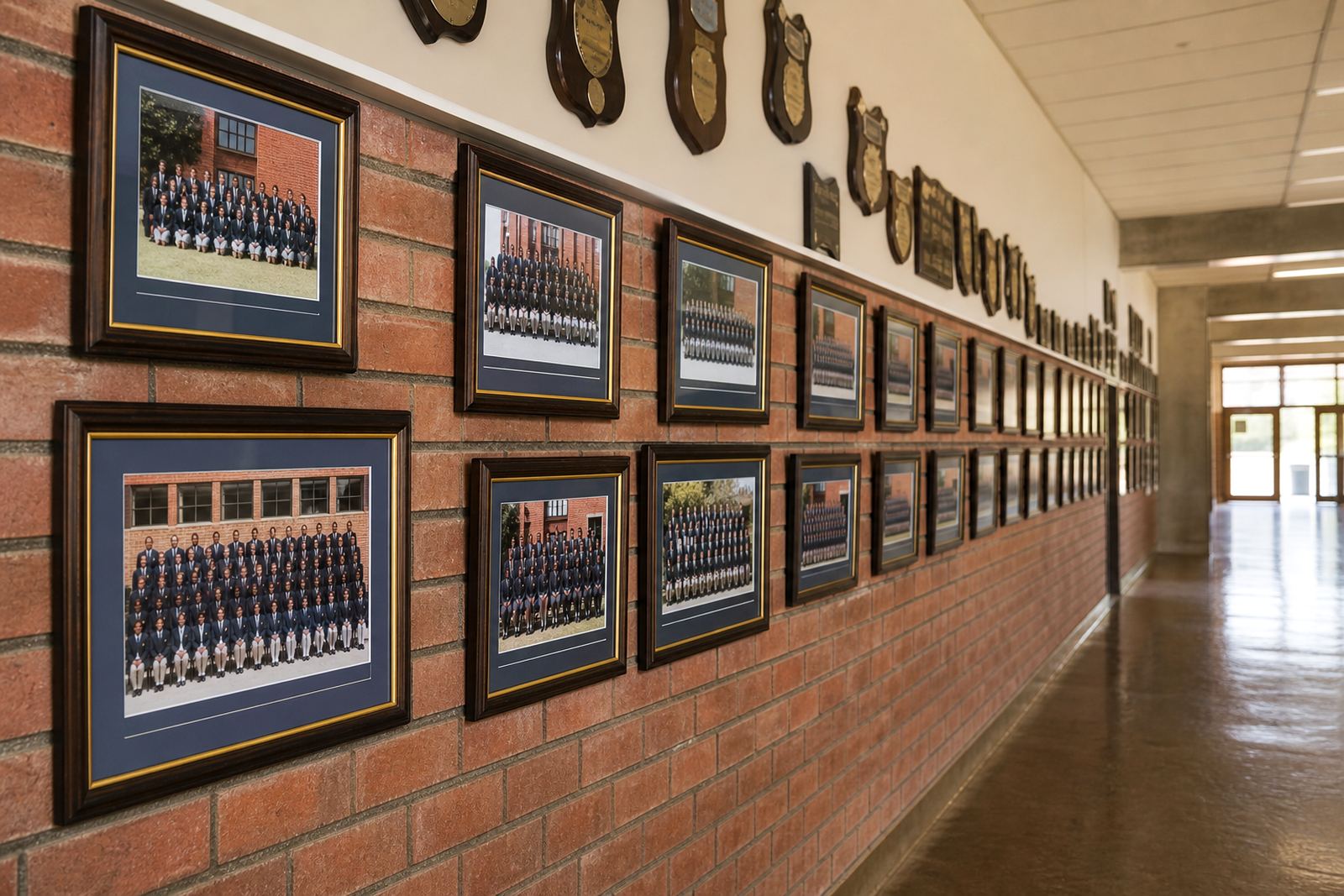

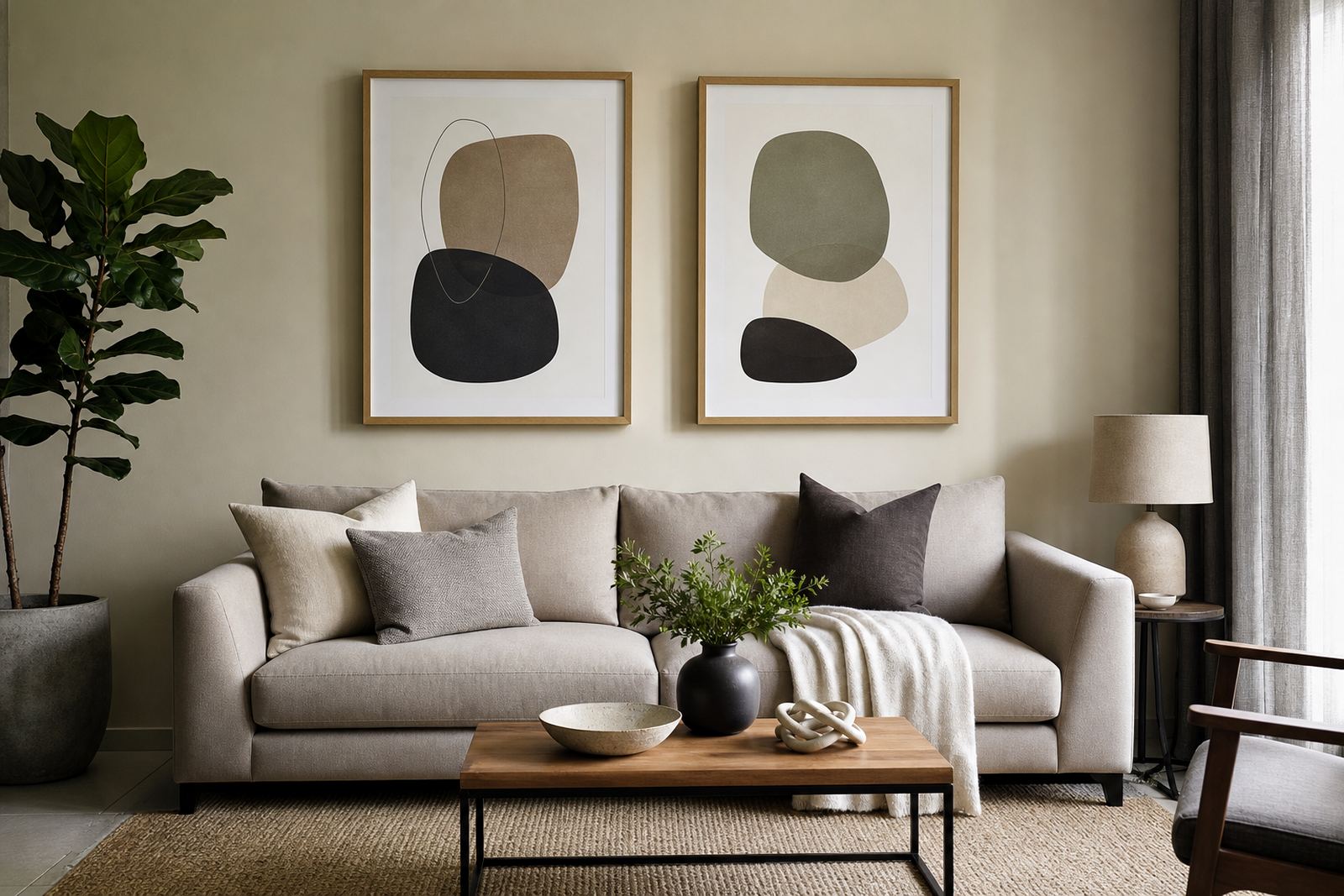
Why staged rooms need the right frame choice
Staging is not about filling walls for the sake of it. It is about giving buyers a clear sense of scale, light and how a room can be lived in. A well chosen frame can quieten a blank wall, soften a hard corner or give a lounge a more complete feel without making it look overdone.
In Parkhurst, Sandton, Rosebank and across Johannesburg, we often see homes where the artwork is too personal, too small for the wall, or framed in a style that fights with the floors and fittings. The right framing keeps attention on the property itself. In Cape Town and Durban, where humidity can be a factor, the frame materials and glazing also matter because warping and moisture marks can spoil a viewing fast.
- Use frames that suit the room size and ceiling height
- Keep colours neutral for broad buyer appeal
- Choose materials that can handle transport between show days
- Protect prints and photos from glare and dust
Typical staging set ups for a show home
A staging set does not need many pieces. In most homes, a small selection placed with care works better than a crowded wall. For a sectional sofa wall, a single large framed print or a neat trio often looks better than a jumble of mixed sizes. In an entrance hall, one strong statement frame can set the tone and make the space feel considered.
For letting units in Pretoria or Midrand, the aim is usually clean and simple. For higher end sales in Johannesburg or Cape Town, a more tailored look may suit, but it still needs to feel neutral enough for different buyers. We guide clients on whether to use custom framing or ready-made frames, depending on the timeline and the number of rooms to stage.
- Single large frame for a lounge or main bedroom
- Two or three coordinated frames for a passage or staircase
- Mirror framing for entrances, guest loos and narrow halls
- Canvas stretching for modern artwork that needs a lighter look
- Ready-made frames for quick turnaround staging jobs
Layout planning that helps a property photograph well
Good framing for staging starts with the wall plan, not the frame shop counter. Measure the wall, note where windows throw light and check what the camera will see from each doorway. A frame that looks balanced in person can feel too high or too small in photographs, so placement has to be planned with the viewing angles in mind.
For galleries or styled homes with open-plan living, a strong horizontal piece can widen the room visually. In tighter spaces, vertical pieces can help draw the eye up. We also look at the paint colour, flooring tone and nearby furniture so the frame does not clash. A pale oak look might suit a coastal Durban apartment, while a cleaner black or white profile may work better in a modern Pretoria townhouse.
- Hang to eye level where possible, not too high
- Leave equal spacing between grouped frames
- Match frame depth to the wall and nearby furniture
- Avoid reflections from windows, downlights and sliding doors
Common mistakes that put buyers off
The most common problem is choosing frames that are too personal. Bright colours, busy matting and sentimental family photos can make buyers feel like they are stepping into someone else’s life rather than imagining their own. Another issue is poor sizing. A tiny frame on a large wall can make the space feel unfinished, while an oversized one can crowd a room.
We also see damage caused by rushed handling during staging moves. If frames are moved from one property to another, the corners chip, glass marks up and the backings loosen. Coastal humidity can worsen this if the work is stored in garages or damp storerooms. On the practical side, some staged pieces are hung with nails or hooks that are not suited to the wall type, which can leave unwanted holes once the property is sold.
- Overly personal or themed artwork
- Frames that are too small for the wall size
- Clashing colours with tiles, carpets or cabinetry
- Poor hanging hardware for drywall, brick or concrete
- Reflective glass in bright rooms with harsh sunlight
Budget ranges for staged framing in Rand
Budget depends on the number of rooms, the finish required and whether you need custom work or ready-made frames. For a simple rental unit or starter home, a small staging package can be kept within a practical budget. For a higher value sale, more refined framing and installation may be worth the extra spend because the home presents better in photographs and at show days.
As a rough guide, ready-made frames for staging can start from around R250 to R850 each, depending on size and finish. Custom picture framing for a statement piece may range from about R950 to R3,500 or more, especially if you need conservation materials, mount cutting or specialist glazing. Canvas stretching, reframing or mirror framing may sit in a similar range depending on dimensions. Collection and delivery, plus installation in Johannesburg, Pretoria, Sandton or Midrand can be quoted once the item list is finalised.
For multiple units or full-property staging, it is usually better to price the room set as a group so there are no surprises later. That helps keep the project within the target figure and avoids unnecessary extras.
How Bright Frames handles staging work from Parkhurst
Our Parkhurst studio works with homeowners, estate agents, stylists and galleries across Johannesburg, Pretoria, Midrand, Sandton, Rosebank, Cape Town and Durban. Sipho Maseko leads the business, with Naledi Khumalo managing the studio flow, Pieter van Wyk on the technical framing side, Ayesha Patel on design advice, Thabo Ndlovu handling production and Lerato Molefe managing client care. That means staging jobs can move quickly without losing the personal service clients expect.
We help with custom framing, ready-made advice, mount cutting, canvas stretching, frame repairs, reframing, glass replacement, artwork installation, gallery hanging and mirror framing service. If a property needs a fast turnaround, we can work from a clear room list and a set of measurements. If the brief is more specific, we can guide the frame choice room by room so the final look suits the property, not just the artwork. Clients send through details using the enquiry form on our contact page, then we plan the order from there.