
What canvas stretching includes
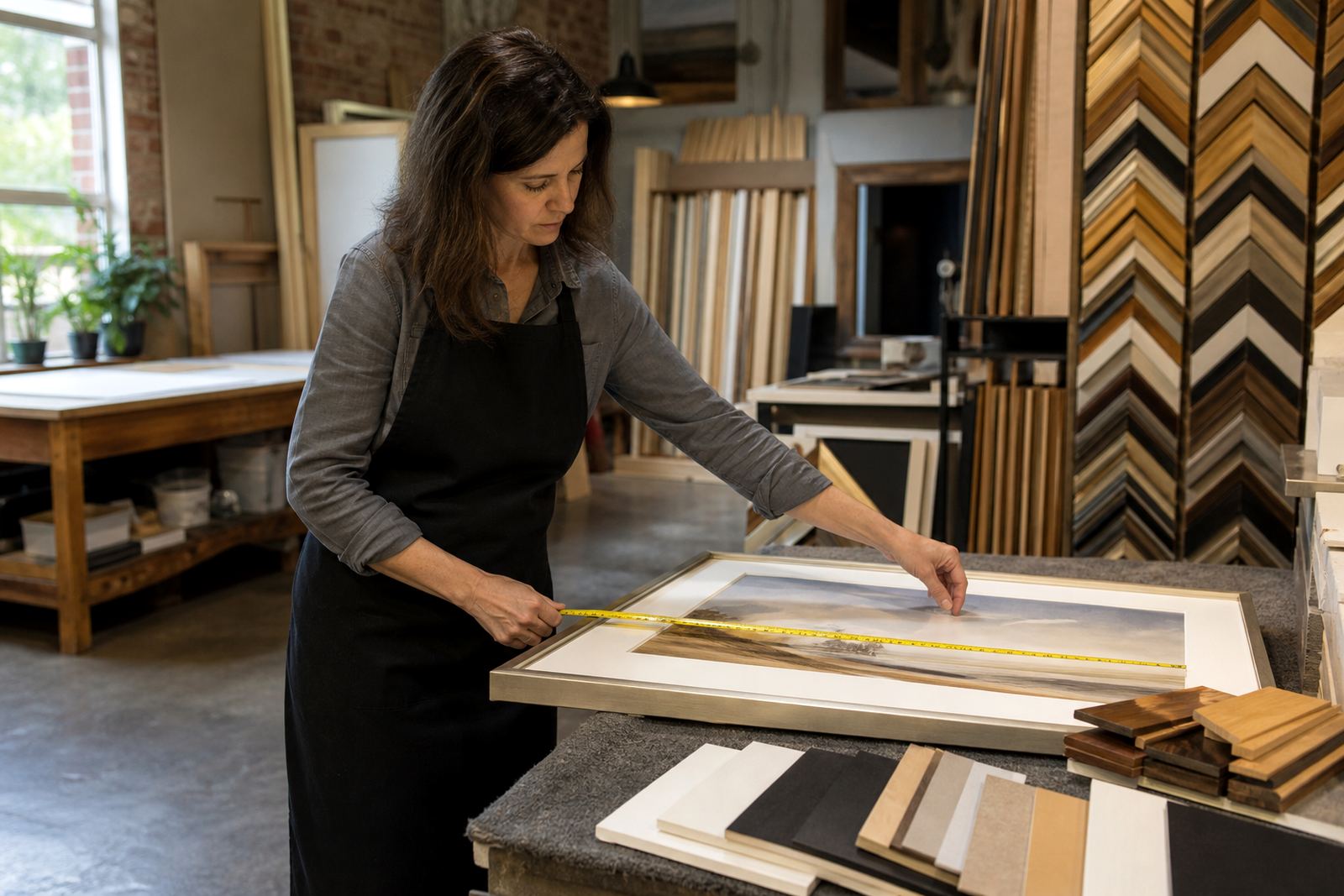
Our canvas stretching service is set up for original artwork, prints on canvas, exhibition pieces and family pieces that need to sit flat and square. We work from our Parkhurst studio in Johannesburg and assist clients in Pretoria, Midrand, Sandton, Rosebank, Cape Town and Durban through the enquiry form on our contact page. The job starts with measuring the artwork, checking the weave and paint surface, then selecting stretcher bars that suit the size and finish required. For larger pieces, we also check whether centre bars or bracing are needed to keep the frame true over time.
Every stretch is done with the aim of protecting the image area and keeping the edges neat for hanging or tray framing. We can stretch a new canvas, re-stretch a loose one, or remove an older canvas from damaged supports and fit it again. If the artwork has been rolled, slightly marked or has softened in humidity, we will advise on the safest method before work begins, because not every canvas should be pulled in the same way. A quick inspection saves trouble later.
- New canvas stretching for oil, acrylic and mixed media works
- Re-stretching of slack, wavy or damaged canvases
- Corner folding and back fastening for a clean finish
- Optional spacer allowance for tray framing or float mounting
How we stretch a canvas step by step
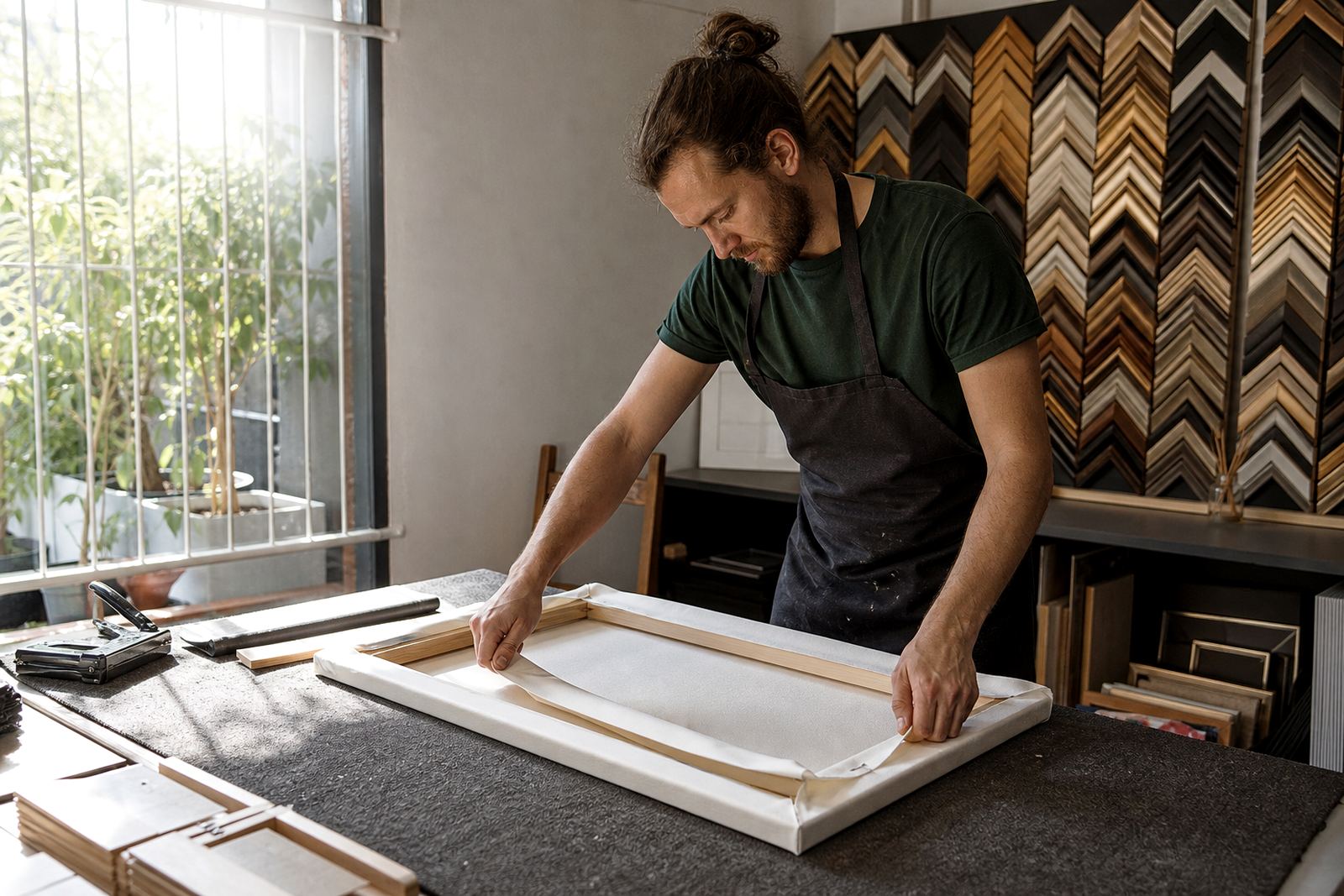
The process is practical and careful from the first check to the final fit. We start by confirming the finished size, because even a few millimetres can affect framing and hanging. The stretcher bars are cut and joined to size, then squared and checked for twist. After that, the canvas is positioned and tensioned in stages so the pull stays even on all sides. This matters on larger works, especially where the surface needs to stay taut through load shedding, heat and the dry inland air we get in Johannesburg.
Once the canvas is fixed, we inspect the front for pull marks, corner folds and surface distortions. Where needed, we adjust the tension again before the piece is handed over. For gallery work, we can also set the back neatly so hanging hardware and labels sit properly. If the canvas has fragile paint or a textured finish, we take a slower approach rather than forcing the fabric tight in one go. That keeps the work looking right and avoids cracking at the edges.
- Measure and confirm final size before cutting bars
- Assemble, square and brace the stretcher frame if needed
- Stretch in stages to keep tension even across the surface
- Inspect edges, corners and face before release
Sizes, materials and working specs
Bright Frames handles small canvas panels right up to oversized pieces for foyers, offices and galleries. We regularly work with standard portrait and landscape formats, but can also stretch custom sizes when a piece does not match a common frame dimension. For coastal homes in Cape Town and Durban, we often advise on materials that cope better with humidity, while Johannesburg and Pretoria clients usually want a cleaner, tighter finish for interior display. If the work is going into a tray frame, we will allow the spacing needed so the canvas sits neatly without rubbing.
We use stretcher bars in suitable profiles for the size of the work, and can advise on deeper edges for float display where the side of the canvas is meant to be seen. Smaller works often suit lighter bars, while larger pieces may need stronger support to stop bowing. If a canvas is going to be handled frequently, such as in a gallery, we will suggest a finish that makes installation and later removal simpler. The aim is not only to make it look good, but to keep it stable in real use.
- Custom sizes available for non-standard artworks
- Options for standard, deep and gallery-style stretcher profiles
- Allowance for tray framing, float display and spacer use
- Advice for humidity-prone areas and larger wall pieces
Turnaround times and pricing approach
Turnaround depends on size, quantity and whether the canvas needs repairs before stretching. A single small or medium piece can often be completed quickly, while larger or more delicate works take longer because each corner and edge must be checked by hand. For gallery openings, bulk orders and recurring artist work, we can plan production in batches so the timing is easier to manage. If the job is urgent, let us know in the enquiry form and we will tell you what is possible without rushing the finish.
Our pricing is quoted according to the size of the canvas, the stretcher profile, whether bracing is needed and whether the work needs re-stretching, repairs or added hanging hardware. We do not price by guesswork. Each piece is assessed first so you know what you are paying for before work starts. That keeps things clear for homeowners, photographers and galleries alike, and avoids surprise charges at collection. For larger orders across Johannesburg, Pretoria, Sandton or Midrand, we can quote for collection and delivery as part of the job.
When a canvas needs maintenance or re-stretching
Canvas can loosen over time, especially in rooms with direct sun, high humidity or aircon that runs hard in summer. If you notice ripples, sagging corners or a dull drumming sound when you tap the back lightly, it may be time for a re-stretch. Paintings that travel often, or are kept in storage between exhibitions, also need regular checks. In our experience, people leave it too long and then the edge damage becomes harder to sort out, so it is better to catch it early.
For most home display pieces, an inspection every 12 to 24 months is sensible. Gallery works and pieces in changing conditions should be checked more often, especially after transport or seasonal humidity shifts. If the canvas has been packed away, we can also assess whether the fabric has taken a set, or whether the stretcher bars need replacing. Small issues are cheaper to fix than a badly warped frame later on.
- Check for ripples, slack corners and visible bowing
- Inspect after moving, storage or a change in climate
- Re-stretch early rather than waiting for edge damage
- Replace warped supports when the frame no longer holds square
Why artists and galleries use Bright Frames
Our Parkhurst studio is run by Sipho Maseko with a team that includes a senior framing specialist, design consultant and production lead, so the work is handled by people who do this every day. That matters when a canvas is part of a sale, an exhibition or a personal collection that needs to look right the first time. We guide clients through size choices, edge treatment and framing options, and we keep the process straightforward from enquiry to collection. You do not have to know the jargon, we will explain what suits the piece.
We also understand that different spaces need different finishes. A gallery in Cape Town may want a clean float look, while a home in Sandton may need a more traditional wrapped edge for a softer room setting. If the piece is being installed on site, we can factor in wall space, hanging height and the final frame type. The result is a canvas that sits properly, looks finished and stays that way for years.
Key facts
| Service type | Canvas stretching for artworks, prints and gallery pieces |
|---|---|
| Base | Parkhurst, Johannesburg |
| Areas served | Johannesburg, Pretoria, Midrand, Sandton, Rosebank, Cape Town and Durban |
| Typical formats | Small panels, standard sizes and oversized custom canvases |
| Support options | Standard bars, deep bars, bracing and tray frame allowance |
| Maintenance check | Every 12 to 24 months, or sooner after transport or humidity changes |