
The brief from a Cape Town gallery team
A gallery team in Cape Town approached us with a clear request: prepare and hang a mixed body of works so the display read as one collection, not a jumble of individual pieces. The artworks included photographs, prints and a few mounted works, all needing a calm, uniform presentation that would suit a contemporary exhibition space.
The client wanted a neat finish with light, consistent frames and placement that would keep sight lines clean from the entrance through to the back wall. They also needed practical support with handling, because some pieces were sensitive to finger marks and one or two had irregular dimensions that made standard hanging awkward. We were asked to help with the framing choices, the install plan and the final gallery layout.
- Client type: private gallery in Cape Town
- Display type: mixed media exhibition with framed works and mounted pieces
- Primary goal: consistent framing and a tidy hanging pattern
- Finish requirement: low visual noise, no heavy profiles
What made the site tricky
Coastal conditions were part of the brief. The gallery sits in an area where humidity can move paper and mounts, so we needed materials that would stay stable during installation and after the show opened. The room also had strong afternoon light from one side, which meant glazing choice and positioning mattered. We also had to work around a tight install window, since the team was preparing for a Friday opening and could only give us a short run of access time.
Another practical issue was consistency. A few works arrived in different sizes and with uneven borders, so the hanging plan had to hide those differences without forcing the whole wall into a rigid grid. We measured every piece on site, checked the wall runs and marked the centre points before anything went up. That slowed things down slightly, but it kept the alignment true and saved rework later.
- Constraints: coastal humidity, afternoon glare, short install window
- Risk points: mixed artwork sizes, uneven borders, handling sensitivity
- Site condition: gallery walls with multiple runs and limited prep time
Framing and hanging work we supplied
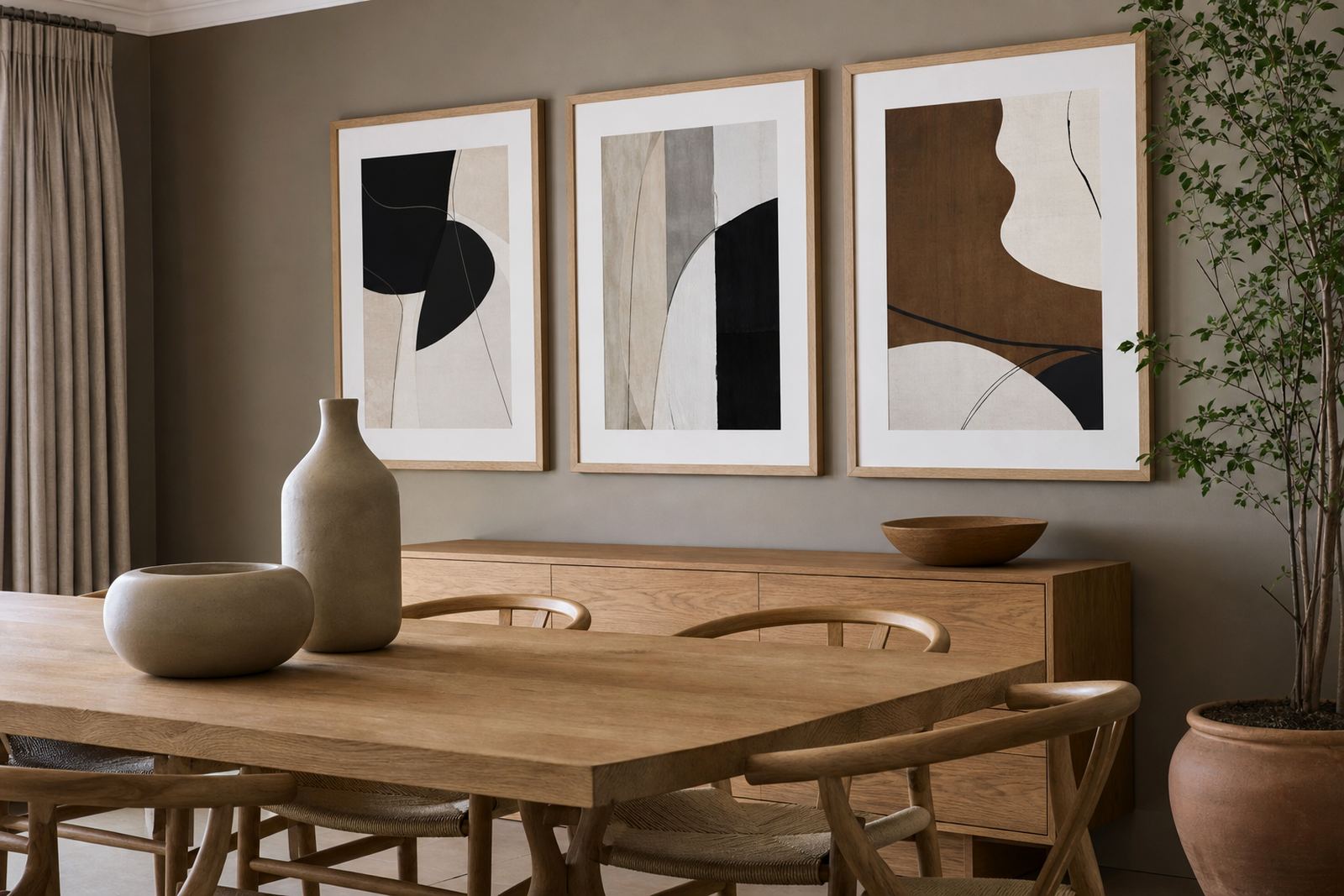
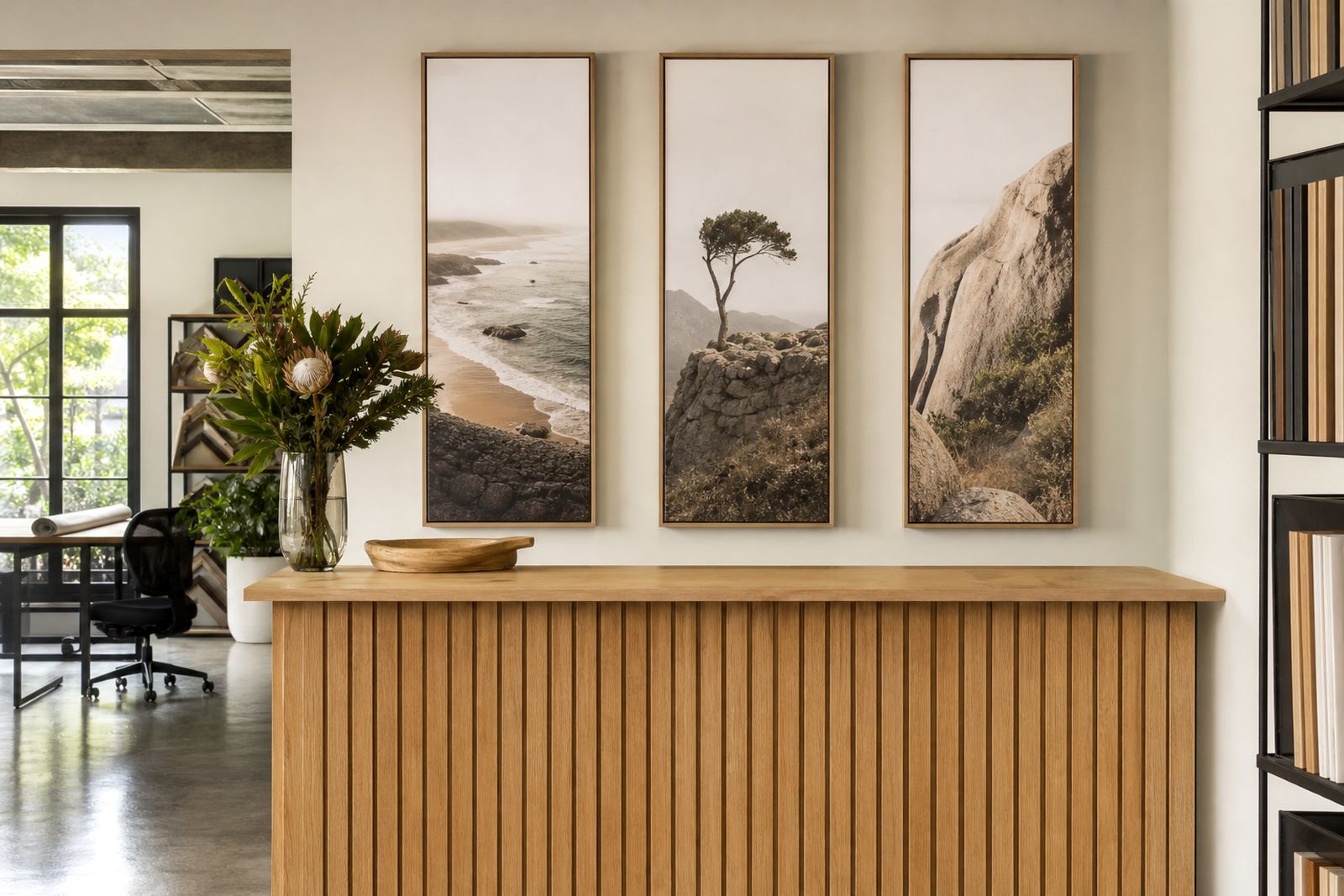
We supplied a combination of custom framing and ready-made frame sizes selected to match the exhibition palette. The look was restrained: slim profiles, neutral tones and clean internal spacing so the work carried the visual weight. For the more delicate pieces, we used conservation-minded mounts and glazing choices suited to the room conditions. Where a standard frame size worked, we used it to keep the budget sensible and the timeline moving.
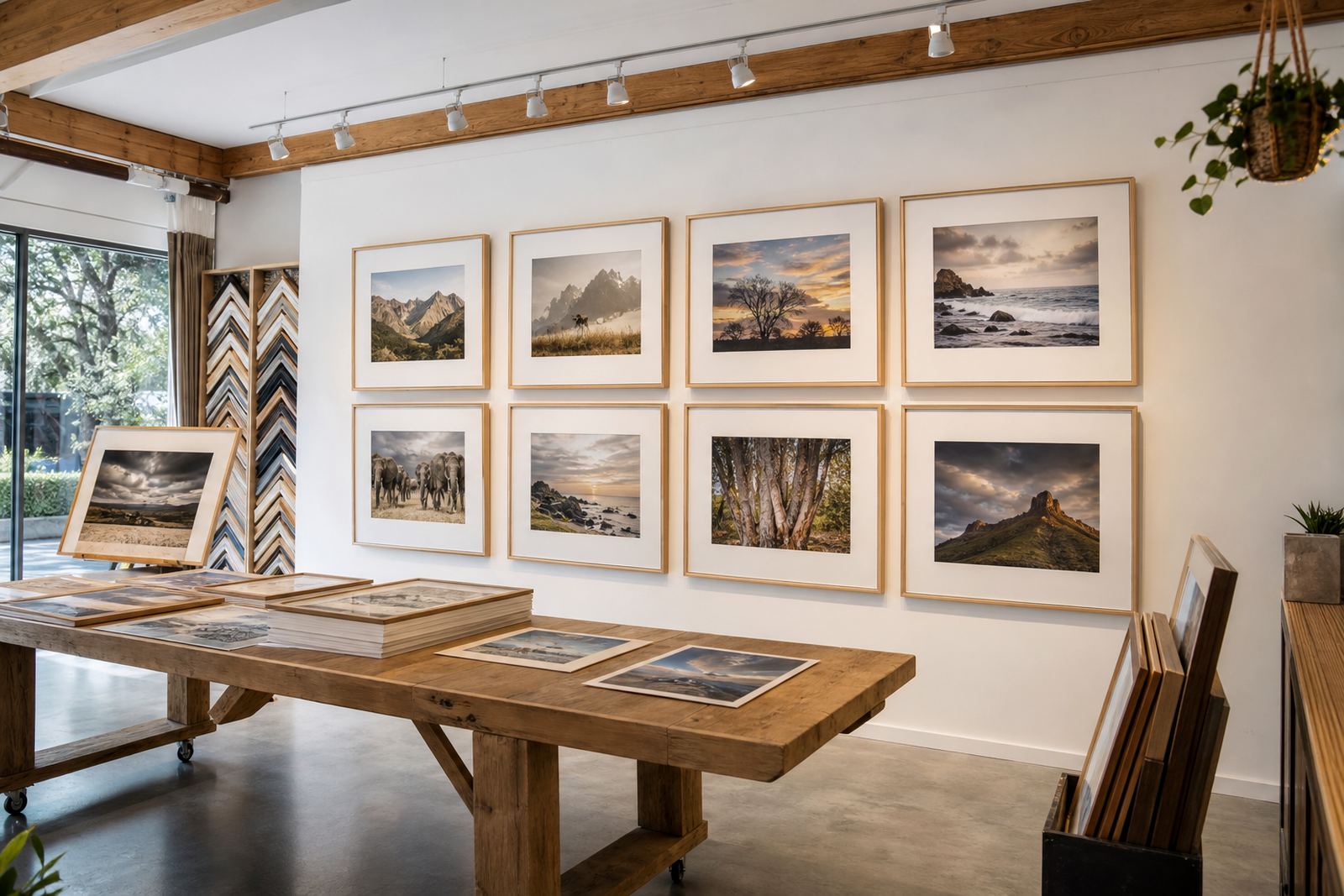
The actual scope covered framing checks, mount cutting, glass replacement on one damaged piece, reframing for a work that had shifted in its old frame, and the full gallery hang. We also supplied hanging hardware suited to the wall type and the weight of each piece. One small but important detail was the spacing between works, which we kept consistent at 80 mm to 120 mm depending on size and wall length, so the display felt ordered without becoming stiff.
- Custom frame profiles matched to the exhibition palette
- Mount cutting for works that needed a cleaner border
- Glass replacement for one damaged item before install
- Hardware selected per artwork weight and wall surface
- Spacing kept consistent across the full run of walls
How the install was handled over two weeks
The project ran over two weeks from first measure-up to final handover. Week one was for consultation, measurements, frame selection and preparation in the studio. We confirmed dimensions, checked which pieces needed new glazing or reframing, and pre-assembled the work that could be completed before site access. Week two was dedicated to delivery, layout marking and installation on site.
On installation day, our team started with a wall-by-wall plan and worked from the main sightline outwards. That helped the exhibition read properly from the entrance. We checked level on every piece, adjusted the rhythm of the hang where needed, and made small spacing changes so the whole room stayed balanced. There was a little movement on one wall due to the existing hooks, but we corrected it on the spot and kept the line true.
- Timeline: 2 weeks total
- Week 1: consultation, measuring, frame prep and workshop work
- Week 2: delivery, layout marking and installation
- Final step: level checks and spacing adjustments on site
The result on the gallery floor
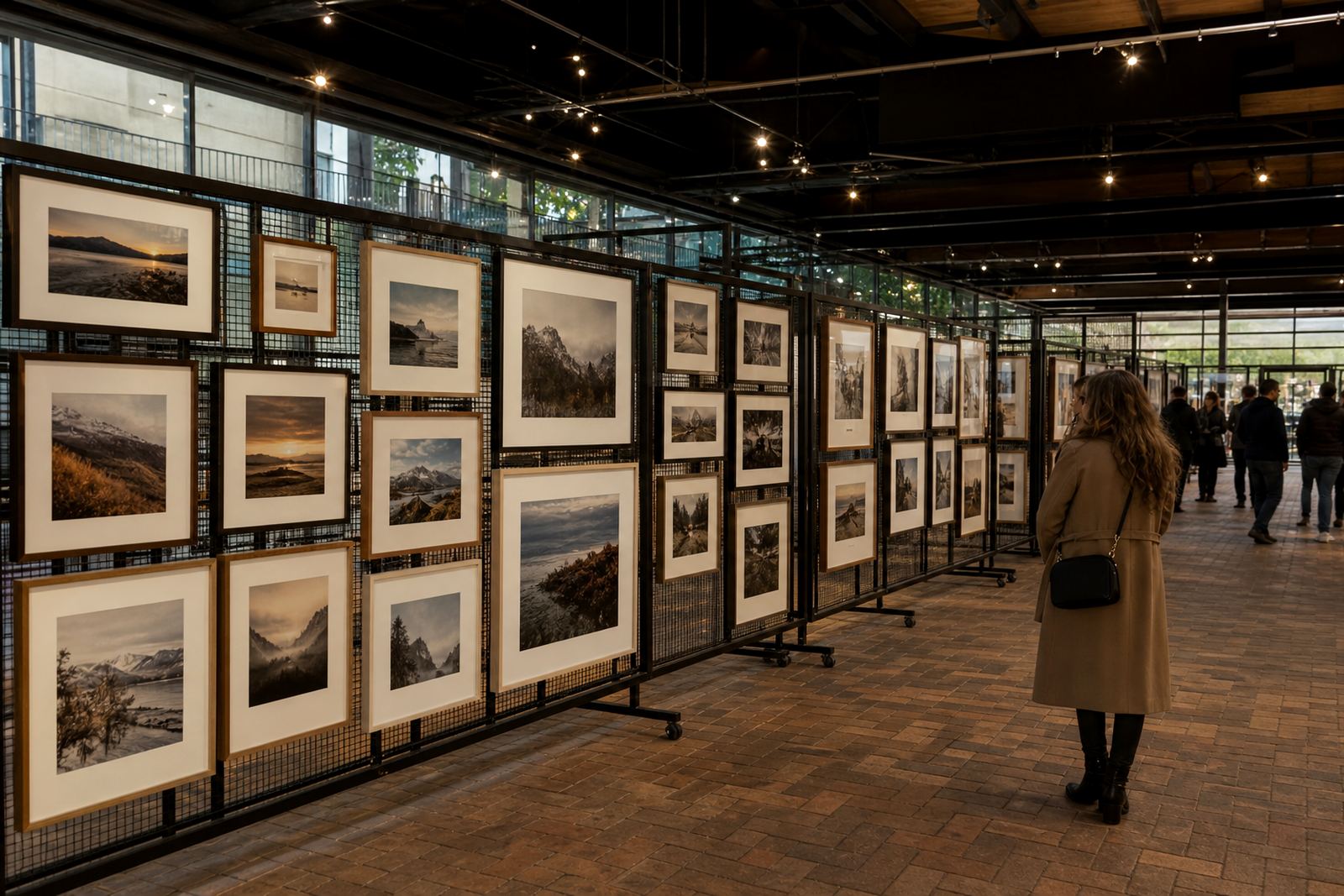
The finished exhibition had the calm, polished look the client wanted. Because the frames were consistent in tone and scale, the artworks could speak for themselves without competing materials pulling attention away. The room felt lighter and easier to move through, with each wall carrying a clear visual pace. The client was especially pleased that the display looked ordered without feeling overdone.
From a practical point of view, the hang also held up well during opening week. The coastal air did not create any noticeable warp in the mounted pieces, and the glazing choices helped keep reflections manageable under the gallery lights. The team told us the layout made it easier for visitors to follow the exhibition narrative, which was the point of the whole exercise.
- Outcome: refined, uncluttered exhibition presentation
- Benefit: stronger flow between works and easier viewing
- Performance: stable finish through opening week in coastal conditions
What we would repeat for a similar show
If we were doing a similar gallery hang again in Cape Town, we would keep the same order of work: measure first, confirm frame choices early, then pre-build as much as possible before site day. That approach saves time and reduces stress when the opening date is fixed. We would also continue using a mixed framing strategy, with custom work for the key pieces and ready-made options where the size allows it.
For a coastal exhibition, we would again pay close attention to glazing, mount board selection and the storage conditions before install. If the show had more natural light, we would consider a slightly stronger anti-reflection option on the most exposed walls. The main lesson from this project was simple: a good gallery hang depends on discipline in the details, not just good looking frames.
If your exhibition needs careful framing, measured spacing and a tidy install in Cape Town or elsewhere in South Africa, Bright Frames can handle the lot from the studio in Parkhurst through to delivery and hanging on site.
- Best practice: pre-plan sizes and sight lines before install day
- Material choice: match glazing and mounts to the room conditions
- Display method: mix custom and standard sizes where it makes sense
Key facts
| Project | Cape Town gallery hang |
|---|---|
| Client type | Private gallery |
| Town | Cape Town |
| Timeline | 2 weeks |
| Core scope | Custom framing, mount cutting, glass replacement, gallery hanging |
| Finish | Slim, neutral frames with consistent spacing |