
The corridor brief from a busy Durban hotel
The client was a mid-sized hotel in Durban looking to refresh several guest corridors without turning the work into a long disruption for rooms and housekeeping. They wanted framed artwork that would soften the long passageways, keep a consistent look from floor to floor, and hold up to trolley movement, luggage bumps and regular cleaning. The hotel team also wanted a finish that felt calm and tidy, not fussy, so the framing had to sit quietly with the existing wall colours and lighting.
Because the property is close to the coast, the framing had to account for humidity, salt in the air and the wear that comes with a full-occupancy site. We worked with the hotel’s facilities contact and interior representative to agree on standard frame sizes, a repeatable layout and sensible fixings for the wall type. The aim was a polished result that could be maintained easily, with no constant touch-ups or warping. It had to look good at check-in and still look good after a year of hard use.
What we supplied for the guest corridor walls
We provided a mix of custom framed prints and selected ready-made frames where the sizing and proportion matched the corridor plan. The artwork sets were framed to a consistent profile so the full run of walls felt deliberate rather than pieced together. Pieter van Wyk handled the framing specification while Ayesha Patel assisted with finish selection, and Thabo Ndlovu managed production sequencing so the work moved in a practical order. Sipho Maseko oversaw the project from brief to handover, with Naledi Khumalo coordinating the studio schedule and Lerato Molefe managing client updates.
- Frame profile: slim, modern moulding in a dark neutral finish
- Glazing: acrylic safety glazing in public areas where impact risk was higher
- Mounting: acid-free mount boards for print presentation and longevity
- Sizes: repeat formats across the corridor run for visual consistency
- Hardware: secure wall fixings chosen for hotel corridor use
We also prepared a few test samples so the team could compare the frame tone against the corridor paint, skirtings and lighting temperature. That saved time later and reduced the chance of surprises once the pieces were on the wall. The hotel wanted something neat, and the sample stage made sure the final result matched the mood they were after.
How we handled the practical constraints
Hotel corridors are not a showroom. People move through them all day, cleaners work before and after check-in peaks, and any installation has to be planned around guest privacy and operational hours. We split the work into measured phases so the hotel could keep normal service going. Collection and delivery were arranged in coordinated batches, and the installation sequence was mapped to the corridor sections that could be accessed without disturbing occupied rooms.
Durability mattered as much as appearance. In Durban, coastal humidity can affect paper, mounts and timber if the wrong materials are used, so we specified components that are more stable in changing conditions. The finishes were selected to be easy to wipe down and less likely to show marks, which is important in a public passage where fingerprints and scuffs are unavoidable. It is the kind of detail that sounds small, but it saves a lot of trouble later on.
- Working timeline: 3 weeks from sign-off to final installation
- Access planning: installations scheduled outside busy guest movement periods
- Protection: wrapped and labelled deliveries to keep each corridor set organised
- Compliance: hardware selected with public-area safety in mind
Installation day and corridor hanging
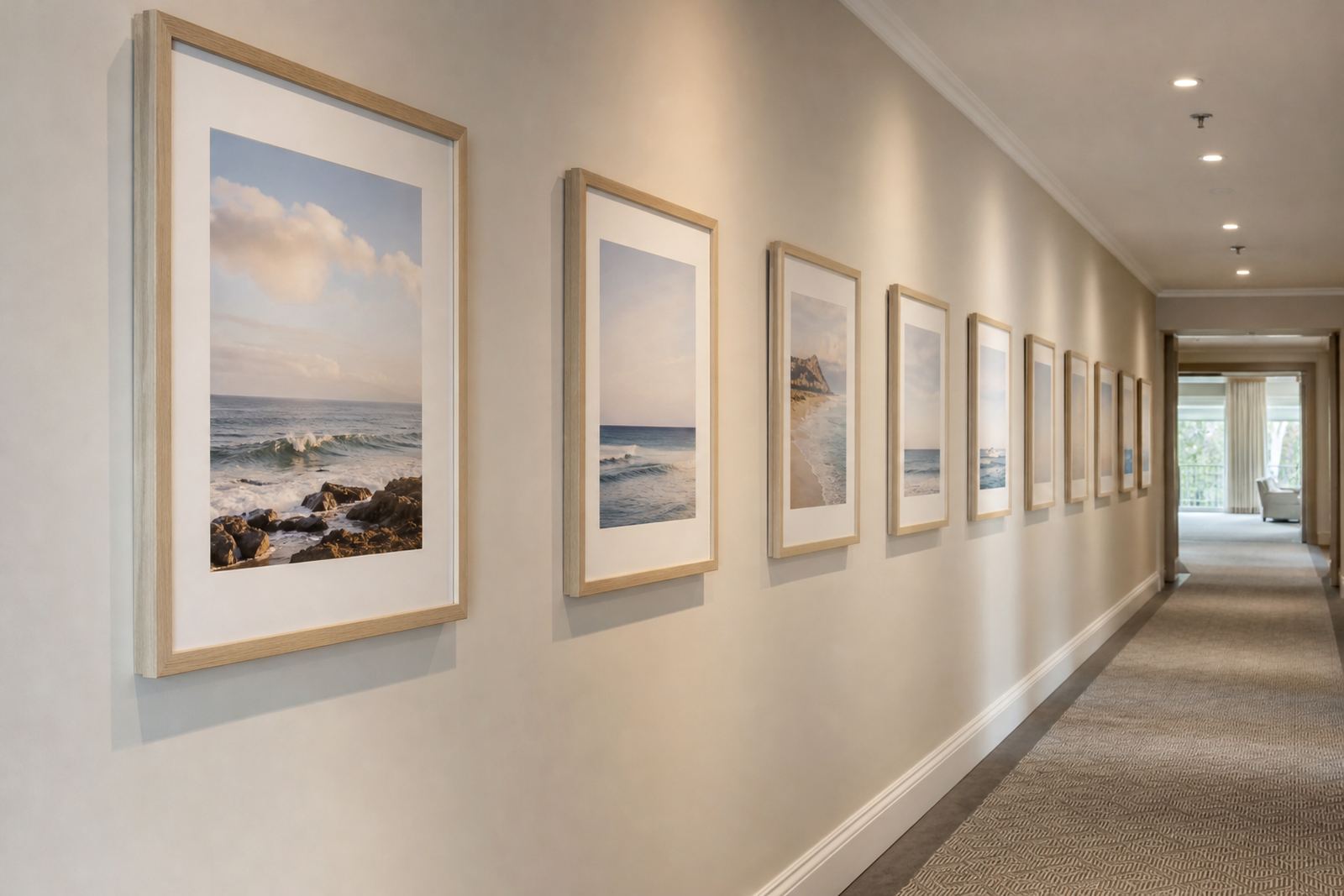
Once the frames were ready, our team installed them in measured runs so the spacing stayed even from one section to the next. Gallery hanging principles were used where longer wall stretches needed a clean line across multiple frames, while other areas used grouped pieces to break up the corridor rhythm. The result was a calm, ordered look that helped the passageways feel more considered without becoming overdone.
We checked alignment, height and sightlines at each stage because corridor art is only successful when it reads well from a distance and still feels balanced when guests pass close by. Thabo’s production notes and the installation plan worked together here, and that reduced rework on site. The final positioning also left enough space for housekeeping carts and guest movement, which is essential in a hotel setting.
What changed after the framing went up
The framed prints immediately gave the corridors more character and helped turn long passages into part of the guest experience rather than just a route between rooms. The hotel team wanted something that looked intentional, and the artwork did that without making maintenance harder. The finish was neat, the walls felt warmer, and the repeated frame style tied the different sections together.
Feedback from the property team was practical and positive: the corridors looked brighter, the artwork sat securely, and the chosen materials held their shape well in the Durban climate. Because the pieces were made to a repeatable standard, it will be easier to replace any individual frame later without upsetting the full look. That matters on a working hotel site where repairs should be simple, not a full project each time.
What we would repeat on the next hotel project
If we were doing the same type of project again, we would keep the same approach: sample the finishes first, agree the hanging rhythm early, and install in phases that suit hotel operations. For corridors in a coastal city, that combination gives the best balance between appearance, safety and long-term wear. We would also keep the frame palette restrained so the artwork can change later while the overall corridor language stays the same.
Bright Frames has been working from Parkhurst, Johannesburg since 2008, and projects like this show why personal service matters. Hotels need clear advice, tidy production and a team that understands the practical side of public spaces. From design consultation through to hanging, we keep the process straightforward and manageable, which is usually what the client needs most. A neat result, no drama and fewer call-backs, that is what we aim for.
Key facts
| Project type | Hotel corridor framing for a guest accommodation property |
|---|---|
| Town | Durban, KwaZulu-Natal |
| Timeline | 3 weeks from approval to installation |
| Frames supplied | Custom framed prints and selected ready-made frames |
| Materials | Acid-free mounts, safety glazing in public areas, secure hanging hardware |
| Service scope | Design consultation, production, collection and delivery, installation and gallery-style hanging |