
A Melville home needed a neater way to show older canvases
The client was a private homeowner in Melville, Johannesburg, with a small group of canvas artworks that had been moved between rooms over the years. Some pieces still had good paintwork and strong colour, but the presentation had become tired. The edges were a bit uneven, the canvases did not sit squarely, and the overall look did not do justice to the art.
The brief was simple enough on paper: refresh the canvases without changing the character of the work. The client wanted something that would suit a lived-in home, sit comfortably with existing furniture, and still look smart enough for visitors. Because the house had a mix of natural light and evening lighting, the framing needed to work from more than one angle. We also had to keep the pieces easy to manage for installation in a residential setting.
Floating tray frames were the right answer. They create a visible border around the canvas while leaving a slim gap so the artwork appears to sit inside the frame rather than being pressed against it. That extra breathing room made a big difference to older pieces.
What we measured, checked and matched before cutting anything
Before any timber was cut, we inspected each canvas for condition, size consistency and edge wear. That step matters because older canvases are not always perfectly square, and a millimetre here or there can throw the whole frame off. We checked the stretcher depth, corner tension, and any areas where the paint surface was sitting close to the edge.
The selection process also included the finish of the tray frame itself. For this job, the client wanted something neat and understated, with no heavy profile drawing attention away from the artwork. We matched the frame colour to work with the home rather than fight it, and kept the sightline slim so the pieces would feel open and uncluttered.
Because Johannesburg homes can face dry indoor air in winter and temperature changes through the day, we allowed for careful fitting tolerances. Canvas expansion and movement are not dramatic in a domestic setting, but they still need proper allowance. That is part of getting a frame to sit right and stay right.
- Artwork type: older stretched canvases
- Frame style: floating tray frames
- Finish: clean, low-profile presentation
- Fit requirement: square alignment and edge clearance
- Location: Melville, Johannesburg
How the floating tray frames were made up
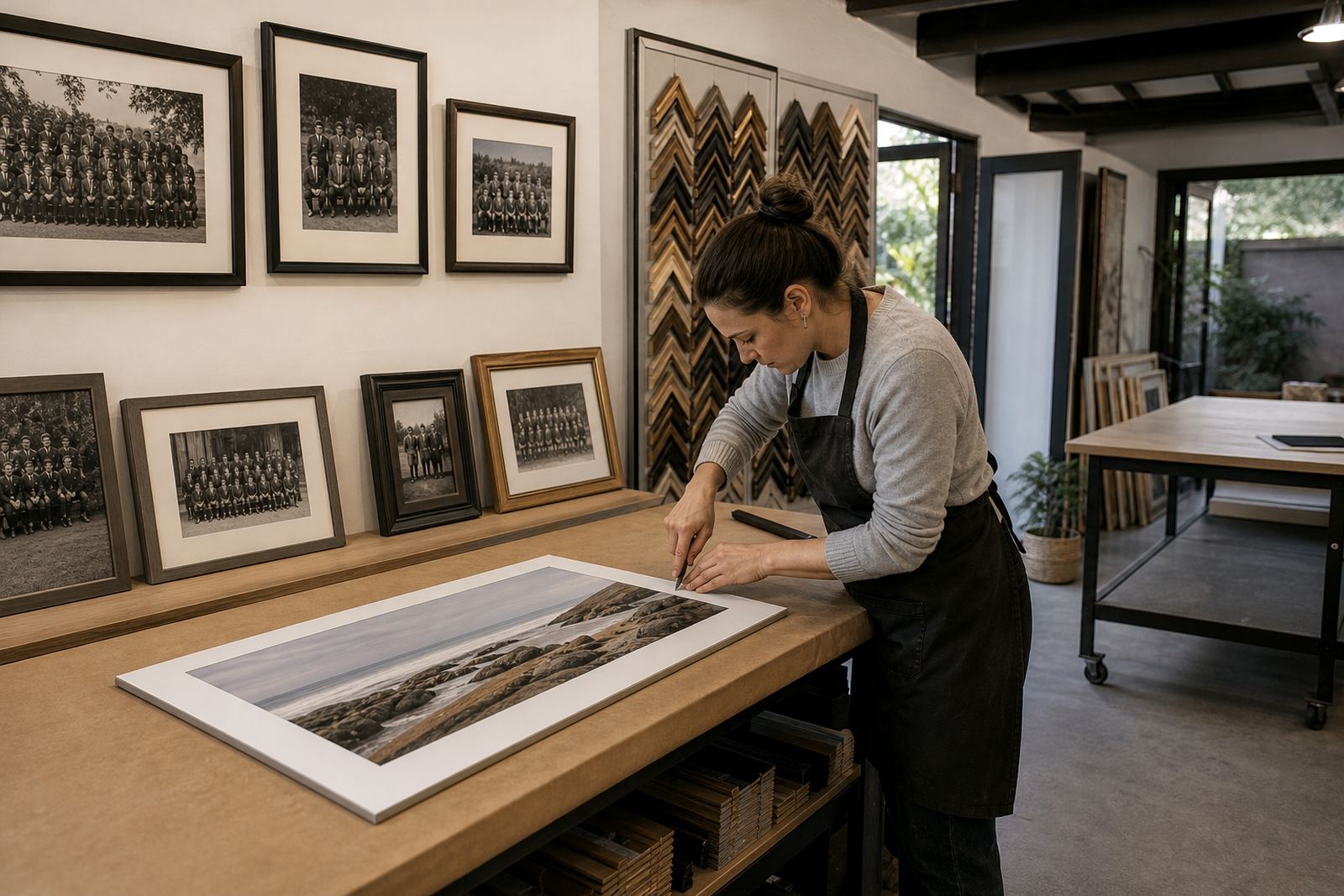
The work was completed in our Parkhurst studio, where we handled the measuring, cutting, assembly and final checks. Each tray frame was built to the canvas size with a small visible reveal, giving the artwork a light border all around. That reveal helps the image sit properly in the frame without making it look cramped.
We used a stable framing structure suitable for domestic display and included secure fixing so the canvases would not shift once mounted. Where a piece needed extra care at the corners, we adjusted the fitting by hand rather than forcing a standard setting. On older work, that patience makes a real difference.
The client also asked about future movement and maintenance, especially because some pieces hang in rooms that are used every day. We talked through dusting, wall support, and the best places to avoid direct glare. This is the kind of practical advice people often need and it helps keep the framed work looking sharp for longer. No fuss, just proper guidance.
- Studio process: measured, cut and assembled locally
- Reveal spacing: set to keep a clear border around each canvas
- Mounting: secure internal fixing to prevent movement
- Advice given: cleaning, glare control and wall positioning
Timeline, delivery and installation support
The project took two weeks from the first inspection to final handover. Week one covered assessment, measurements and frame preparation. Week two covered assembly, finishing and collection planning. That timing worked well for the client because the home did not need to be disrupted for long, and the pieces could be returned in one coordinated drop-off.
We arranged collection and delivery so the client did not have to carry multiple canvases across town. Once the framed pieces were ready, we checked each one again before dispatch, then confirmed hanging positions with the client for the rooms they were going into. In a home with mixed wall spaces, placement matters as much as the frame itself.
The client wanted the artwork up quickly but properly, so we kept the process straightforward. The result was a neat turnaround, with every piece ready to hang as soon as it arrived back in Melville. The job finished on schedule and without any hold-ups, which is always the aim when a household is working around everyday life.
The finished result in the rooms
Once installed, the canvases looked more intentional and better cared for. The floating tray frames gave each piece a stronger outline, which helped older art read as part of the room instead of sitting loose on the wall. Colours appeared more settled and the edges looked tidy, especially on the canvases that had previously shown wear at the sides.
The biggest change was visual order. The artwork no longer felt mismatched or unfinished, and the frames gave the pieces enough presence to hold their own against furniture, shelving and everyday decor. That kind of result is what homeowners are usually after, even if they do not say it that way at the start. They want the art to look like it belongs there.
The client told us the rooms felt more pulled together after the work was done. That is often the effect of a good tray frame: not flashy, just the right amount of structure. It makes older canvases look cared for without changing what makes them special.
What we would do again for similar canvas work
For similar projects in Melville, Parkhurst or anywhere in Johannesburg, we would use the same careful approach. Start with a full check of the canvas condition, confirm the final wall position, then build the floating tray frame around the actual artwork rather than relying only on the printed size. That avoids surprises and keeps the finish neat.
We would also keep the client involved in the choice of colour and edge detail, because even a subtle difference can change how a canvas sits in a room. On this job, the strength of the result came from the combination of practical measuring, clear advice and a restrained frame style. Nothing overdone, just a clean finish that suits real homes.
For older canvases, that is often the best route. They need respect, careful handling and a frame that supports the work without taking over. This project did exactly that, and it is the kind of result we are happy to repeat.
- Best suited to: older stretched canvases that need a fresh presentation
- Recommended approach: measure the actual piece, not just the nominal size
- Ideal finish: simple, square and visually light
- Good to know: floating tray frames work well in homes, studios and small galleries
Key facts
| Project name | Melville Canvas Refresh |
|---|---|
| Client type | Private homeowner |
| Town | Melville, Johannesburg |
| Service used | Custom framing and collection and delivery |
| Frame style | Floating tray frames for stretched canvases |
| Timeline | 2 weeks from assessment to handover |