
What a panorama frame is and why it works
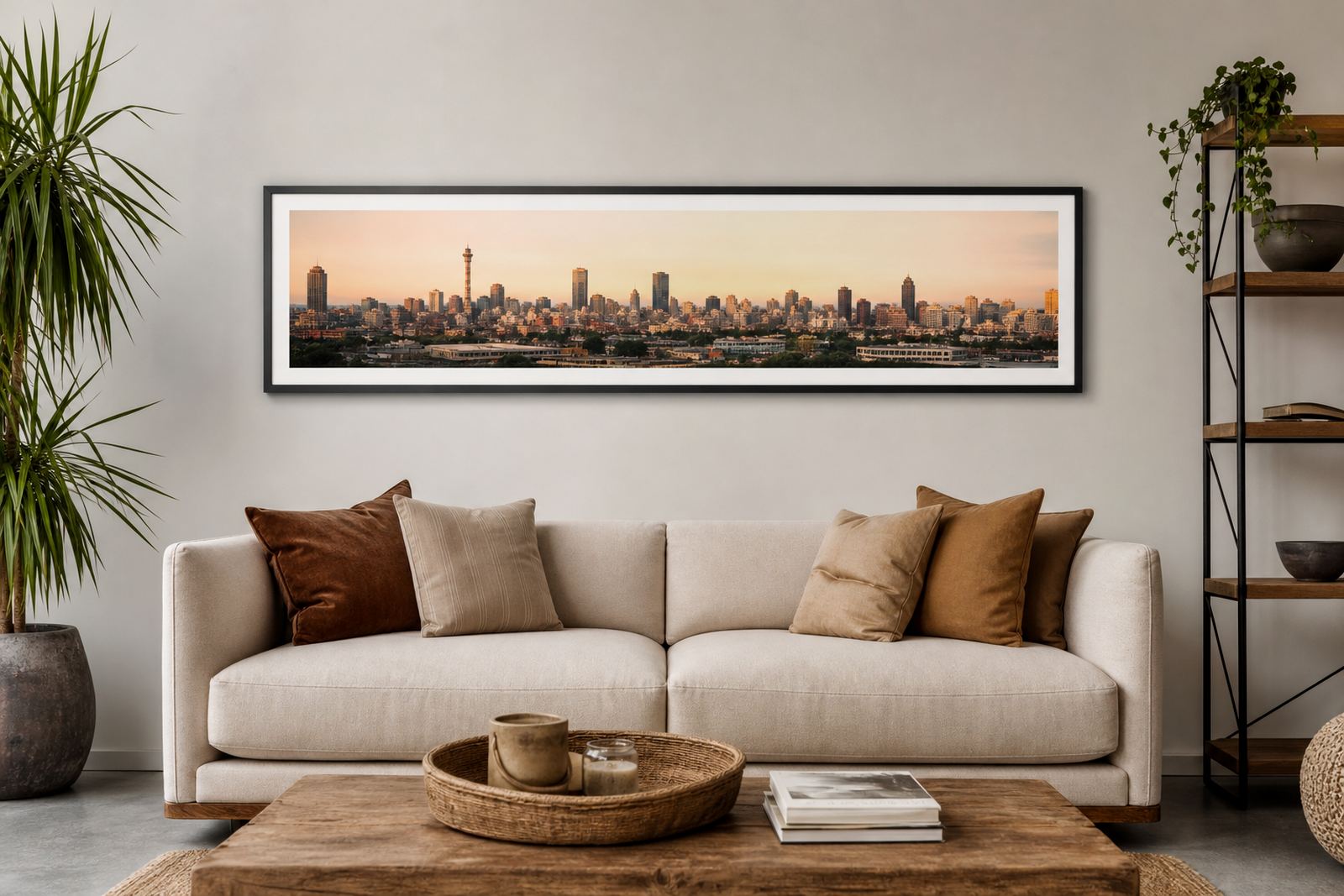
A panorama frame is built for artwork or photographs that are wider than standard portrait or square formats. It gives the print enough breathing room on the wall without forcing it into a size that cuts off important detail. For long landscape views, rows of buildings, game reserve scenes and event photos, the shape matters as much as the image itself.
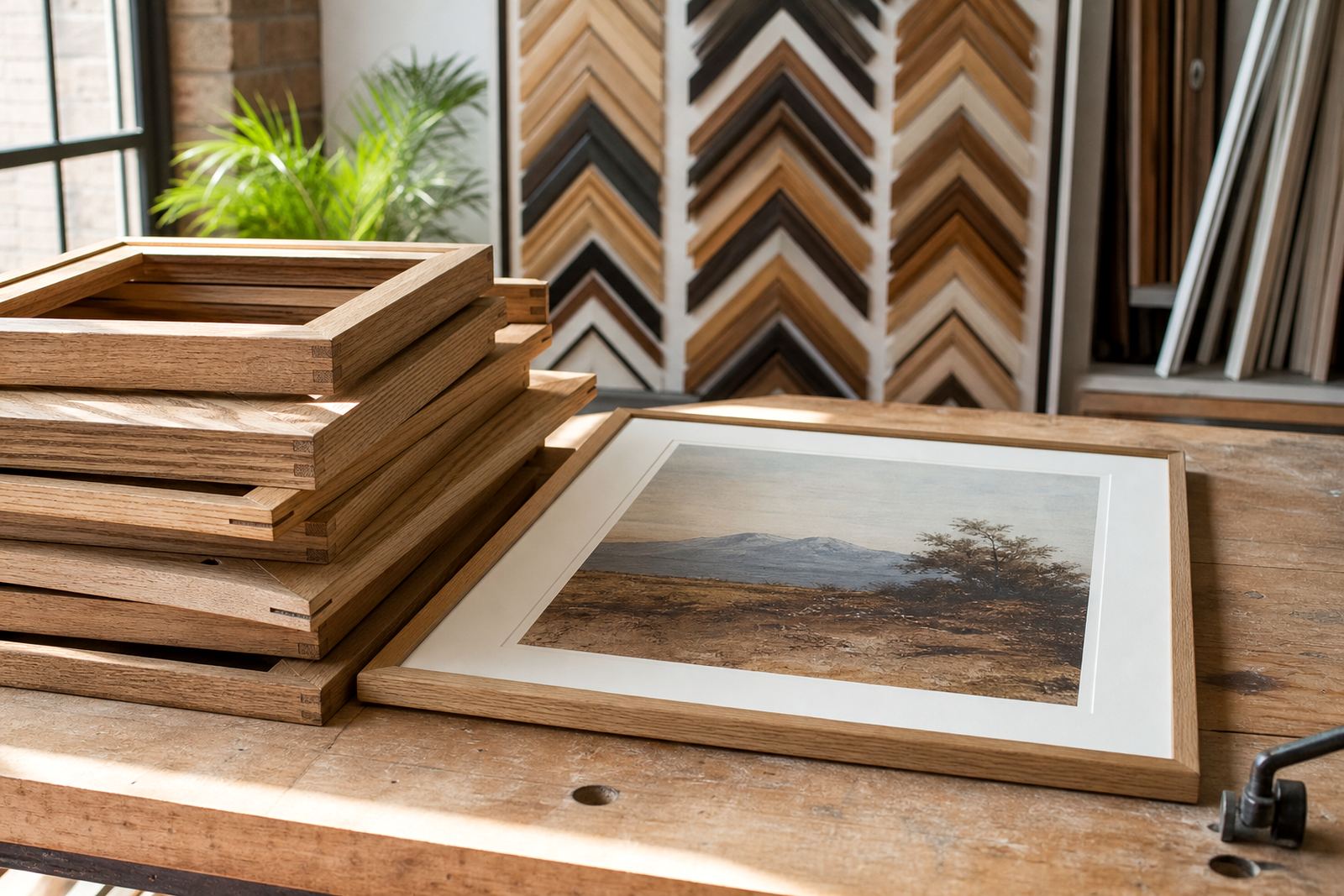
In our Parkhurst studio, we cut and assemble panorama frames for homes, offices and galleries across Johannesburg, Pretoria, Midrand, Cape Town and Durban. The frame can be made as a simple narrow profile for a modern interior, or with a deeper section and a mount for a more formal display. If the image is very wide, we also check how it will be viewed from the room so the proportions feel right from a distance and up close.
Panorama framing is especially useful when the original print has a long format that is not easy to replace. Rather than trimming the image, we work around it with correct measurements, clean corners and stable backing boards. That keeps the print protected and helps the final piece look intentional, not stretched or cramped.
Sizes, glazing and frame options we can supply
Panorama frames are often made to order, because wide prints rarely fit standard off the shelf sizes. We can frame small panoramic photographs, medium-sized city views, and very long statement pieces for reception areas or lounges. Common sizes include 300 x 900 mm, 400 x 1200 mm, 500 x 1500 mm and larger custom formats, depending on the artwork and wall space available.
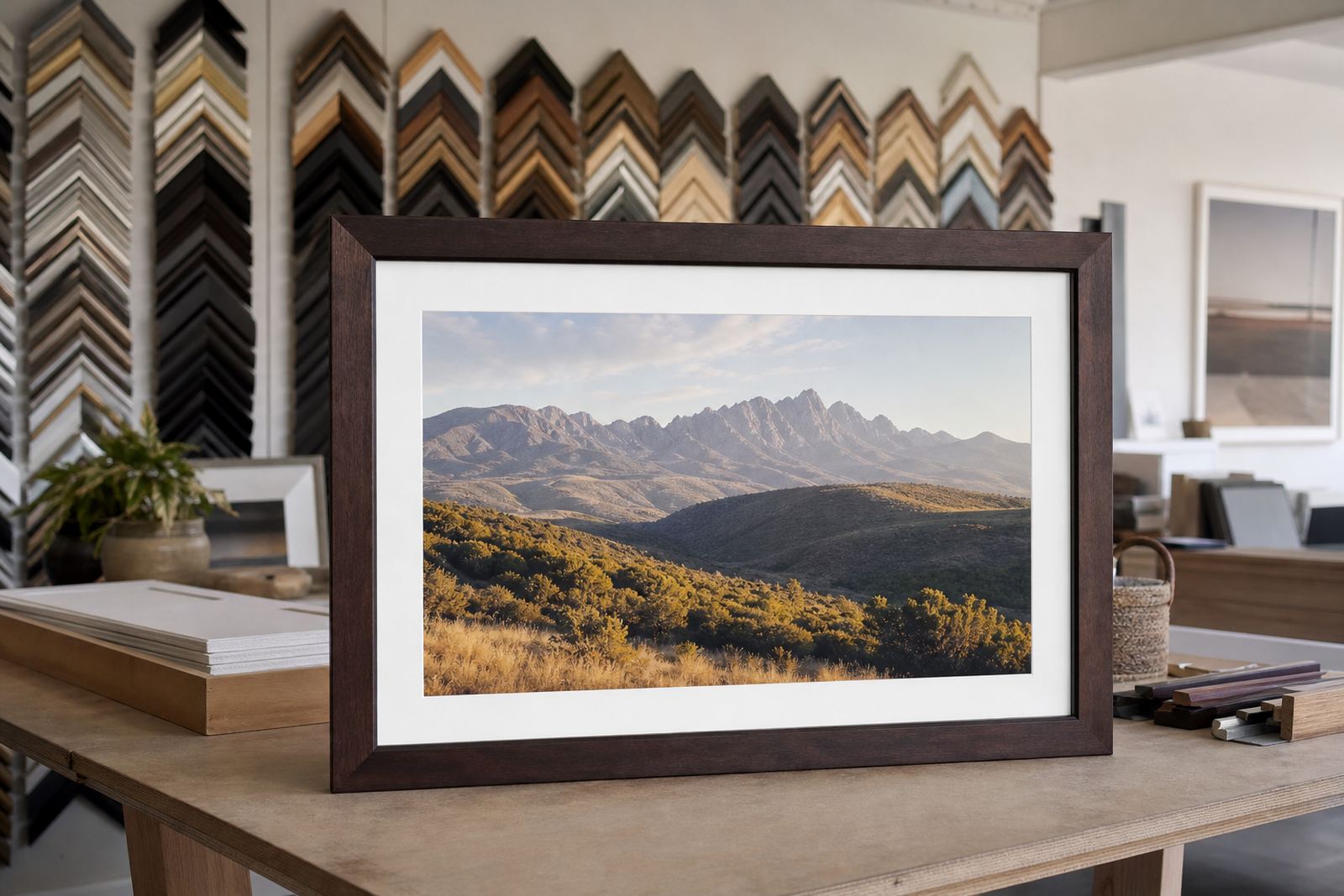
We can supply the frame with clear glass, lightweight acrylic glazing or no glazing where the piece is meant for a protected internal space and the client prefers an open finish. For larger formats, acrylic can be easier to handle and less risky than glass during collection, delivery and hanging. We also help with mount colours, backing board thickness and frame depth so the finished piece does not bow over time.
- Narrow profiles for clean modern interiors
- Deep profiles for heavier prints and gallery presentation
- Black, white, natural timber and painted finishes
- Single mounts, double mounts and border-free options
- Glazing choices for UV protection, glare reduction or lighter weight
If you are framing multiple panorama pieces for a corridor, stairwell or office reception, we can keep the dimensions and finish consistent so the wall reads as one set. That matters in spaces where symmetry and line work carry the whole room.
Where panorama framing suits best
This format suits places where a long visual line helps the room feel organised. A panorama frame works well above a couch, along a passage wall, over a headboard, in boardrooms, and in hospitality spaces where the eye moves across a wide surface. It is also a strong choice for gallery hanging where the artwork needs room to be seen properly from across the floor.
For private homes, customers often choose panorama framing for travel photos, family events, seascapes and mountain views. In commercial spaces, the same format is used for office skylines, local landmarks, sports scenes and custom prints that need a neat, professional finish. If your wall space is narrow but long, this is often the cleanest solution.
- Living rooms and TV walls
- Entrance halls and passages
- Boardrooms and reception areas
- Galleries and exhibition walls
- Restaurants, hotels and guest lounges
Because Johannesburg homes and business interiors often have mixed wall sizes, we check the actual measuring line before cutting. A frame that is 20 mm too high or too long can throw off the whole room, so we always confirm the print size, the visible area and the outer frame size before production starts.
Installation, hanging and what the frame needs
Panorama frames do not require power or gas. What they do need is correct wall support, especially when the finished size is large. On plasterboard, hollow walls or older brickwork, we recommend the right hanging hardware for the weight and wall type. In humid coastal areas like Durban and parts of Cape Town, we also consider the backing, glazing and hardware so the frame stays flat and secure.
For wider pieces, balance is important. A frame that is hung from one point may tilt over time, so we often use two hanging points or a secure rail system where needed. If the piece is for a gallery or a business premises, we can advise on height, spacing and the safest way to position it without crowding switches, lights or skirting detail.
If the artwork is being installed in a room with strong sunlight, air conditioning or frequent load-shedding related temperature changes, we will guide you on glazing and placement. Direct sun can fade ink and paper, while heat and sudden changes in humidity may affect mounts and backing boards over time. A bit of planning upfront saves repairs later.
Care, cleaning and long-term servicing
Panorama frames are easy to maintain if they are handled properly. Dust the frame with a soft dry cloth and avoid spraying cleaners directly onto the glazing. If the frame has glass, use a light cleaner on the cloth rather than on the surface. For acrylic glazing, only use products that are safe for plastics, otherwise the surface can mark or haze.
We also offer frame repairs and reframing if the piece has been damaged in transport or if the finish no longer suits the room. This can include new mounts, fresh backing board, replacement glass, corner repairs or a full reskinning into a different profile. For clients who move homes or offices, reframing is often simpler than replacing the artwork entirely.
- Keep out of strong direct sun where possible
- Avoid hanging above heaters or in damp spots
- Check that hanging hooks stay tight after delivery
- Do not lift a wide frame by one corner only
- Ask for a service check if the piece has warped, loosened or scratched
For galleries and repeat clients, we can keep notes on preferred sizes and finishes so future pieces match the existing set. That helps when the collection grows over time and you need a consistent look across several walls.
What to check before placing an order
Before ordering a panorama frame, it helps to have the exact image size, the final outer size you want, and the wall space available. If the print has white borders, a signature, or text that must remain visible, tell us upfront so the mount and aperture are cut correctly. We also need to know whether the image should be centred exactly or if you want a floating effect with more margin around the print.
When clients in Sandton, Rosebank, Pretoria and Midrand send through details, we usually check the following points before starting:
- Print dimensions and orientation
- Whether the piece needs glass, acrylic or no glazing
- Preferred frame colour and finish
- Mount colour and visible border width
- Wall type for hanging and delivery access
- Any deadline for installation, opening or gifting
If you are unsure, we can guide you through the selection process from start to finish. That includes advice on ready-made options where suitable, or a fully custom build if the print needs a specific size. The aim is simple: a frame that fits the image, suits the room and holds up well in local conditions.
Key facts
| Product type | Panorama picture framing for wide prints and photographs |
|---|---|
| Typical sizes | 300 x 900 mm to 500 x 1500 mm, with larger custom sizes on request |
| Frame materials | Timber, painted profiles and select composite frame sections |
| Glazing options | Glass, acrylic or no glazing depending on use and size |
| Mount options | Single mount, double mount or floating presentation |
| Service area | Parkhurst, Johannesburg and nationwide delivery to major centres |