
Start with the frame, not the van
The safest delivery starts before the artwork leaves the studio. Check that the frame is clean, the backing is secure and the hanging wire or fittings are fitted properly. If the piece has glass, make sure the glass is seated correctly and that no loose pins, clips or hanging hardware can shift during the trip. A frame that is already slightly loose will only move more once it hits a speed bump in Parkhurst or a pothole on the route into Pretoria.
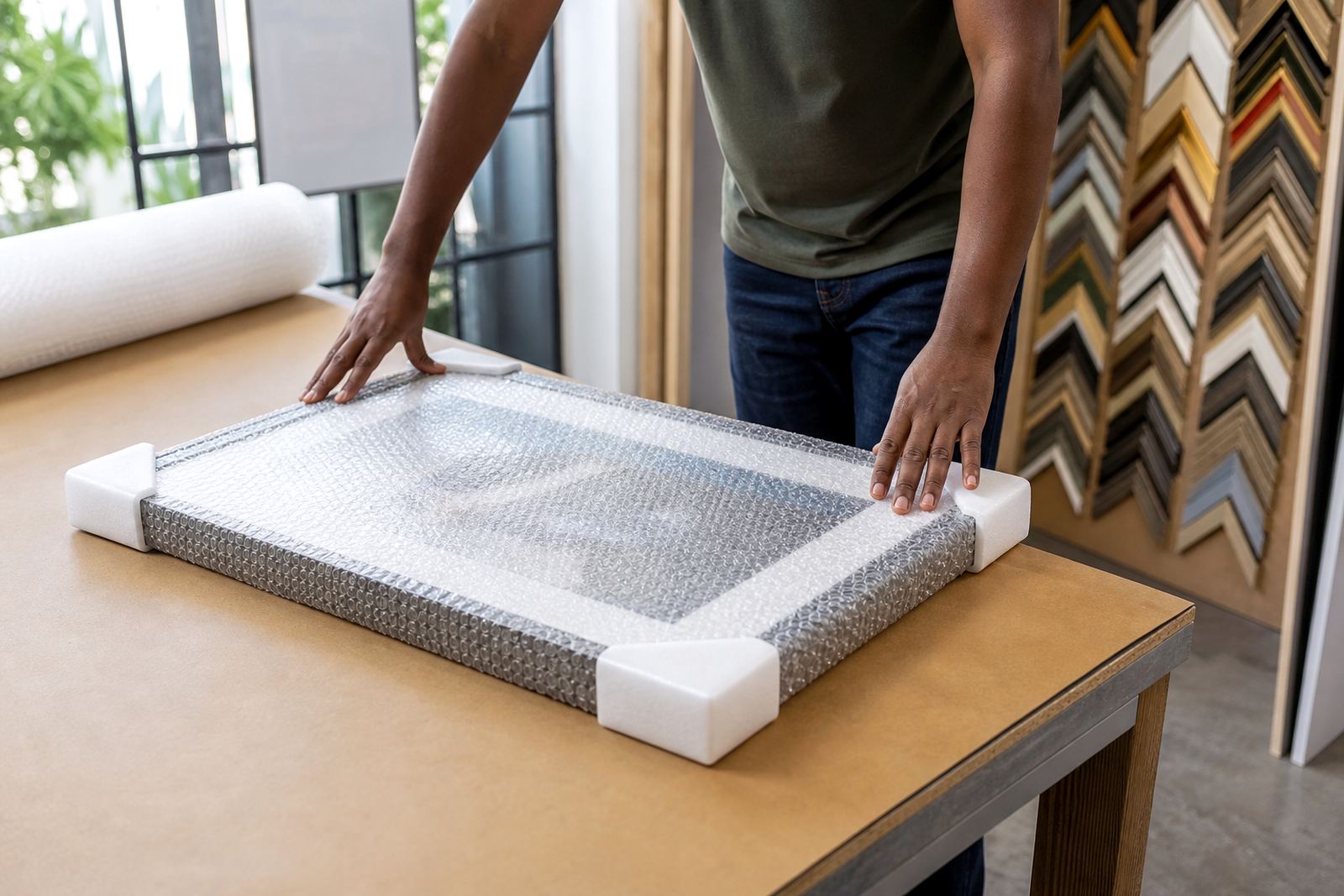
For larger pieces, the corners should be the first point of protection. Corner damage is one of the most common problems we see after transport. Use rigid corner guards or thick card protectors, then wrap the full piece so the corners cannot rub against other items or the vehicle interior. If the frame has a wide moulding, add extra padding along the edges where knocks are most likely to happen.
Wrap artwork for South African road conditions
Road travel in Gauteng can mean sudden braking, rough surfaces and strong sunlight through the windows. In Durban, coastal humidity adds another layer of risk, especially for paper artwork and timber frames. Wrap framed work in clean acid-free paper or glassine first, then add bubble wrap on the outside. Never let bubble wrap touch the artwork surface directly if there is a chance of heat or condensation, as it can leave marks.
For extra protection, place the wrapped piece inside a rigid carton or between two sheets of board. This helps absorb movement and protects the front face from pressure. If you are delivering more than one item, separate each frame so they do not knock together. A single slip can chip a corner, scratch the glass, or mark the moulding and the repair bill climbs fast.
- Wrap the artwork face first, then protect the edges and corners.
- Use boards or cartons for larger pieces instead of soft packaging only.
- Keep each framed item separated so frames do not rub during transit.
- Label fragile pieces clearly, especially if they are glass fronted.
Load the vehicle with space, not pressure
Framed artwork should never be jammed under boxes, furniture or loose parcels. Load pieces upright when possible, with padding between each item and with enough space so nothing can slide. If a work must lie flat, make sure it is fully supported and not carrying weight on the centre of the frame. Heavy items stacked on top of a frame can twist the moulding or crack the glass.
Inside the vehicle, use blankets, foam and straps to keep things still. A delivery vehicle in summer can get very warm, so avoid leaving framed art inside for long periods while you make other stops. If you are moving items between Sandton, Rosebank and Midrand in one day, plan the route so the artwork is not sitting in the back for hours. This matters even more for original prints, mirrors and stretched canvas pieces that can react to heat and moisture.
- Keep framed items upright and supported where possible.
- Do not stack weight on top of glass or canvas.
- Strap items so they cannot shift during braking.
- Plan deliveries to reduce time in a hot vehicle.
Use the right handling method at the door
Many damaged frames are hurt during the final few metres, not on the road. The person carrying the work should have a clear path, one hand under the frame and one hand steadying the side or bottom edge. For large pieces, two people are better than one. Never carry a framed artwork by the hanging wire or by the top moulding alone. That puts strain on fittings and can pull the frame out of square.
When passing through narrow passages, lift the frame clear of corners and door handles. Ask the client to open gates, doors and lifts in advance so nobody is forced to rush. In apartment blocks and office buildings, confirm access times and any body corporate rules before arrival, especially where there are shared lifts or loading bays. A little planning saves time and avoids damage to walls, floors and the artwork itself.
Check glass, mirrors and canvas before installation
On arrival, inspect the artwork before it goes up on the wall. Look for loose glazing, shifted mounts, scratches or any signs that the frame has twisted in transit. If the piece is a mirror, inspect the backing and hanging points before lifting it into place. Canvas should be checked for slack edges or a corner that has worked loose during the trip. Catching a problem at this point is far better than finding it after the installation is complete.
If the work has travelled from Johannesburg to Cape Town or Durban, allow time for the piece to settle in the room before final hanging where possible. Temperature changes and humidity can affect timber, backing board and paper based art. A framed print that was fine in the studio may need a small adjustment once it has been moved into a cooler or damper space. Give the client a quick walk-through so they know how the piece was handled and what to watch for after delivery.
A local example from Parkhurst to a corporate wall
We recently handled a mixed delivery of framed family photographs and two large gallery pieces from our Parkhurst studio to a client in a Sandton office. The order needed careful packing because the pieces were different sizes, with one mirror framed piece and one artwork on paper. Each item was wrapped separately, corners were protected, and the larger works were loaded upright with padding between them. The client wanted installation before a board meeting the next morning, so the route and timing had to be exact.
That job showed how much difference simple preparation makes. The delivery reached site without scuffs, the wall layout was checked before drilling, and the pieces were level on the first pass. When framed work is handled properly from the start, the install goes quicker and there is less stress for everyone. It also means the artwork looks the way it should, which is the whole point.
- Separate different frame sizes so they do not press against one another.
- Keep installation tools and hanging hardware ready before arrival.
- Confirm wall position and height before you take the artwork out of its wrapping.