
Why bedroom framing needs a lighter hand
Bedrooms are different from living areas and passage walls. You want visual interest, but you also want rest, so the framing choice needs to support the room rather than compete with it. In many Johannesburg and Pretoria homes, that means softer colours, simpler profiles and artwork that sits comfortably with the bedding, curtains and wall paint.
At Bright Frames in Parkhurst, we often guide clients toward pieces that feel calm at eye level and even calmer from the bed. A strong frame can work, but in a bedroom it is usually best when it feels measured. If the room already has a patterned headboard, busy bedding or dark furniture, the frame should give the eye somewhere easy to land.
Choosing colours that suit the room, not just the picture
Colour is usually the first thing people notice, but in bedroom framing it should be chosen against the wall and the furniture as much as against the artwork itself. Soft oak, black, white, charcoal and warm neutrals are common choices because they sit neatly in most rooms. For a coastal bedroom in Cape Town or Durban, lighter timber tones and matte finishes often feel right. In a north-facing room in Sandton or Midrand, stronger contrast can help the artwork hold its place without looking heavy.
When the artwork has many colours, a quieter frame can steady it. When the image is simple, a coloured frame or a more textured mount can add enough interest without making the room feel busy. The aim is balance, not matching everything exactly.
- Use pale frames for airy rooms with light walls and linen textures.
- Choose darker frames when the bedroom has strong contrast or darker furniture.
- Keep finishes matte where glare from windows or lamps may be a problem.
- Pick mount colours that repeat one tone already in the room.
The best sizes and positions above the bed
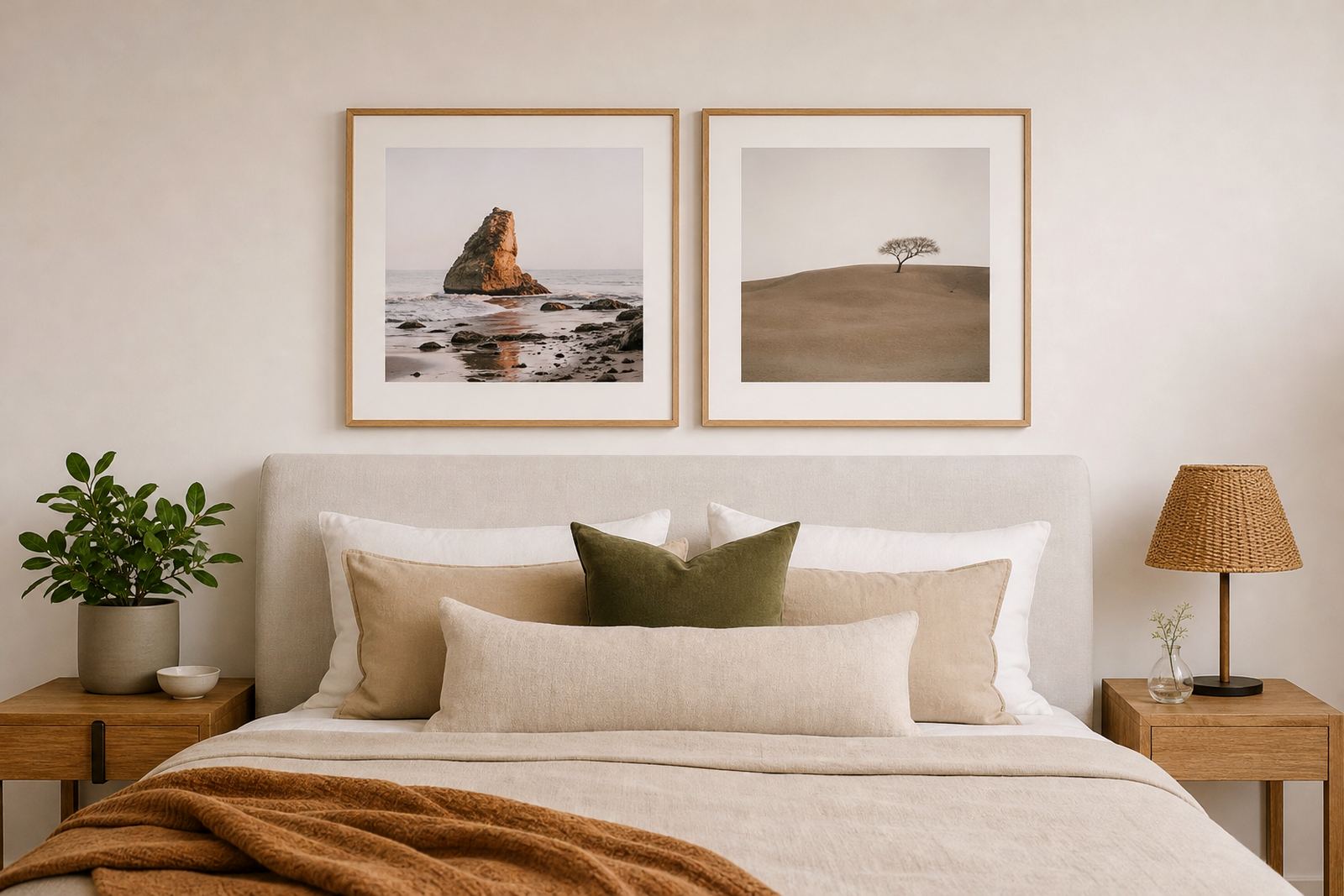
Bedroom wall art is often hung above the bed, so scale matters. A single piece that is too small will look lost, while an oversized frame can make the bed feel squeezed. A useful guide is to keep the framed work roughly two thirds the width of the bed, though the final choice depends on the headboard and ceiling height. In compact flats and guest rooms, a pair of smaller framed pieces can work better than one large image.
Keep the bottom edge high enough so pillows do not touch the frame, and leave space for bedding folds and bedside lamps. In many homes, 150 to 200 mm above the headboard is a practical starting point, then adjust for sightlines. If the room is used in low evening light, position the artwork where it can still be seen from the doorway without needing bright lighting.
- Queen beds usually suit one medium or large frame, or two balanced pieces.
- King beds can take a wider layout, especially with a low headboard.
- Small bedrooms often work better with one calm focal piece than a gallery wall.
- Leave enough space so the frame does not feel pressed against the ceiling.
Mounts, glass and finish choices that make sense in bedrooms
The frame is only part of the job. Mount width, glass choice and finish all affect how the piece behaves in the room. A wider mount can give a bedroom artwork a quieter look and let the image breathe. For photographs, certificates, botanicals and family portraits, this is often the best way to make the piece feel less crowded. Glass choice also matters where there is sunlight, streetlights or bedside lamps throwing reflections onto the wall.
In homes close to the coast, humidity can affect paper-based artwork and backing materials, so the right materials and sealing make a difference over time. In Johannesburg, dust and dry winter air can also show up on exposed surfaces. If the bedroom gets strong afternoon sun, ask for a solution that helps protect the work rather than one that only looks good on the day it is collected.
- Use a wider mount for portraits, line drawings and calm, minimalist pieces.
- Choose reflective control where glare from windows or lamps is a concern.
- Ask about moisture-aware construction for coastal homes.
- Prefer materials that suit the room’s temperature swings and daily use.
When ready-made frames are enough, and when custom is worth it
Ready-made frames can be a sensible choice for bedrooms, especially when you need a neat finish quickly or want to frame several smaller pieces at once. They work well for standard photo sizes, prints and simple layouts. If the artwork has an unusual size, a special mount, a canvas, or a sentimental item with uneven edges, custom framing gives you more control over proportions and finish.
Many clients visiting from Rosebank, Sandton or Pretoria come in with a bedroom piece that has been waiting in a cupboard for years. Often the issue is not the artwork itself, but that the frame size or colour was never right. Reframing can change the whole feel of the room without replacing the art. That is often the more practical choice when the picture has meaning and the bedroom decor has changed over time.
A local example from a Parkhurst home
A couple from Parkhurst brought in a muted landscape print for their main bedroom. The room had white walls, a linen headboard and dark side tables, but the original frame was too glossy and too narrow. The piece looked unfinished. We set it in a slim charcoal frame with a clean white mount, then adjusted the size so it sat well above the bed without overpowering the wall. The result was quieter and more settled, which suited the room far better than a decorative frame would have.
That kind of outcome is common. The artwork did not need to be louder, just better placed and framed with a bit of care. In bedrooms, that small shift often matters more than people expect.
Practical checklist before you bring bedroom art in
If you are planning bedroom framing, it helps to think through the room before choosing the frame. Measure the wall, look at the headboard height and note where morning sun falls. If the room needs to feel restful, avoid frames that introduce too many reflections or hard contrasts. If the piece will hang near a mirror or wardrobe, make sure the finishes do not fight each other.
At Bright Frames, we help clients across Johannesburg, Pretoria, Midrand, Cape Town and Durban choose framing that suits the room and the artwork. Bedroom framing works best when it feels personal, balanced and easy to live with. That usually means better proportions, sensible materials and a finish that suits the room you actually sleep in.
- Measure the bed and wall before choosing the size.
- Check where natural light lands during the day.
- Think about the mood you want when you wake up and switch off at night.
- Bring a photo of the bedroom if you want help matching the frame to the room.