
Start With the Wall, Not the Certificates
Before any frame is picked, measure the full wall area and decide how much of it should be filled. A certificate wall that is too small can look lost, while one that is packed too tightly becomes hard to read. In Parkhurst homes, corporate foyers in Sandton, and clinic reception areas across Johannesburg, the best results usually come from leaving enough breathing room around the group.
Lay the certificates out on the floor first if you can. This helps you see the real balance between portrait and landscape formats, as well as which documents need to sit in the centre. If the wall is in a passage or entrance, allow for normal movement past the display and avoid placing lower frames where bags, chairs or cleaning equipment may knock them.
- Measure wall width and height in centimetres before choosing frame sizes.
- Check where light falls during the day, especially near windows or glass doors.
- Keep the top row high enough to look intentional, but not so high that it feels disconnected from the room.
Use Matching Sizes for a Clean Certificate Grid
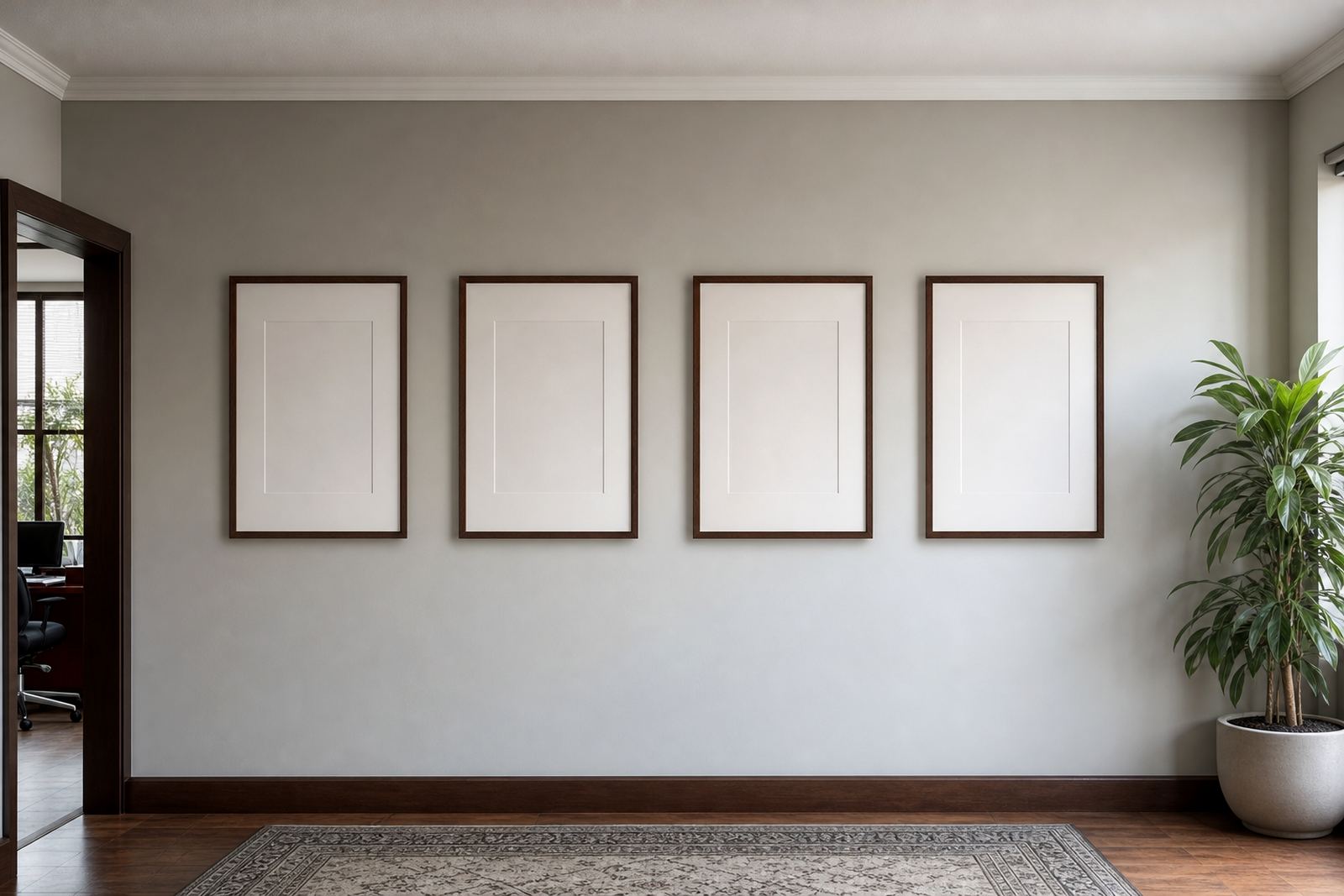
Grouped certificate displays look best when the outer dimensions are consistent. Even when the documents inside are different sizes, a matching frame size creates order and helps the eye move across the wall. This is especially useful for schools, legal practices, medical rooms and training centres where several certificates need to be shown together.
At Bright Frames, many clients ask for a simple grid with equal gaps between each frame. That approach works well when the certificates are all similar in shape, and it keeps the wall from looking busy. If one certificate is larger than the others, it can still be included, but it should be treated as the lead piece and given space around it.
- Use the same frame width across the group where possible.
- Choose one frame colour for all certificates to avoid visual clutter.
- Keep spacing between frames consistent, usually around 4 to 7 cm depending on wall size.
Choose a Frame Finish That Suits the Room
Certificate wall arrangement is not only about alignment, it is also about how the finish sits with the room. Black frames work well in formal offices and galleries. Natural wood suits consulting rooms, home studies and heritage homes. White or pale oak can soften a display in a bright room, while metallic tones can work in modern reception areas if the rest of the décor is already simple.
In Johannesburg, dust and changing indoor temperatures can affect the upkeep of framed documents. A good choice of backing board and glazing helps protect the paper from yellowing, curling and moisture. For offices near the coast, such as our Durban service area, humidity matters even more and sealed framing becomes important if the certificates are to stay flat over time.
- For formal spaces, keep the finish plain and consistent.
- For home displays, match the frame to existing furniture or shelving tones.
- Ask for protective glazing if the wall gets strong sunlight or regular air-conditioning.
Measured Spacing Makes the Display Look Professional
The difference between a neat wall and a messy one is usually a few millimetres. Measured spacing makes the whole arrangement feel deliberate. Rather than hanging each frame by eye, mark the centre point of the wall and work outwards so the group stays balanced. This matters most when the certificates sit above a reception counter, along a staircase, or in a narrow corridor where the eye has less room to adjust.
For large certificate walls, use a spirit level and a measuring tape for every row. If the wall is uneven, which is common in older buildings around Pretoria and parts of the inner city, adjust the hanging points rather than forcing the frames into a crooked line. It is better to correct the hardware than to live with a display that always looks slightly off.
- Mark the centre line on the wall before starting.
- Use paper templates to test the layout before drilling any holes.
- Keep the bottom row level even if the wall or floor is not perfectly straight.
Plan the Arrangement for Daily Use and Future Additions
A certificate wall often grows over time. New qualifications, awards or professional registrations may need to be added later, so it helps to leave room for expansion. A flexible layout is useful for businesses and practices that will update the wall each year. If the display is full from the start, adding one more frame later can spoil the balance.
Think about who will stand in front of the wall and how often the frames may need cleaning or changing. In busy offices, low-maintenance framing is practical. In galleries or client-facing spaces, you may want a display that can be updated without disturbing the whole wall. Bright Frames can advise on mounting, frame repairs, reframing and glass replacement where existing pieces need a better finish.
- Leave a spare position if more certificates may be added later.
- Use a layout that can expand in rows or columns.
- Keep extra backing and glazing notes for future matching frames.
A Local Example From Parkhurst to a Pretoria Boardroom
A recent certificate wall for a Parkhurst professional practice used nine frames in a 3 by 3 grid, all the same size and finished in a dark timber look. The room had strong afternoon light, so the certificates were placed away from the window wall and fitted with glazing that reduced glare. The result was tidy, easy to read and suitable for clients walking in from the reception area.
That same approach works in other parts of Gauteng too. In Pretoria boardrooms, the aim is often formal and disciplined. In Midrand and Sandton, clients sometimes prefer a cleaner contemporary line. In Cape Town and Durban, the wall may need more attention to moisture and sunlight. The method stays the same: measure carefully, match the frames, and hang the group with clear alignment. A certificate wall should show the work without making the room feel crowded.
If you are arranging certificates for a home, studio, gallery or business premises, Bright Frames in Parkhurst can help with design consultation, ready-made advice and custom framing. The right layout makes the wall easier to read and easier to live with, and that is what gives the display a proper finish.