
Start with the wall, not the artwork
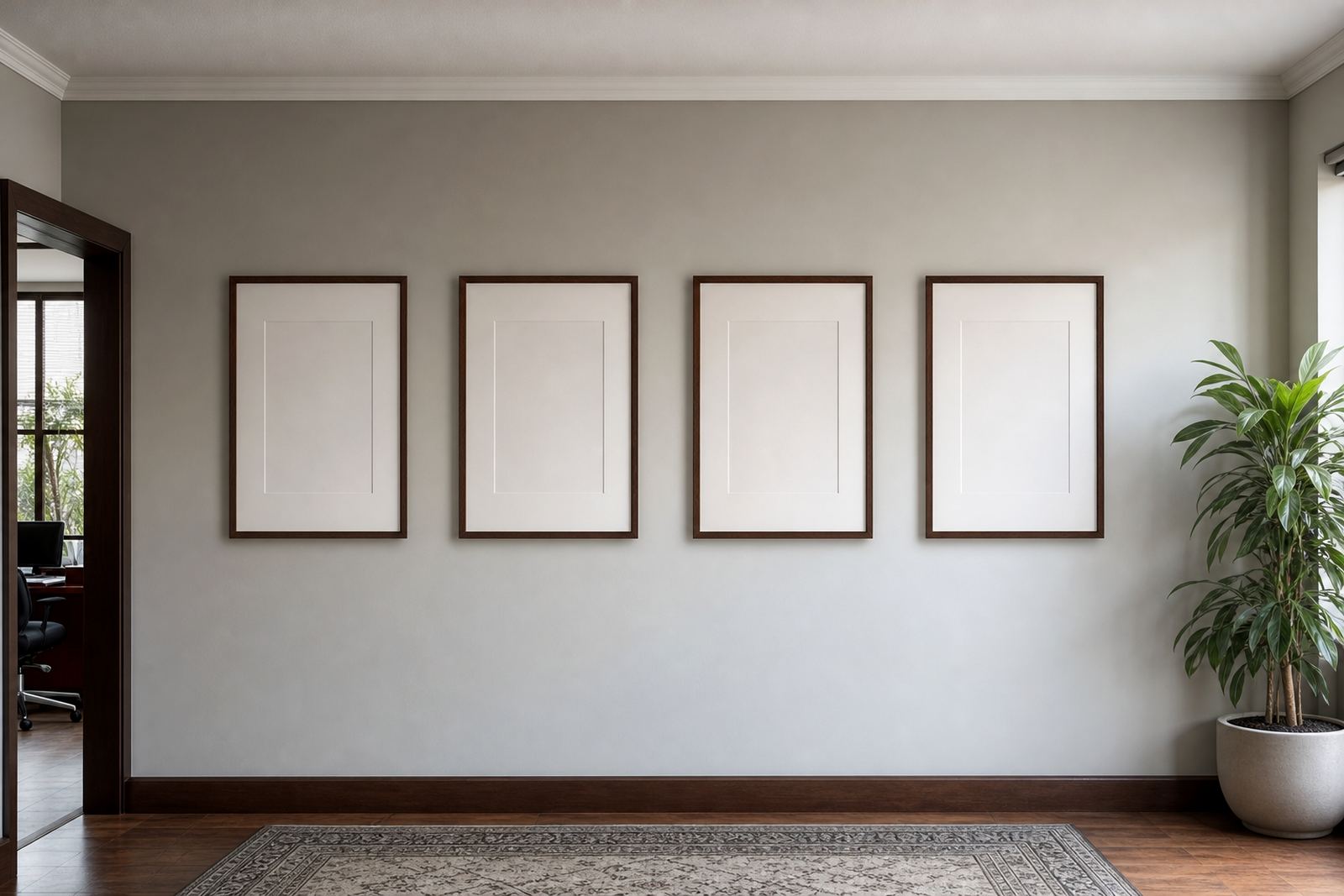
Large wall art works best when the wall can carry it. A piece that looks balanced in a double-volume foyer may feel heavy in a narrow passage, while a canvas that suits a lounge can overwhelm a small office reception. Before choosing a frame, measure the wall, the furniture below it, and the viewing distance. In practical terms, leave enough visual breathing room around the piece so it does not fight with doors, skirting, ceiling lines or light fittings.
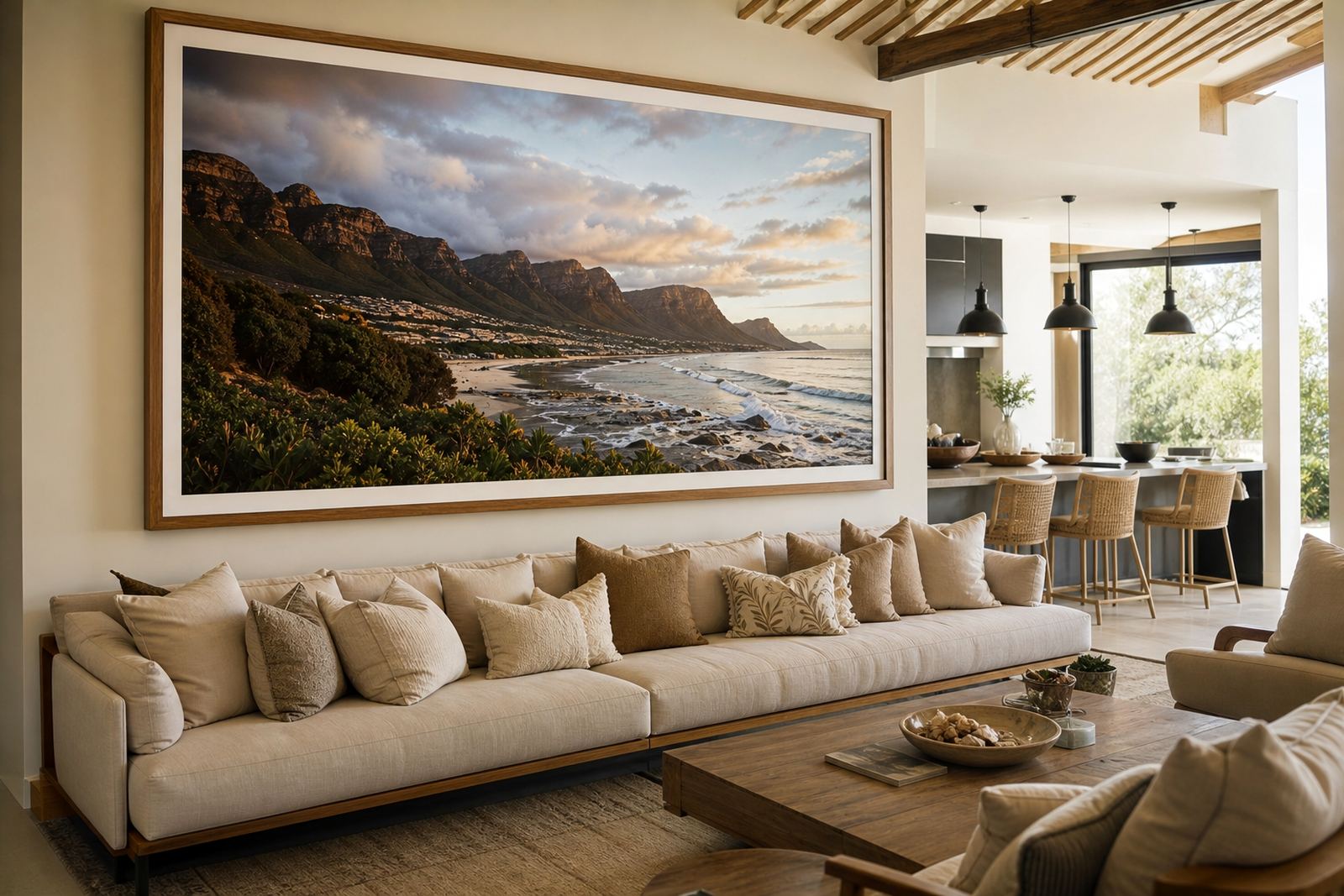
For a home in Parkhurst, a large piece above a sofa often needs a frame that adds structure without making the work feel boxed in. In a gallery setting in Johannesburg or Cape Town, the same artwork may need a slimmer profile so the image stays the focus. Scale matters more than decoration. A good frame should help the art sit comfortably in the room, not compete with it.
- Measure wall width, height and the space around nearby furniture.
- Check the viewing distance from where people will stand or sit.
- Allow clear space for hanging hardware and movement around doors.
- Match the frame size to the room size, not only to the artwork.
Weight, support and hanging hardware matter
Large pieces need more than a strong hook. The frame, glazing, backing and artwork all add weight, so the hanging method must suit the final piece. For heavier framed works, proper wall fixings and correct load distribution are essential. A plasterboard wall in a new office block is different from a solid brick wall in an older house in Rosebank, and the hanging solution should change with it.
We often see damage caused by hanging a large frame on hardware meant for a lighter piece. That can lead to crooked hanging, cracked plaster or a dropped artwork. In humid coastal areas like Durban, extra care is needed for fixings and materials that can cope with moisture. In homes affected by load-shedding, it also helps to think about where the art sits near candles, lamps or backup lighting, since heat and shifting shadows can affect both display and safety.
- Use fixings rated for the full weight of the finished frame.
- Check wall type before choosing hooks, plugs or rails.
- For very large pieces, ask about professional installation.
- Keep the artwork clear of direct heat and damp corners.
Choose a frame that supports the image
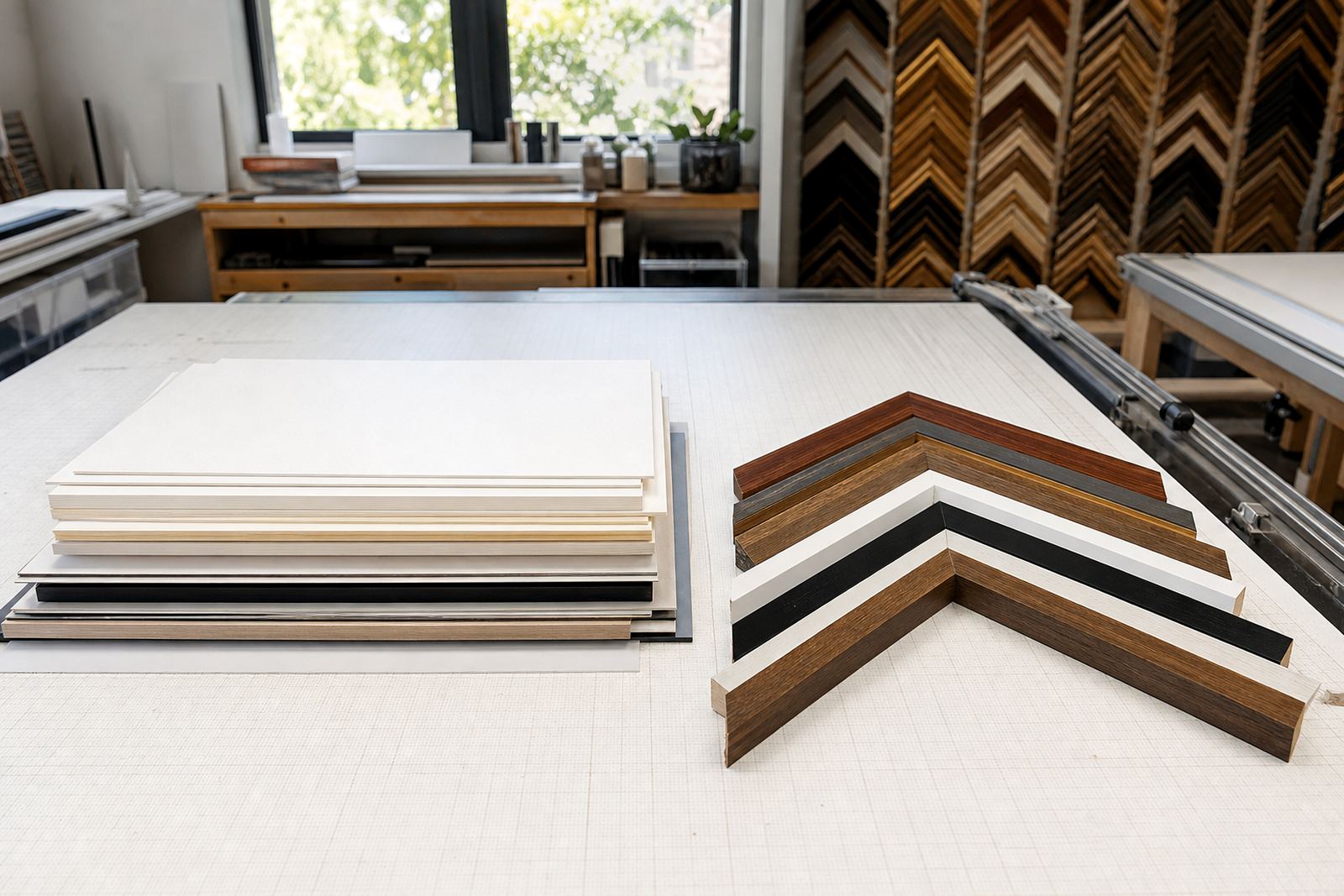
With large wall art, the frame should do three jobs at once: protect the work, suit the image, and hold its own at scale. Thin framing can look elegant on some pieces, but on a wide print or painting it may disappear. A heavier profile can bring order to a big composition, while a simpler finish may work better for photography or contemporary art.
The right choice depends on colour, subject and surface. Deep blacks can sharpen a monochrome print, while natural timber tones can soften a landscape or family portrait. For coastal homes, materials that cope better with humidity are worth considering. For galleries, a neutral finish often keeps attention on the art itself. If the work has strong colour or texture, a carefully chosen mount can add separation and help the eye settle on the image. There is no single correct style, only the one that suits the work and the room best.
Common decisions for large pieces include:
- Whether to use a wide or narrow frame profile
- Whether a mount will improve the balance of the image
- Whether glass, non reflective glazing or no glazing is best
- Whether the finish should match furniture, flooring or the artwork itself
When canvas, glass or a mount changes the result
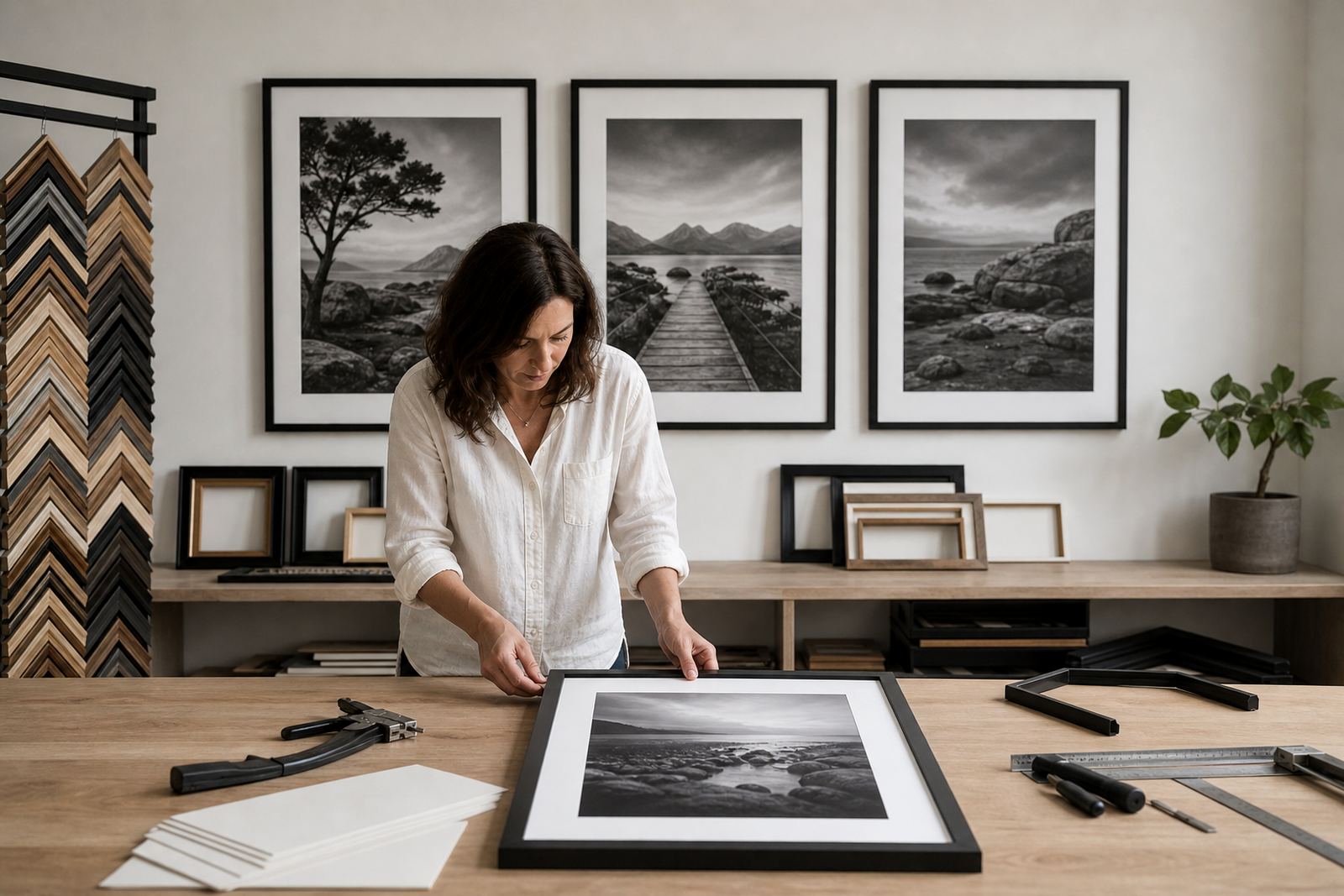
Large wall art is not always framed in the same way. A stretched canvas may only need a neat frame around the outside edge, while a printed photograph or certificate may need glazing and a mount to protect the surface and create space around the image. Oversized works often benefit from a tailored approach, because standard ready-made solutions do not always suit the final dimensions.
Canvas stretching must be even across the frame so the fabric stays taut over time. If the work is meant for a gallery wall or a client facing office in Midrand, the edges should be clean and the corners properly finished. For framed prints or drawings, a mount can stop the artwork from sitting too close to the glass. This matters even more in warm rooms and in places where the air-conditioning runs hard during the day and switches off after hours. Small changes in temperature can affect paper, backing boards and the overall finish.
- Use mounts to create space and improve proportion
- Stretch canvas evenly to avoid sagging or ripples
- Choose glazing based on the artwork surface and display position
- Ask about materials that cope better with humidity and temperature swings
Large art in real South African spaces
A local example makes the point. A homeowner in Parkhurst wanted to hang a large family photograph above a long sideboard in an open-plan living room. The image looked fine on its own, but once it was placed on the wall it needed more structure to suit the room. A wider frame with a clean finish gave it presence without making the wall feel crowded. The result sat comfortably with the furniture and did not dominate the space.
In a gallery hanging in Pretoria, the challenge is different. Several large works may need to sit together while still leaving enough wall between them. The spacing, height and alignment have to be accurate, especially when visitors move from one piece to the next. In Cape Town and Durban, climate can also play a part, so the framing materials and backing need to be chosen with care. For business premises in Sandton or a home office in Midrand, large art should also be placed where it will not clash with glare from windows or reception lighting.
Good large wall art framing is usually the result of a few practical checks done properly:
- Confirm the final size before cutting the frame or mount
- Test the position on the wall with tape or a paper template
- Check sightlines from the main seating or walking area
- Plan for safe handling during transport and installation
Why personal guidance saves time and repairs later
Big framed pieces are harder to correct after the fact. If the proportions are wrong, the hanging is off centre, or the materials do not suit the room, the problem is more noticeable than on a small print. That is why a proper consultation matters. It helps you choose the right scale from the start and avoid unnecessary frame repairs, reframing or glass replacement later on.
At Bright Frames in Parkhurst, the process is straightforward. We help customers compare finishes, measure accurately, and decide whether a custom frame or ready-made option will work best for the piece and the wall. For clients across Johannesburg, Pretoria, Cape Town, Durban and Midrand, this practical guidance can save time and reduce handling risk. It also means the finished work is more likely to look right in the first place, which is usually the point.
When a large work is framed properly, it settles into the room and carries itself well. That is the aim, whether the piece is for a home passage, a gallery wall, or a reception area that needs to look organised without feeling stiff.