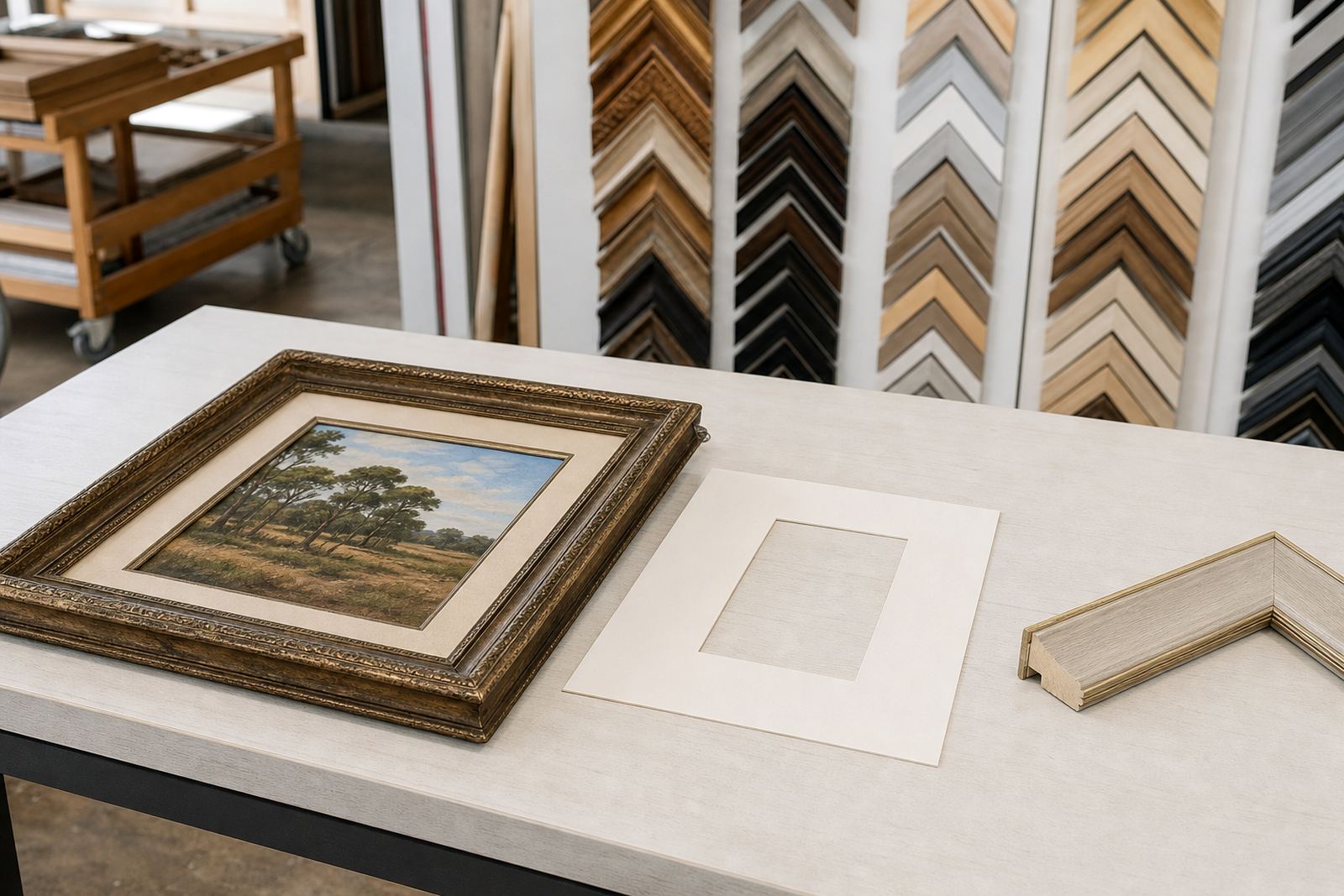

Why the corner is the first thing people notice
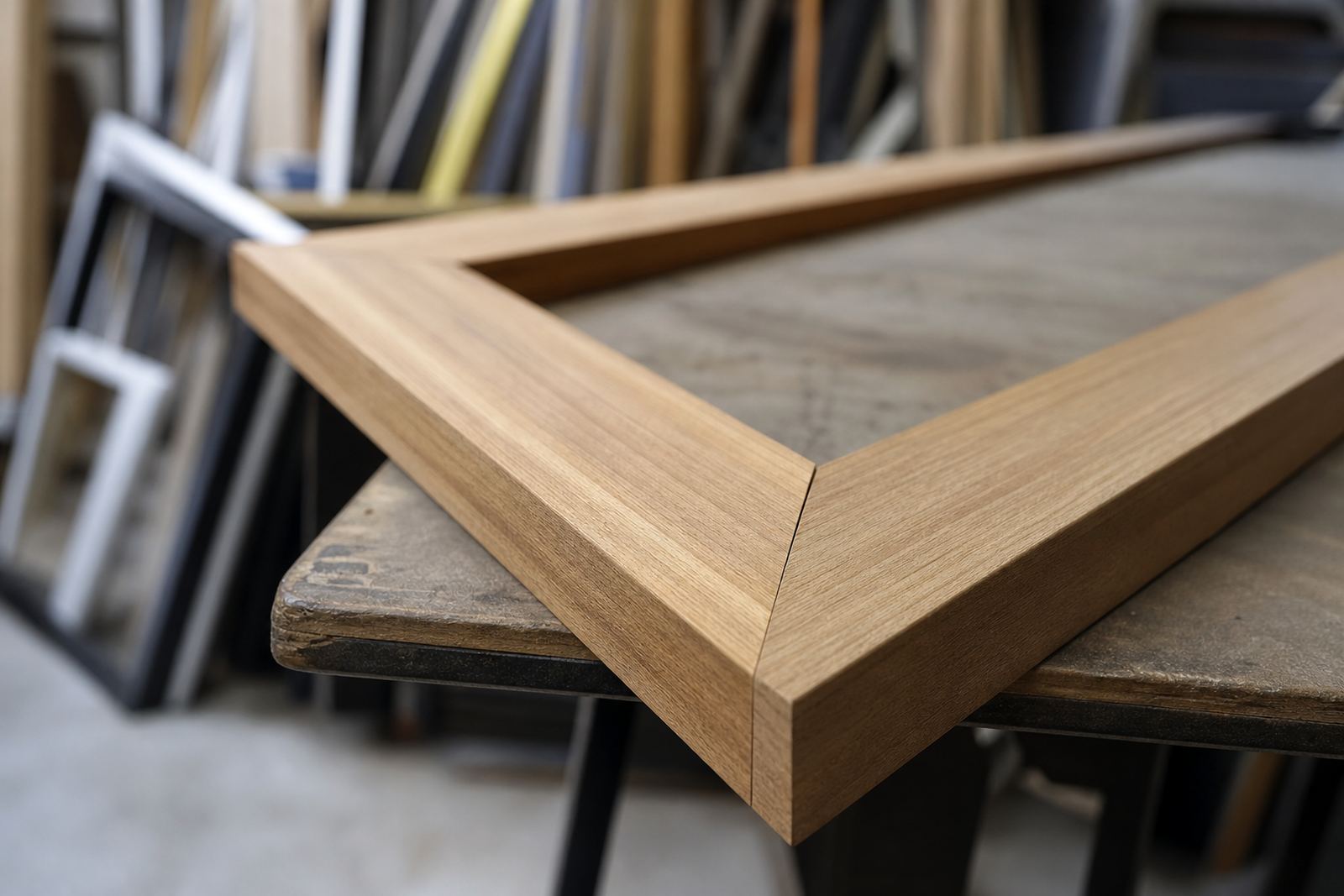
A frame can have beautiful moulding, good glass and a well chosen mount, but if the corners are open or uneven the whole piece looks tired. Corner joins are what hold the visual line together. They control whether the frame reads as one clean shape or four pieces that do not quite meet.
In a home in Parkhurst, the difference may be subtle at first. In a gallery, shop or corporate space, it is obvious the moment the light catches the edge. A good join keeps the mitres tight, the angles true and the frame sitting flat against the wall. That matters for photographs, certificates, prints and works on canvas.
At Bright Frames in Johannesburg, we see this every week when people bring in older frames that have started opening at the corners. Sometimes the issue is wear. Sometimes it is poor assembly from the start. Either way, the join is usually the first clue to what went wrong.
What makes a strong join in South African conditions
South African homes and galleries are not all the same. Johannesburg has dry air for much of the year, while Durban and the coastal areas deal with humidity that can swell timber and affect adhesives. Cape Town can bring a mix of moisture and cooler winters, and load-shedding can mean temperature swings in closed rooms. A join has to cope with that movement.
A proper join depends on more than glue. It starts with accurate cutting, a clean mitre and a frame profile that suits the job. Some mouldings are forgiving, others show every small error. Heavier frames need better reinforcement, especially for large mirrors or framed canvases that put extra strain on each corner.
- Clean 45 degree cuts with no chip-out at the edge
- Matching profiles so the face of the frame meets neatly
- Reliable fixing at the back of the join, not only adhesive
- Square assembly so the frame does not twist over time
- Material suited to the room, including humidity and sun exposure
The signs that a corner join needs attention
People usually notice a problem when the frame stops sitting straight, or one corner opens slightly after a move. There may be fine gaps, lifted edges, or a frame that rocks on a flat surface. On older pieces, the joins can loosen after repeated hanging and removal. That is common in offices, schools and galleries where work is rotated often.
If a frame has been stored in a garage, storeroom or near a damp wall, the corners may shift before the owner even realises it. In some cases the join is still holding but the moulding has split right at the point of stress. That can happen with narrow profiles or with timber that was not properly seasoned.
- Visible gaps at one or more corners
- Frame no longer sits square on the artwork
- Cracks, lifting or flaking at the mitre
- Rattling when the frame is lightly tapped
- Backboard, mount or glazing no longer lining up
How proper corner work protects the artwork too
A weak join is not only a cosmetic fault. It can allow movement inside the frame, which can damage the mount, mark the print or put pressure on the glazing. With canvas stretching, the outer frame or stretcher support must hold shape without pulling at the surface. If the corners shift, the work can start to sag or lean out of true.
For mirrors, the issue is even more practical. A poor join can leave the frame out of square, which affects how the mirror sits and how safely it is handled during installation. If a piece is going up in a foyer, passage or stairwell, the corners need to be right before the frame leaves the studio. That saves time later and lowers the risk of rework.
Good framing is often about what you do not see. The join sits at the back of the frame, but it affects how the front presents, how the weight is carried and how long the piece will last in use.
What we look for before repairing or making a frame
Every frame starts with a few practical checks. We look at the size, weight, mounting method and where the frame will be used. A small print in a bedroom is one thing. A large artwork in a humid Durban room or a mirror for a Sandton entrance is another. The join needs to match the job.
When we assess a piece, we consider the condition of the existing corners, whether the moulding can be repaired, and whether the frame should be rebuilt. Sometimes a simple reframing is enough. Sometimes new corner support and fresh assembly give a better result. The goal is not to overdo it, but to make sure the frame will stay true for the long term.
- Size and weight of the artwork or mirror
- Type of moulding and condition of the timber or composite
- Amount of handling, moving or display rotation
- Room conditions, including sun, moisture and dust
- Whether the piece needs collection, delivery or installation
A Parkhurst example: the difference a tight join makes
A client recently brought us a set of family photographs for a Parkhurst home with high ceilings and strong afternoon light. The frames looked fine from a distance, but two corners had begun to open slightly after years on the wall. The gaps were small, yet they caught the light and made the set feel uneven.
We rechecked the sizes, corrected the mitres and rebuilt the joins so each frame sat square again. The photographs themselves did not change, but the presentation did. The wall looked calmer and the frames aligned properly with the room. That is the value of a good corner join: it gives the whole piece quiet structure, not just a tidy finish.
For galleries and homes across Johannesburg, Pretoria, Midrand, Cape Town and Durban, that kind of detail matters. A frame should support the work without drawing attention to itself.
When to repair, replace or reframe
Not every corner fault needs a full replacement, but not every join is worth saving either. If the frame is solid and the profile suits the artwork, repair may be the best option. If the moulding is warped, damaged or no longer safe for the weight, a new frame is usually the better call. The same applies when a piece needs new glass, a different mount or a fresh hanging method.
We often help clients decide between repair and replacement during a design consultation. That conversation is practical, not theoretical. It takes into account the value of the work, the look of the room, and how the piece will be used day to day. If the corner joins are the weak point, the frame should be sorted before it causes bigger problems.
For anyone hanging, storing or moving framed work, the simple rule is this: if the corners are square, the rest of the frame has a better chance of lasting. And if the corners are wrong, the whole piece will show it sooner rather than later.