
Start with the artwork, not the wall space
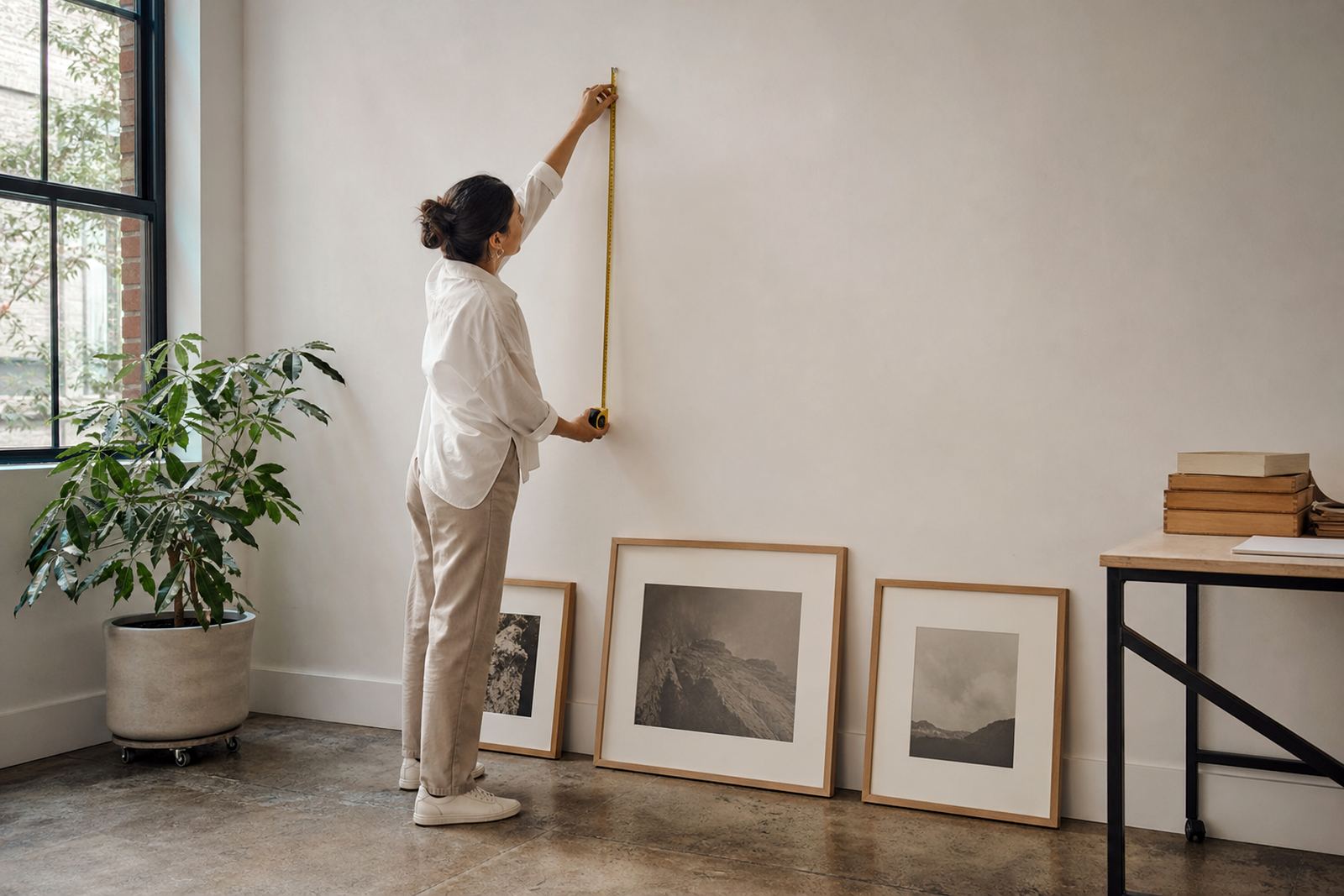
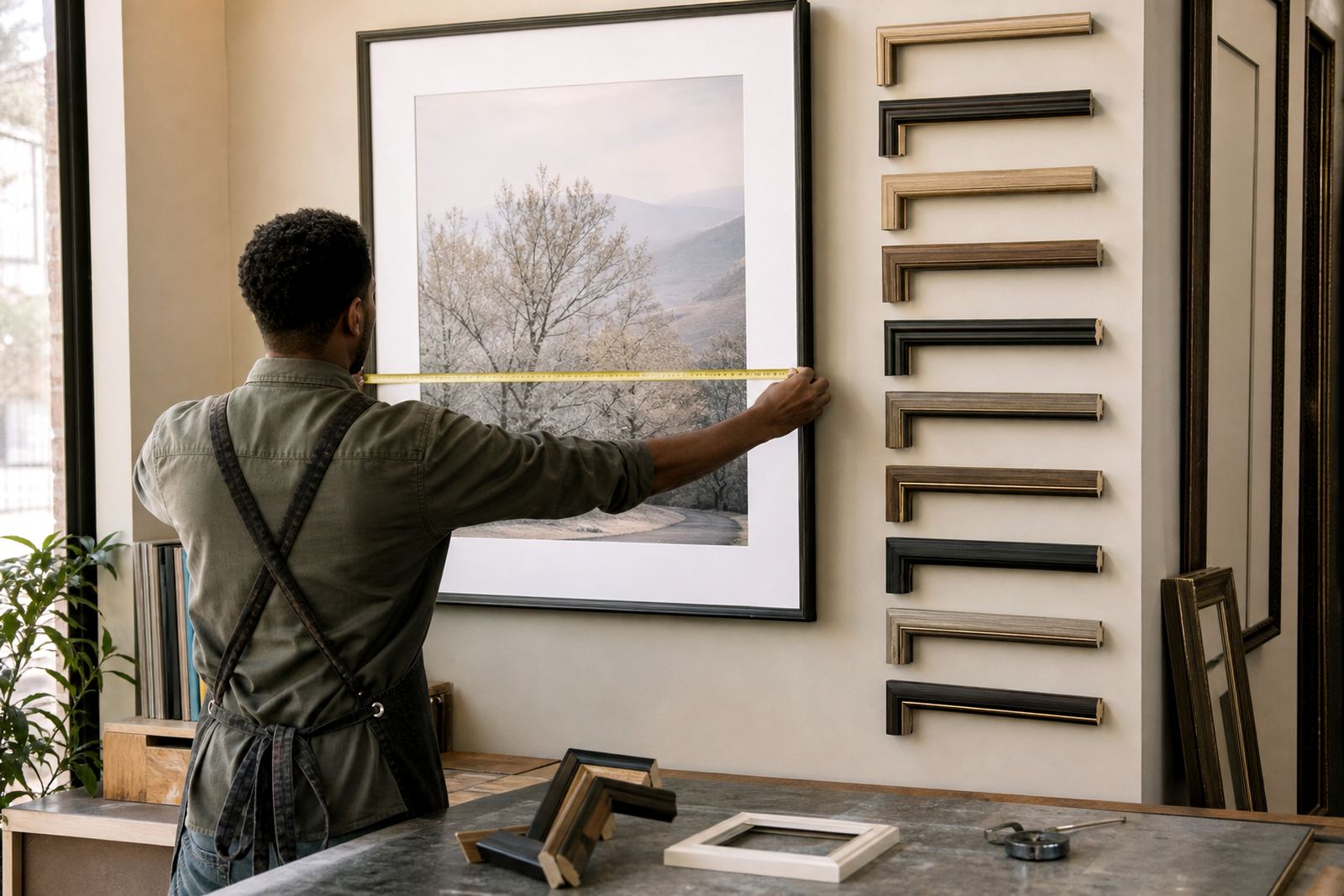
Before you choose a frame, measure the artwork itself. Note the visible image size, the full sheet size if there is a border, and any uneven edges from hand-cut paper or old mounting. This is the first step because the frame should support the piece, not squeeze it. If you are framing a photograph, certificate, print or painting, the exact measurements matter more than the wall where it will hang.
In practice, it helps to write down three numbers: artwork width, artwork height, and the amount of visual border you want around it. For framed art in a home or gallery, those figures guide the frame opening, mount size and overall outer dimensions. That planning avoids a piece looking too cramped in a narrow frame or too loose in a wide one.
- Measure the visible art in millimetres, not only in centimetres.
- Check whether the work needs a mount or can sit close to the glazing.
- Allow for any signature, edition number or paper deckle edge.
Frame width changes how the piece reads
Frame width is not only a styling choice, it changes the visual weight of the work. A slim profile works well for smaller photographs, contemporary prints and grouped pieces. A wider frame gives more presence to a single artwork, especially in a formal lounge, boardroom or gallery wall. If the frame is too wide for the image, the piece can feel heavy. If it is too narrow, the art may look under-supported.
As a rule, the bigger the artwork the more carefully you need to balance the width of the frame against the size of the image. A bold frame can suit a large oil painting in a Parkhurst dining room, while a lighter profile may suit a black-and-white print in a Midrand office passage. For coastal spaces in Cape Town or Durban, it is also worth considering how humidity and sunlight will affect the materials over time.
- Small artworks usually suit slimmer frame widths.
- Medium to large pieces often need a wider visual border around them.
- Busy interiors usually call for simpler profiles so the art stays clear.
Mount depth affects the finished proportions
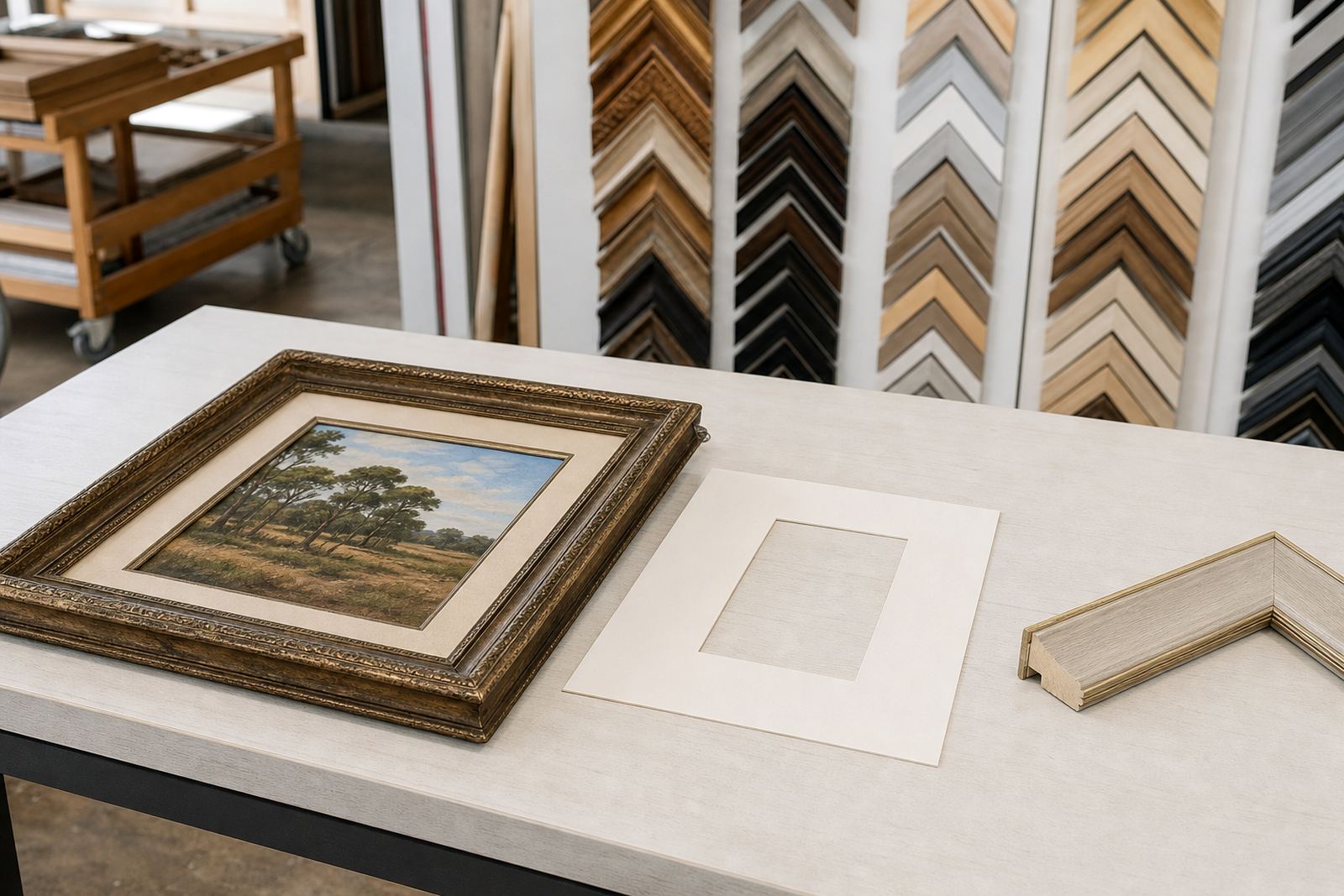
Mount depth is often overlooked, yet it changes how far the artwork sits back from the glass and how substantial the final presentation feels. A deeper mount can create breathing room around a work on paper, which is useful when the image is detailed or the wall colour is strong. Shallow mounting can suit compact pieces where you want a tighter, cleaner look.
For framed photographs and limited edition prints, the mount should not compete with the image. It should create a measured border that draws the eye inward. In a gallery setting, the depth also helps when several works hang together. If every frame has a slightly different opening and border, the display can look uneven even if the frame sizes match perfectly.
- Choose deeper mounts for delicate works that need visual space.
- Keep the mount width consistent if you are hanging a series.
- Use conservation materials for pieces with value or sentimental importance.
Think in ratios when planning a set or series
If you are framing more than one piece, proportions matter even more. A collection of family photographs, exhibition prints or certificates should look related even when the artwork sizes differ. The easiest way to do this is to work with a repeat ratio. That means using the same frame width or mount proportion across the set, even if the image dimensions change.
This approach is useful for office walls, staircases and gallery corridors where the eye moves from one frame to the next. In a Johannesburg home, for example, a row of smaller travel photographs can look orderly if each one has the same border depth and frame profile. The result is tidy without feeling stiff and the room still feels lived in.
- Keep the mount border the same from frame to frame where possible.
- Match frame colour and finish across a series for visual unity.
- Allow some breathing space between frames so the wall does not feel crowded.
Local conditions change material choices
In South Africa, frame planning should take the climate into account. High summer heat, coastal humidity and load-shedding all affect the long-term condition of paper, timber and glazing. In Durban and Cape Town, moisture can make certain materials warp or lift if they are not chosen carefully. In Johannesburg and Pretoria, dry indoor air and strong sun through windows can fade inks and brittle paper.
This is why size planning should also include the frame structure itself. A very large frame needs proper support so it does not twist over time. Heavy artwork may need stronger hanging hardware and a more stable backing. If the piece will hang in a passage, foyer or gallery with bright light, ask whether UV filtering glazing or a deeper rebate is suitable.
- Large frames need secure hanging points and proper wall fixings.
- Rooms with direct sun call for extra protection against fading.
- Coastal homes benefit from materials that handle moisture better.
A practical example from Parkhurst to Pretoria
Imagine a customer brings in a 420 x 594 mm print from Parkhurst and wants it displayed in a Pretoria study. The image itself is fairly simple, but the room has high ceilings and a clean, modern feel. A narrow frame would make the print look small on the wall. A mount that is too wide would overpower the image. In that case, a balanced mount with a medium frame width can give the print enough presence without making it feel heavy.
Now compare that with a family photo enlarged for a gallery wall in Sandton. There the same frame size might look too formal if the mount is oversized. The best result often comes from testing proportions on paper first, then checking how the frame relates to other pieces nearby. That step saves time and avoids expensive rework later on.
Good frame size planning is really about reading the whole setting. The artwork, the wall, the light and the room all need to work together. When those elements are measured properly, the frame becomes part of the composition rather than just a border.
When to ask for framing advice before you order
It is worth asking for advice before cutting mounts or ordering a ready-made frame if the piece is valuable, awkwardly sized or meant for a special wall. A quick check can prevent mistakes with odd formats, oversized canvases, mirrors or artworks with fragile edges. For galleries and homes alike, the best framing choices usually come from seeing the work in context, not from guessing off a tape measure.
At Bright Frames, the team works with custom framing, ready-made guidance, mount cutting, canvas stretching, frame repairs, reframing, glass replacement, artwork installation, gallery hanging, collection and delivery, design consultation and mirror framing. That makes it easier to match the frame size to the job at hand, whether it is one photograph or a full wall installation.
- Bring the artwork, or accurate measurements, before choosing a frame.
- Ask how the frame will look from a few metres away, not only up close.
- For gifts or commercial displays, plan the size before the event date is fixed.
When frame size is planned well, the final piece feels settled. It sits in the room properly and the proportions make sense from every angle.