
Start with the eye line, not the top edge
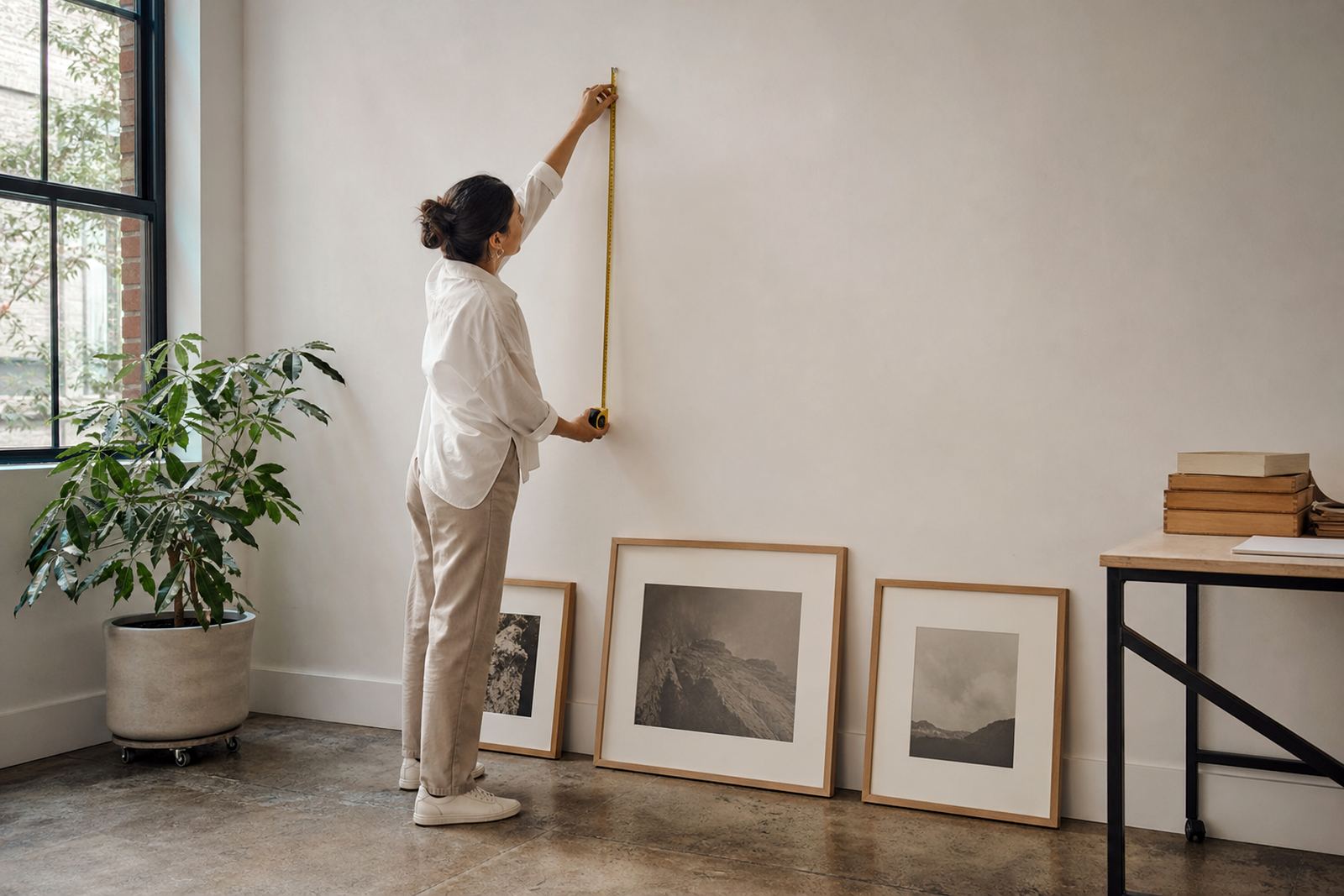
The most common mistake is hanging a picture by judging where the top of the frame should sit. A better rule is to place the centre of the artwork at average eye level, which is usually around 145 cm to 155 cm from the floor in a home setting. That measurement works well because it keeps the work in natural view when you are standing, moving through a room, or sitting nearby.
For a lounge, passage or entrance hall, this gives a balanced result without making the piece feel too high. In a home with high ceilings, do not be tempted to push the artwork up just because there is empty wall space. If the eye line feels right, the room will usually feel better too.
- Measure from the floor to the centre point of the frame, not the top.
- Use the same eye line for a row of smaller works where possible.
- If the piece is above furniture, keep the centre line lower than you might for a plain wall.
When the artwork sits above a couch or sideboard
Artwork above furniture needs a slightly different approach. A useful guide is to leave about 15 cm to 25 cm between the top of the furniture and the bottom of the frame. This gap helps the item and the picture read as one unit, instead of two separate things fighting for attention.
For a couch, allow enough space so the frame does not feel like it is about to drop onto the backrest. For a sideboard or console table, the artwork can sit a little higher if the furniture is slim and the wall is wide. In a Parkhurst home with a narrow living area, a lower placement often looks calmer and less crowded.
- Small frames over a large sofa often look lost unless grouped.
- A wide frame or a trio of works can suit a longer sideboard better than one tiny piece.
- Keep the lowest point clear of lamps, ornaments and door swings.
Gallery walls need one clear anchor point
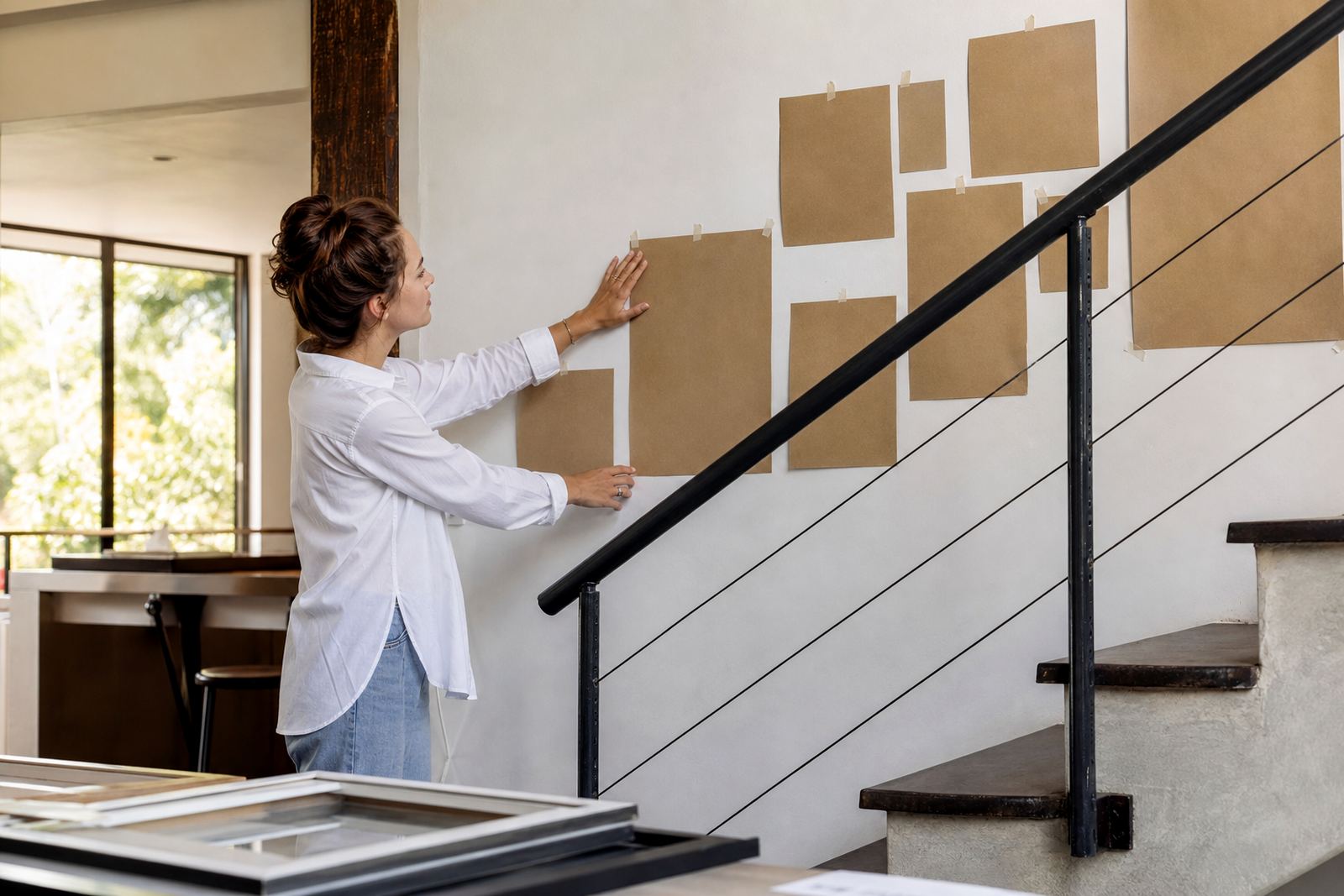
Gallery walls can look casual, but they still need a plan. Choose one anchor piece and let the rest of the group build around it. The centre of the full arrangement should still sit roughly at eye level, with the outer pieces balanced around that point. This is often where people go wrong: they hang each frame correctly on its own, yet the final group feels too high or too scattered.
Lay the pieces out on the floor first if you can. Keep even spacing, usually 5 cm to 8 cm between frames, and check that the overall shape works with the wall and the furniture below it. A gallery wall in a Pretoria family room may include school photos, line drawings and one larger statement print, while a Midrand office might use a cleaner grid for a more formal look.
- Use paper templates or masking tape to test the layout before drilling.
- Keep the top and bottom edges of the whole group visually level.
- Mix frame sizes, but do not mix spacing too much.
Adjust for mirrors, staircases and tall walls
Mirrors have their own rules because they are functional as well as decorative. In a hallway or dressing area, the centre of the mirror should usually sit around eye level, but if people use it for a quick look before leaving the house, a slightly lower position is often better. In bathrooms, mirror height must work with basin height, tap position and tile layout, so it is worth checking the whole wall before any holes are made.
Staircases are different again. The eye line rises as you move up the stairs, so a straight horizontal line can look awkward. In that case, follow the slope of the staircase and keep the spacing consistent. On tall walls, especially in older Johannesburg homes, it is better to group pieces lower than you think and let the wall breathe above them. Empty space can be useful, not wasted.
Hanging height and frame weight go together
Height is only one part of the job. A heavy frame needs the right wall fixing, especially on plasterboard, brick or older walls where the surface condition is not perfect. If a piece is hung too high and too far from a fixing point, it is more likely to shift, tilt or put strain on the hardware. That is why careful installation matters just as much as measuring.
In South African homes, weather and building conditions also play a role. Coastal humidity in Durban can affect paper, mounts and some backing materials, so a well-sealed frame and proper fixing are important. In Johannesburg, load-shedding sometimes means the room is viewed under different light levels, so test the height in both daylight and evening light if you can. A frame that looks fine at noon may feel ofen too high after dark.
- Use proper wall plugs and hooks for the wall type.
- Check that the frame sits level after hanging, not just while marking it out.
- For larger pieces, get two people involved so the position can be checked from a distance.
A simple local example from Parkhurst
Take a common Parkhurst setting: a dining room wall with a long table, a sideboard and one framed print from a family trip. If the print is hung too high, the room starts to feel disconnected. If it sits too low, the table and the artwork crowd each other. The best result is usually a frame whose centre sits close to eye level, with enough space above the sideboard to let the wall breathe.
For a bigger collection, like framed photographs in a Cape Town gallery or a mixed wall in a Sandton office, the same rule applies. Start with the person who will view the work most often, then build the height around comfort and balance. Good framing should look right when you enter the room, not only when you stand directly in front of it.
At Bright Frames, we guide clients through hanging height, placement and frame choice so the finished result suits the room and the work itself. The aim is simple: make the piece easy to live with, and make the wall feel properly finished.