
Start with the canvas, not the frame
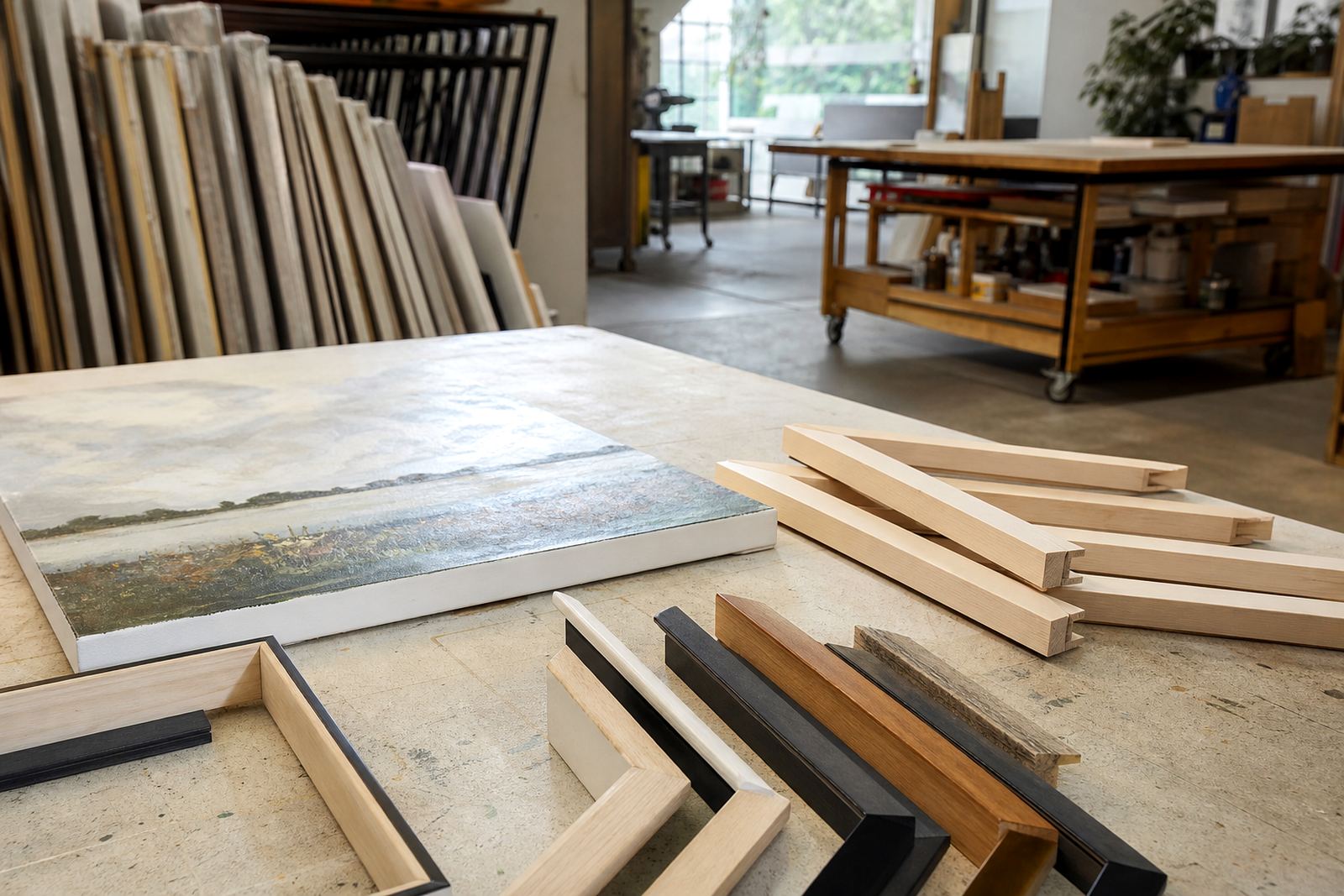
Before choosing a frame style, look at the painting or print itself. A stretched canvas with painted edges often does well on its own, while a work with raw edges or visible staples may need a cleaner finish. If the canvas is thin, quite large or will hang in a busy passage, the support matters as much as the look.
In Johannesburg and Pretoria, many clients bring in canvases after they have lived with them for a while. The piece may suit the wall, but not the space around it. A dining room in Parkhurst can call for a neater border, while a bright office in Sandton might need a deeper frame to hold its own against glass, timber and strong daylight.
- Check whether the painted sides should stay visible
- Confirm the canvas depth before choosing a tray or floating frame
- Think about glare, dust and daily handling
When a tray frame gives the cleanest finish
A tray frame suits canvas art when you want a neat border without covering the edges. The artwork sits inside the frame with a small shadow line around it, which works well for contemporary paintings and photographic prints on canvas. It also helps the work look finished without making it feel heavy.
This style is popular in modern homes and galleries because it keeps the artwork visible and gives the wall a tidy edge. In coastal areas like Durban, clients often prefer a tray frame in a stable timber or sealed finish so the piece can cope better with humidity. For large works, the extra structure can also help the canvas feel more grounded on the wall.
- Best for modern interiors and gallery spaces
- Good for canvases with finished edges
- Works well when you want the art to remain the main focus
Floating frames for depth and breathing room
Floating frames are a strong choice when you want the canvas to appear as if it is hovering inside the frame. The small gap around the artwork gives depth and makes brushwork, texture and edge detail easier to appreciate. This is often the best option for painters who have continued the image over the sides of the canvas.
We often recommend this look for larger pieces that need a bit of visual space. It can suit a statement wall in Rosebank or a private collection in Midrand where the canvas needs to stand out without becoming too formal. The frame should be measured carefully, because even a few millimetres can change how balanced the finished piece feels.
- Good for textured paintings and bold colour fields
- Lets painted edges remain visible
- Ideal when you want a lighter visual frame around the work
When to leave a stretched canvas unframed
Not every canvas needs a frame. A well-stretched artwork can look strong on its own, especially when the edges are painted and the stretcher bars are square and tight. This approach suits minimal interiors, studio work and pieces that already have enough presence without extra detail.
The important part is the quality of the stretch. If the canvas is sagging, the corners are uneven or the edges are marked from storage, leaving it unframed can expose those faults. In South African homes where load-shedding means rooms are often lit differently through the day, a plain stretched canvas can also shift in appearance more than a framed piece, so placement matters.
- Best for clean, contemporary interiors
- Works when the canvas edges are finished properly
- Choose this if you want the most direct view of the artwork
Practical matters: glass, weight and wall conditions
Canvas framing is not only about style. Weight, wall strength and the room environment all matter. A heavy frame on a plasterboard wall needs proper fixing, and a large canvas in a humid room may need materials that are less likely to move. In some cases, clients ask for glass replacement or installation advice for mixed collections, but most canvas art is better left without glass unless the work demands extra protection.
For galleries and offices, we also look at handling. If a canvas will be moved for exhibitions or taken off the wall often, the frame has to be practical as well as neat. Collection and delivery can help reduce handling damage, especially for larger works that are awkward in a lift or stairwell. A little planning now saves a costly repair later, and that is worth more than a fancy finish.
- Match the frame to the wall fixings and the canvas size
- Consider humidity in coastal towns and temperature changes inland
- Plan for safe transport if the work travels between spaces
How we guide clients through the choice
At Bright Frames, we start by looking at the artwork, the room and how the piece will be used. Some clients come in with a single family canvas, others with a small gallery wall or a full set of works for a new office. Sipho Maseko and the team work through the options with practical advice, not guesswork. That means looking at colour, edge depth, weight and the final wall space before anything is cut.
A local example is a client in Johannesburg who brought in a stretched seaside painting for a family lounge. The room had strong afternoon light and the walls were already busy with timber furniture and bookshelves. A floating frame gave the work enough presence without making it heavy, and the finished piece sat comfortably between the windows. That is often the best result: not the fanciest frame, just the right one for the space.
From Parkhurst to Pretoria, Cape Town, Durban, Sandton and Midrand, the same rule applies. Good framing should protect the canvas, suit the room and let the artwork speak for itself. If you are unsure, start with the work in hand and let the piece show you what it needs.