
Why kids art deserves proper framing
Children put real effort into their art, and the display should show that. A simple peg on the fridge works for a day or two, but a proper frame protects the work from fingerprints, bending and moisture, especially in Johannesburg homes where summer dust and winter dryness both take a toll. In coastal areas such as Durban and Cape Town, humidity can also cause paper to curl, so it helps to keep pieces behind the right glazing and away from damp walls.
For parents, schools and galleries, the goal is not to make a child’s work look formal or stiff. It is to give it a place of pride while keeping the process practical. A good framing plan lets you rotate pieces through the year, from crayon drawings and collages to watercolours and school certificates. That way the wall stays fresh and the child sees that each new effort matters.
- Choose framing that protects paper from dust and handling
- Leave space for changing artwork as children grow
- Use colours and finishes that suit the room, not just the picture
- Keep the display easy to update without damaging the frame or artwork
The best frame style for a changing wall
For a kids art display, the best frame is usually one that is simple, light and easy to reopen. Deep decorative mouldings can overpower a small handprint or pencil sketch. Clean lines, narrow profiles and neutral tones usually work well, because they let the artwork stay the focus. White, black, natural timber and soft colours are common choices for homes in Parkhurst, Sandton and Rosebank, where the room may already have a lot going on.
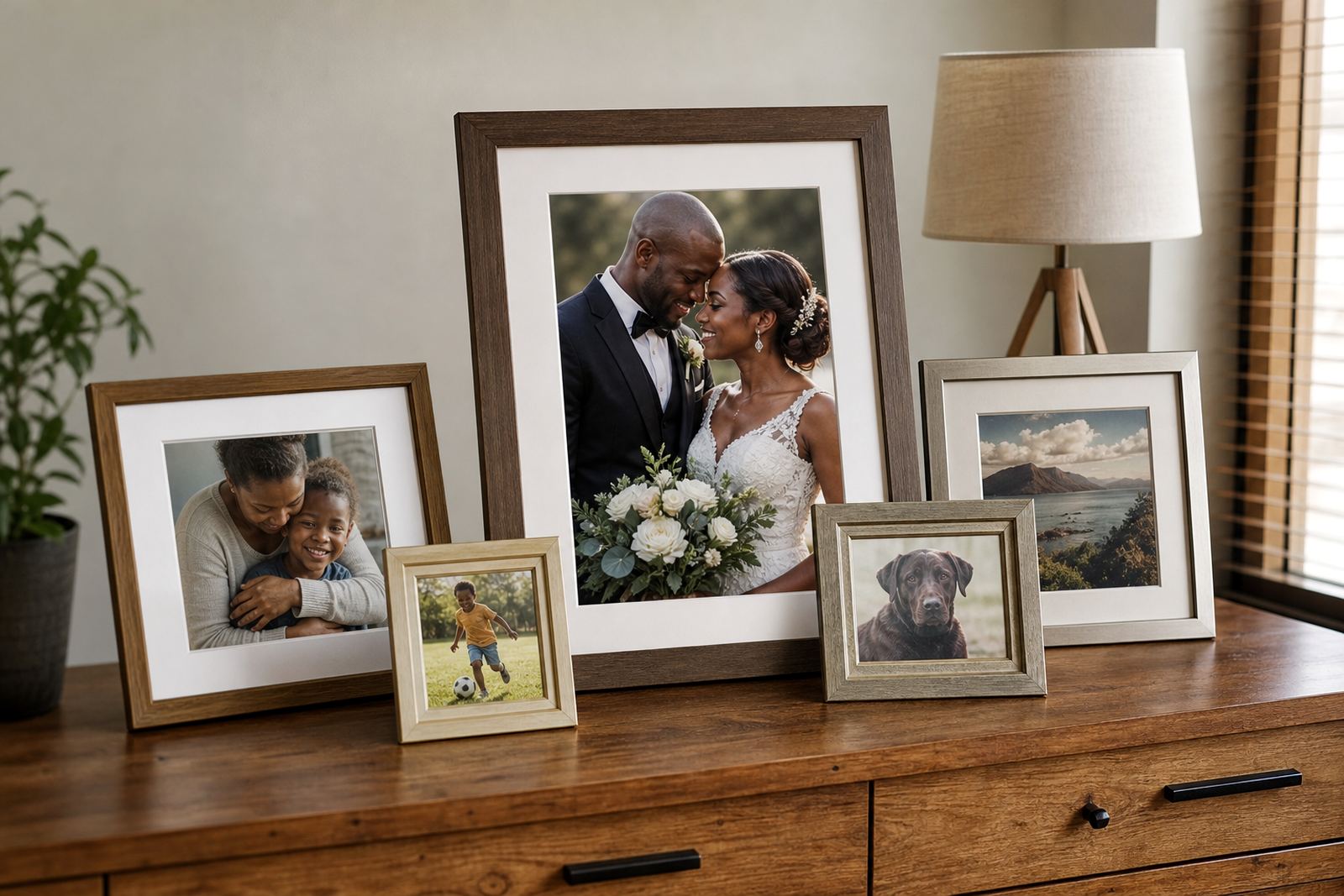
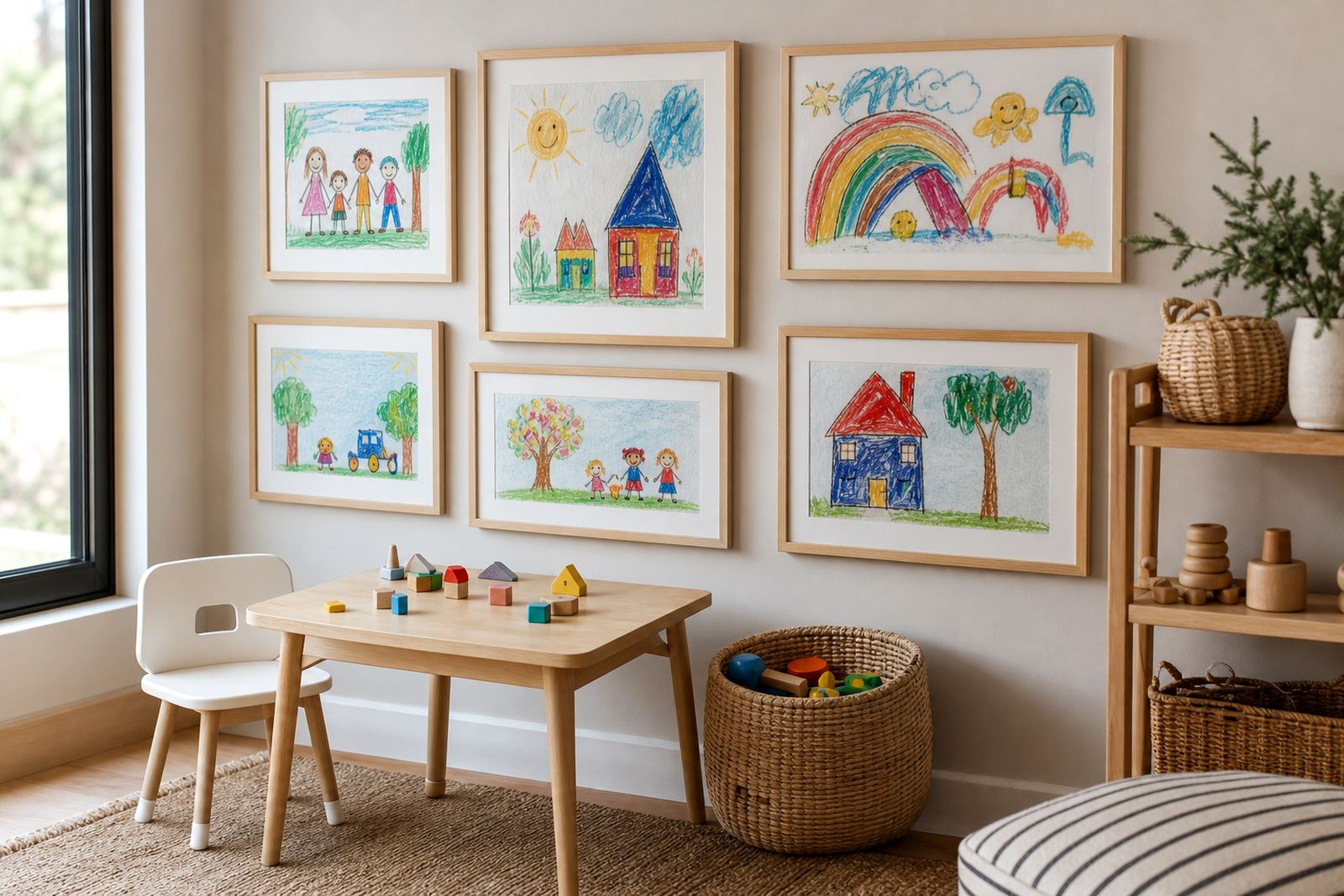
When the work is part of a gallery wall, consistency matters. A row of similar frames can make a mix of drawings, school photos and certificates feel organised. If the child’s art is bold and colourful, a plain frame with a crisp mount often gives the piece more breathing room. For softer pastel work, a timber finish can feel warmer and more inviting.
- Use standard sizes where possible to make future changes easier
- Pick a frame depth that suits paper, canvas or layered collage work
- Ask for a mount if you want the artwork to sit neatly inside the frame
- Choose glazing based on where the frame will hang, near sun or away from it
How to frame school art without losing the child’s hand
Parents often want to tidy up a school project before it goes on the wall, but a child’s marks should still look like a child made them. A frame should not flatten the work into something over-polished. If the piece has thick paint, glued beads, fabric or foam, it may need extra depth so the front glass does not press on the surface. For paper pieces, careful mount cutting can create a cleaner border without hiding the original edges.
In many South African homes, the nicest family displays are the ones that mix different stages of a child’s growth. A preschool finger painting next to a Grade 4 self-portrait tells a better story than a wall full of identical prints. If you keep the frames consistent, the art can change as often as needed without the wall looking messy. It also helps if the same frame can be reopened for a new piece later, which saves money over time.
- Keep the original artwork intact where possible
- Use wider mounts for small pieces so they do not look crowded
- Allow extra space for textured projects and 3D elements
- Store older pieces flat in a dry place before rotating them back in
A practical rotation plan for homes, schools and clinics
The smartest kids art display is one that can change without fuss. Some families update the wall every term, while schools and child-focused waiting rooms may rotate artwork monthly. In a busy home, a frame with a simple opening system makes it easier to swap in new drawings when homework bags come home on Friday. That keeps the display active and stops the same picture from staying up for years.
A good rotation plan also helps with storage. Instead of stacking art in cupboards where corners get bent, keep a folder or flat box for the older pieces you want to keep. If a child is especially proud of a work, it can be framed now and then moved into storage later once a new favourite comes along. This keeps the display feeling fresh without creating waste. It also makes it easier to prepare for grandparents visiting from Pretoria or Cape Town, who often enjoy seeing the latest work on the wall.
- Set a regular change-over date, such as each school term
- Keep spare mounts or backing boards for quick updates
- Label the back of each piece with the child’s name and date
- Store finished art flat, away from heat and damp
Protecting artwork in South African conditions
Paper and board are sensitive to light, heat and moisture, so the placement of the frame matters almost as much as the frame itself. Avoid full sun where possible, especially on north-facing walls that get strong daylight for much of the day. In Durban, moisture in the air can make unprotected paper wave or stick. In Johannesburg, sudden dust and dry air can collect around open edges. For homes in Midrand or Pretoria, where rooms may get strong afternoon sun, the safest position is usually away from windows and heaters.
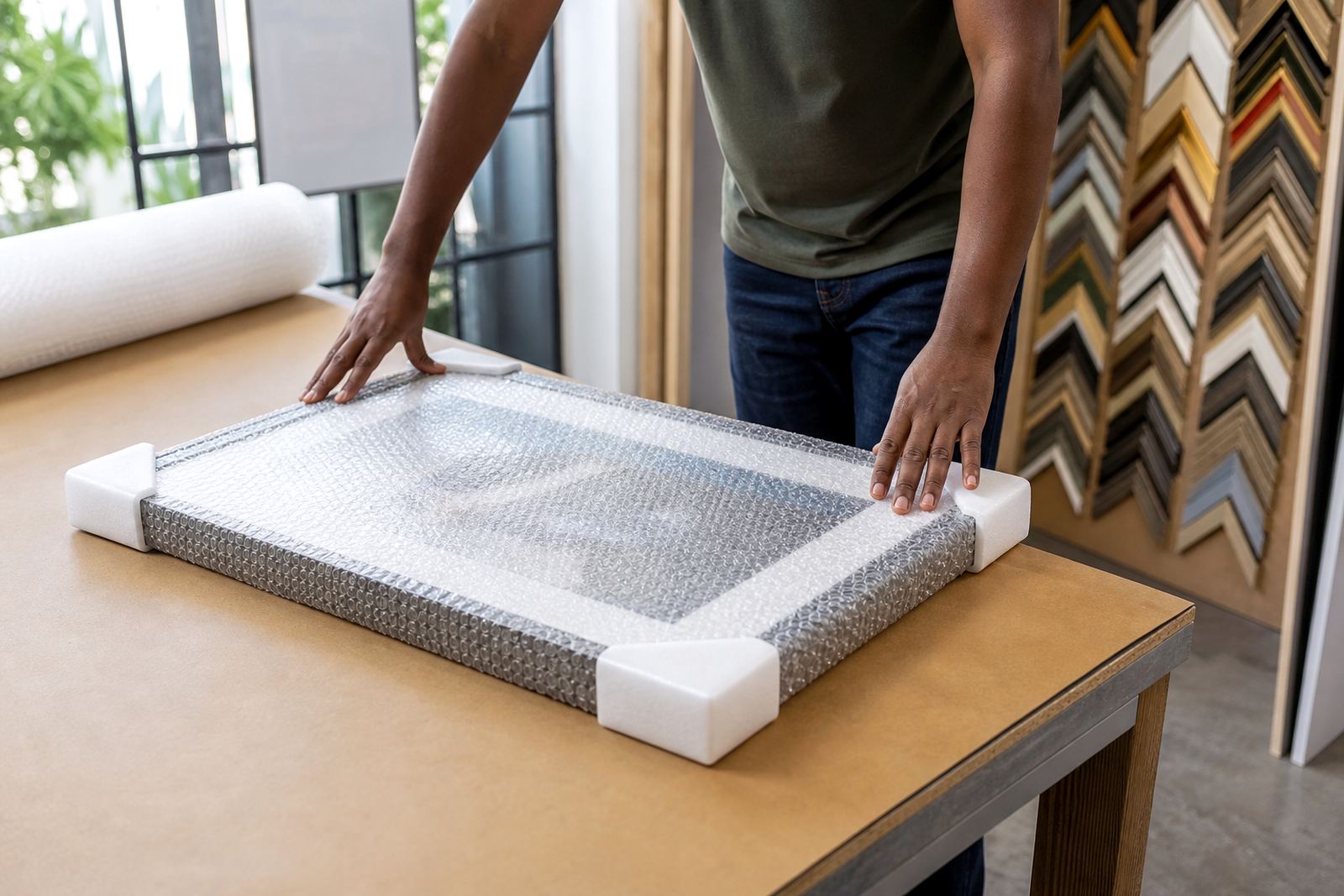
If the artwork is valuable to the family, ask for materials that help it last longer. A sealed backing, clean hanging method and suitable glazing all make a difference. For very delicate pieces, the framing should support the work without forcing it flat. It is also worth checking the wall itself. A solid fixing is important for heavier framed pieces, especially if the home has children running around, or if the frame will hang in a school passage where people move past it all day.
- Keep framed art out of direct sun and away from damp walls
- Use proper wall fixings for the weight of the frame
- Clean glass and frame surfaces with a soft dry cloth
- Check the backing from time to time for any signs of moisture
How Bright Frames helps families choose the right display
Bright Frames works with families, schools and galleries that want children’s art shown properly and without hassle. Based in Parkhurst, Johannesburg, the studio helps clients choose between custom framing, ready-made options, mount cutting, reframing and glass replacement. That is useful when a child brings home a picture that is an unusual size, or when an older frame can be reused for a new piece.
The team can also advise on hanging, collection and delivery, which is handy for busy parents and school staff who do not have time to keep measuring every wall. Ayesha Patel can help with layout choices, Pieter van Wyk handles the framing details, and Lerato Molefe helps with client requests so the process stays clear from start to finish. For homes in Johannesburg, Pretoria, Midrand, Sandton, Rosebank, Cape Town and Durban, the aim is the same: make the art look cared for, and keep the wall easy to update as children keep drawing.
For a kids art display, the best result is usually the one that feels personal, practical and ready for the next school term. A good frame should not freeze a child’s work in place forever. It should give that piece a proper moment, then make room for the next one when the time comes.
A local example from Parkhurst
A Parkhurst family came in with a stack of school drawings, one lino print and a painted self-portrait from a six-year-old who wanted everything on the wall at once. The solution was not one big frame but a set of matching frames in different sizes, each with a simple neutral mount. The result let the parents rotate pieces through the year without changing the whole display, and the child could see each new artwork as it was finished.
That approach works well in many Johannesburg homes because it balances pride with order. The wall stays tidy, but it never feels stiff. And because the frames were chosen with future updates in mind, the family can keep using the same style as the child grows. Small detail, big difference.