
Choose pieces that suit the wall, not the wish list
In a small room, scale matters more than quantity. One well-chosen framed photograph, print or artwork can do more than a cluster of pieces that fight for attention. Start by looking at the wall first. Measure the available width and height, then leave breathing room around the frame so the room can still feel open.
For compact spaces in Parkhurst, Rosebank or a flat in Midrand, clients often do better with one vertical piece for a narrow wall or a slim horizontal frame above a couch or sideboard. A piece that is too large can make the room feel cramped, while something too small may look lost. The aim is balance, not filling every gap.
- Use one statement piece on a short wall.
- Choose vertical frames for tight passages and stair landings.
- Keep paired frames the same size for visual order.
- Leave 10 to 15 cm of wall around the frame where possible.
Light, reflection and the right glass for tighter rooms
Small rooms often rely on natural light, so the glass choice matters. If the wall gets strong sun during the day, particularly in west-facing rooms, select glazing that helps reduce glare and protects the artwork. If the room is darker, a lower-reflection option can keep the image visible without making the glass look heavy.
In apartments and townhouses, shiny surfaces can bounce too much light and make a room feel busy. A carefully chosen matt mount and the right glass finish can help settle the whole composition. In coastal cities like Cape Town or Durban, humidity can also affect framing over time, so materials need to be chosen with care if the piece is near a kitchen, bathroom or enclosed patio.
- Use non-reflective glass where glare is a problem.
- Protect photographs and artwork from direct sun.
- Avoid placing framed pieces against damp exterior walls.
- Ask about materials suited to coastal humidity.
Mounts and frames that make a room feel cleaner
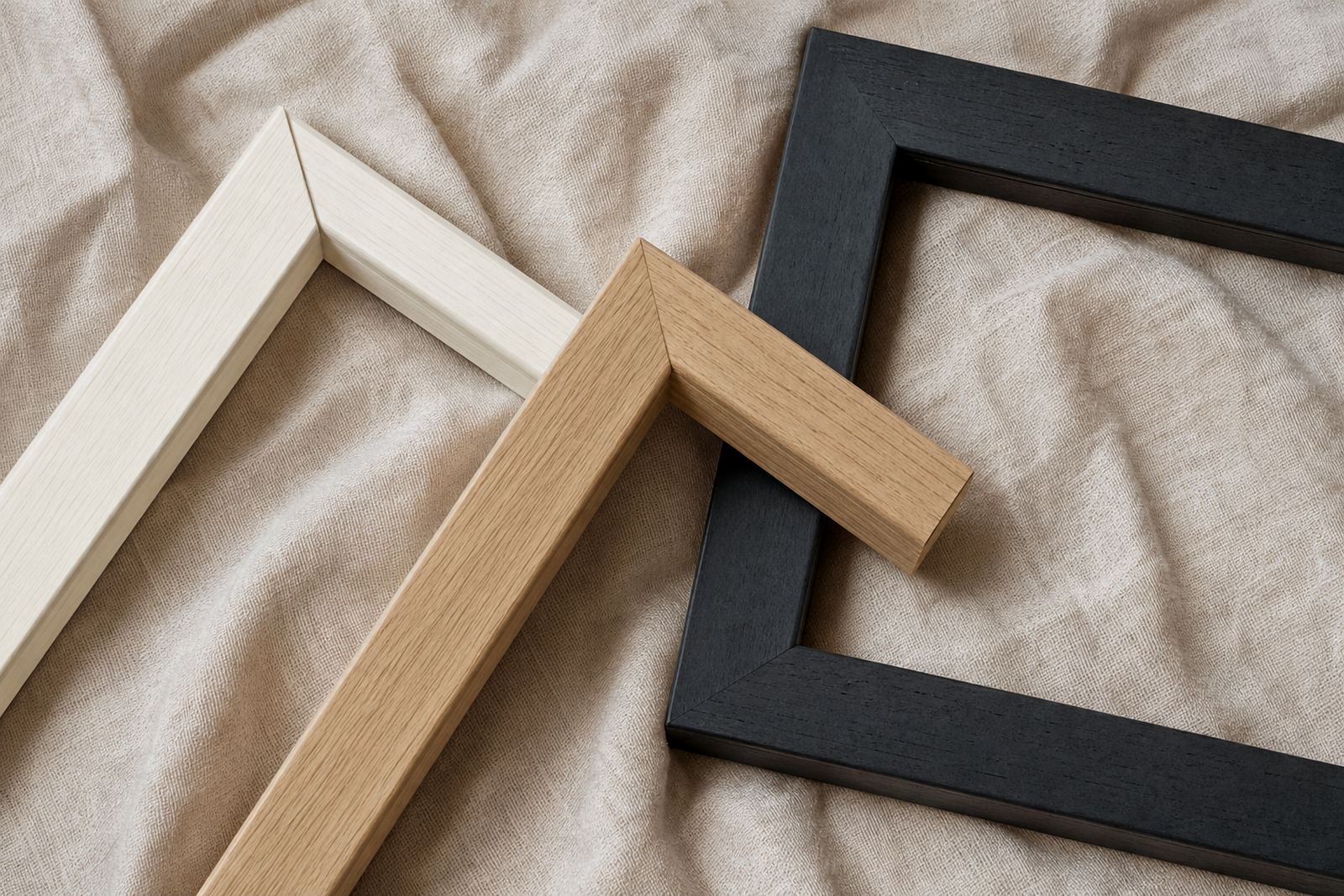
A mount is not just decoration, it gives the artwork space to breathe. In smaller rooms, a wide mount can make a modest image feel more refined without adding bulk. Thin frames also help keep the look light, especially if the room already has a lot of furniture or built-in shelves. Dark, heavy frames can work in some interiors, but they need enough wall space around them to avoid closing the room in.
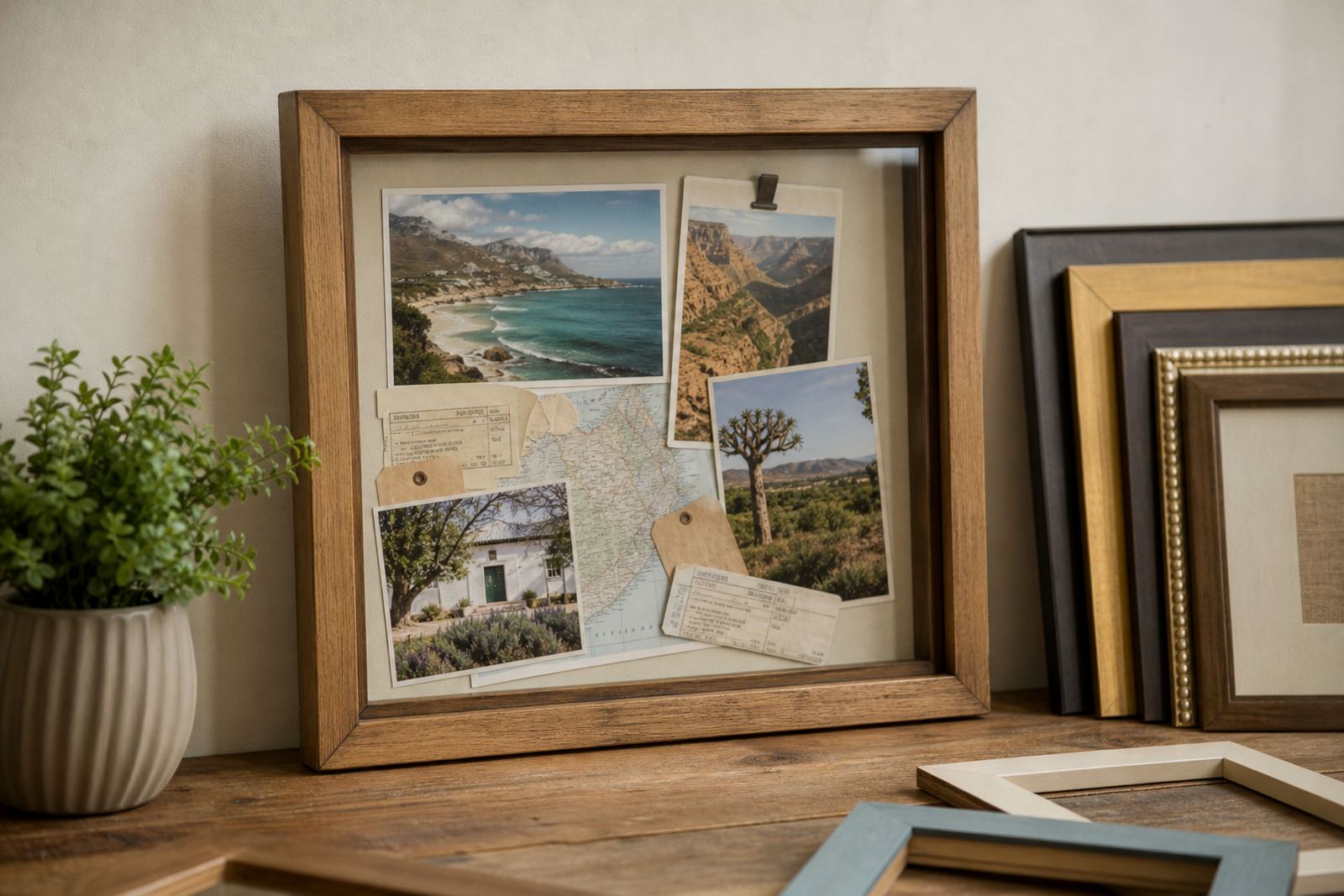
For family photos, certificates, and travel pieces, a simple frame with a plain mount is often the best choice. It keeps the eye on the image rather than the frame. If you want more visual interest, texture can come from the mount board or the frame profile rather than from large decorative borders. That gives depth without clutter, and it is a good fit for homes where every wall has to work hard.
- Plain mounts suit collections of family photos and certificates.
- Thin profiles are easier on smaller walls.
- Keep the frame finish in line with existing furniture and flooring.
- Use one accent frame, not three competing styles.
Small gallery walls need discipline, not lots of pieces
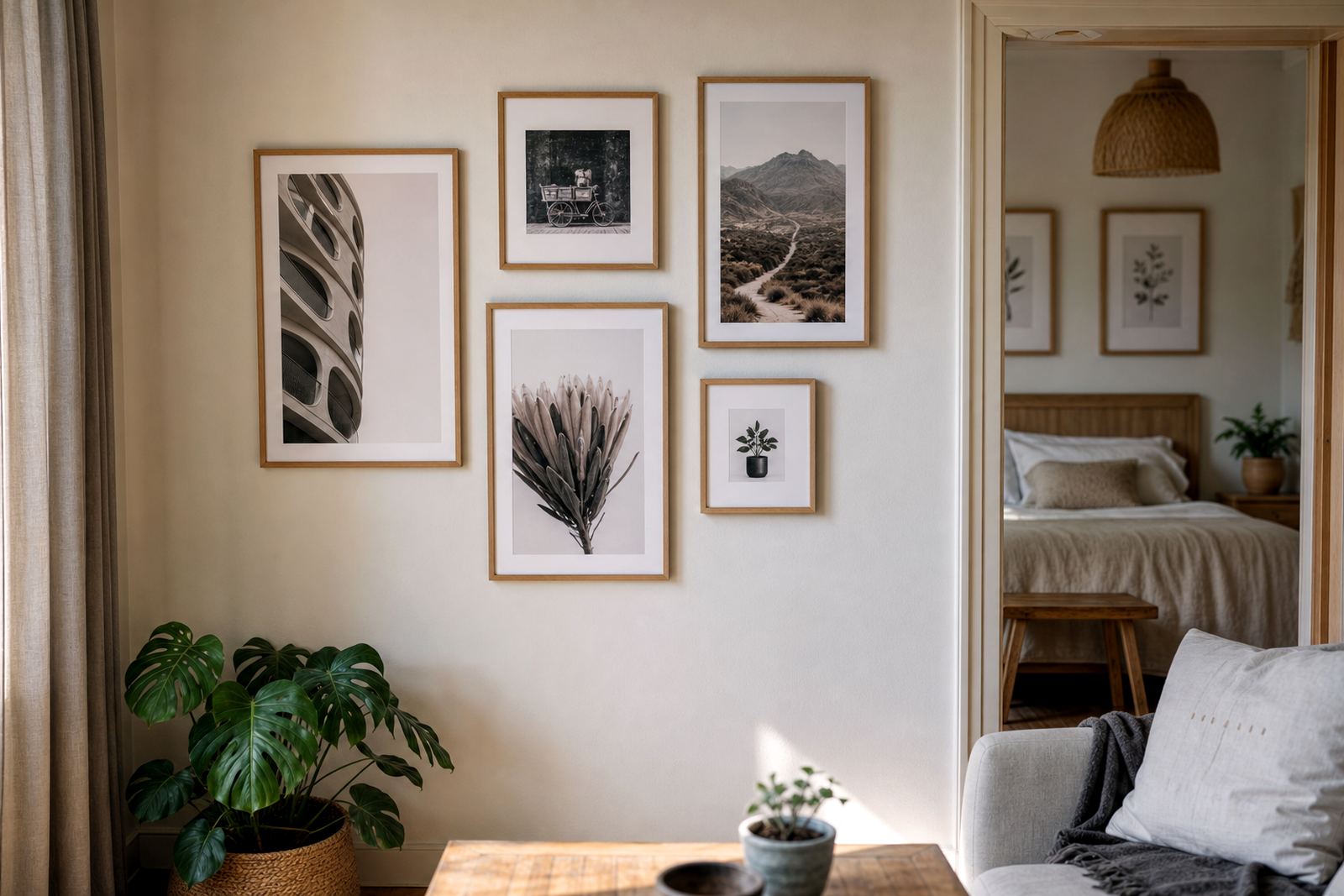
Gallery walls can work in compact rooms, but they need clear spacing and a consistent plan. The biggest mistake is packing too many items into one area. That can make a passage, study nook or bedroom feel crowded. A tighter arrangement with matching spacing looks calmer and more deliberate.
When planning a small gallery wall, it helps to decide on one of three approaches. You can use matching frames for a neat grid, mix frame sizes but keep the colour family consistent, or build around one anchor piece with smaller items around it. In a small Johannesburg apartment the right arrangement can turn a plain wall into a feature, without making the room feel smaller. Carefull measuring makes all the difference.
- Keep spacing between frames consistent, usually 5 to 8 cm.
- Hang the centre of the arrangement at eye level.
- Choose a common theme such as family, travel or black and white photography.
- Use paper templates before making holes in the wall.
Practical framing for rentals and changing interiors
Many people in Pretoria, Sandton and Cape Town rent their homes or move often, so framing has to be practical as well as good-looking. Lightweight pieces are easier to handle and simpler to reposition when the layout changes. If you are not sure where a piece will live long term, talk through the wall type, the amount of sunlight and whether the room may be repainted later.
Ready-made frames can be a good answer for quick styling, while custom framing is better for odd sizes, art on paper, jerseys, mirrors or items with sentimental value. For a small room, it can also help to frame in stages. Start with one piece, then see how the room feels before adding more. That way the room keeps its sense of space.
- Choose lighter frames for easier moving and rehanging.
- Use custom framing for odd sizes and special items.
- Test one wall before planning a full room.
- Keep spare hanging hardware for future changes.
A local example: a compact Parkhurst living room
A client in Parkhurst wanted to place a family print above a narrow couch in a small living room with limited wall space and one bright window. The room already had a rug, a lamp and a low bookcase, so adding a large frame would have made the area feel crowded. The solution was a medium-sized vertical frame with a clean mount and glass chosen to reduce glare from the window.
The frame sat comfortably above the couch without touching the bookcase or the curtain line, and the wall still had enough open space around it. The result was simple, but it changed the room. That is usually the point with small space framing. You are not trying to fill every surface, you are making the wall work harder while keeping the room calm and easy to live in.