
Why travel memories work best as one story
A single snapshot is lovely, but a trip usually has more than one part to remember: the route, the place, the timing and the small moments in between. Framing these pieces together gives the memory structure, which is especially useful for holiday souvenirs that would otherwise fade or crease in storage.
For homes in Johannesburg, Pretoria or Cape Town, a framed travel piece also works as wall art that feels personal without looking cluttered. If you are framing a family road trip, honeymoon, school expedition or overseas adventure, the trick is to choose the right balance between paper items and photographs. Too many elements and the piece looks busy. Too few and the story feels thin.
Start with a clear layout before any cutting begins
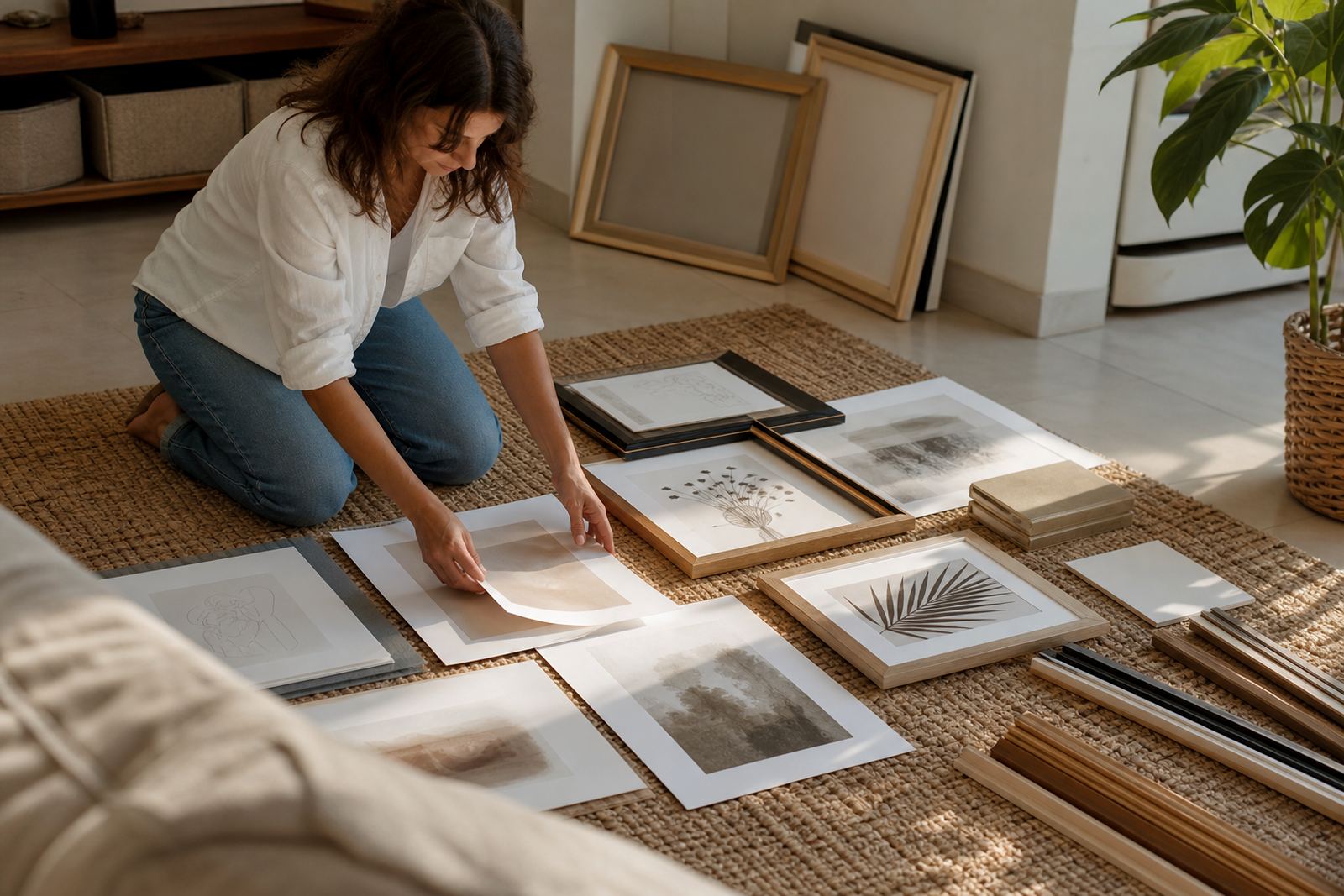
Before mount cutting or glass selection, lay everything out on a clean table and decide what the main item is. It could be a folded map, a dated itinerary, a boarding pass, or a favourite photo from the trip. Once that anchor is chosen, the rest of the pieces should support it rather than compete with it.
In our Parkhurst studio, we often suggest grouping items by meaning instead of by size. A ticket stub can sit beside a photo from the same day, while a map section can point to the place where the photo was taken. That approach gives the frame a clear line of travel and helps the eye move through the memory in a natural way.
- Pick one main item, then build around it
- Keep the colour palette simple if the memorabilia is varied
- Allow space around each item so it can breathe
- Use archival materials where possible to help protect paper items
Maps, tickets and photos: how to combine them neatly
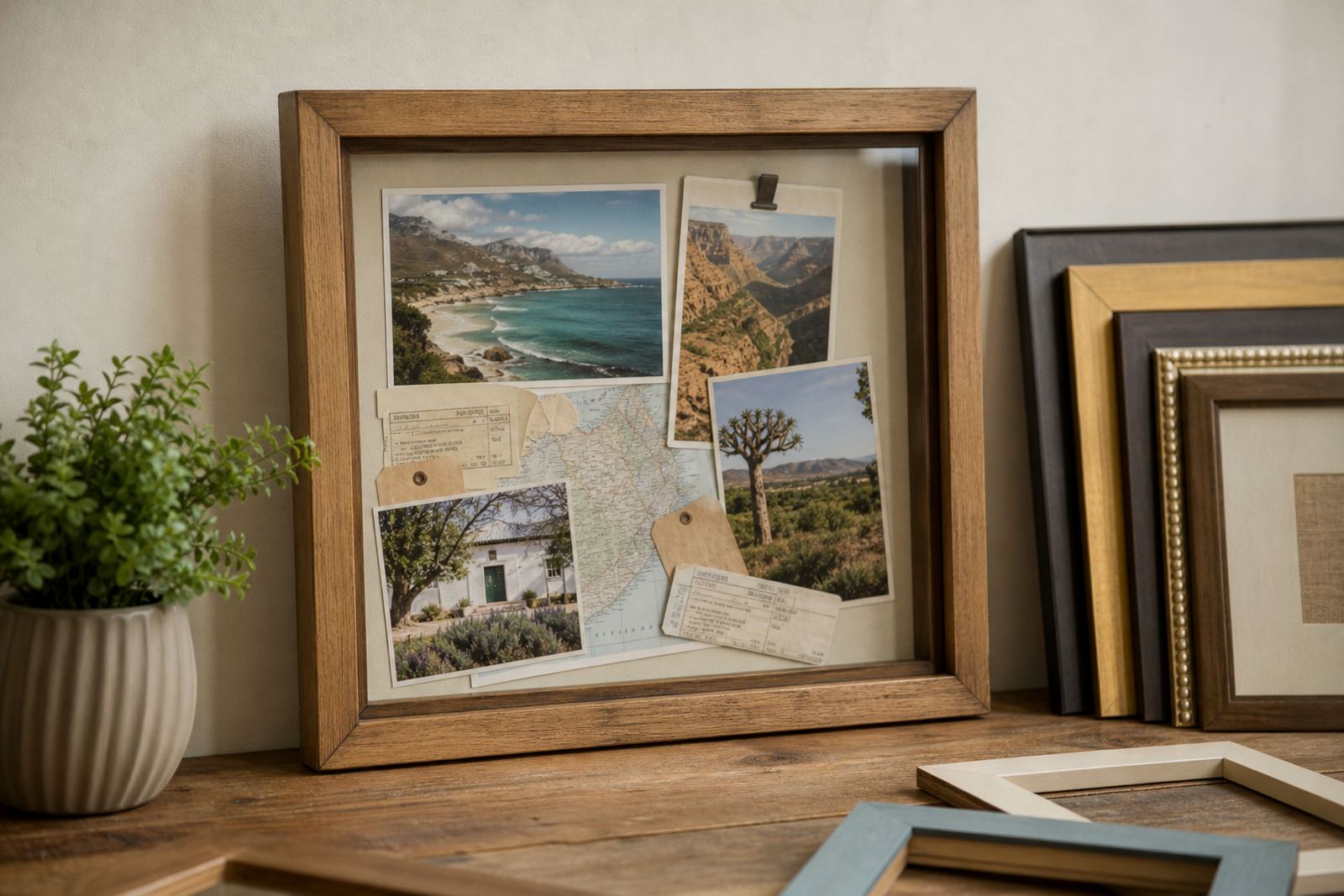
Layered framing works best when each piece has a job. Maps can give context, tickets show the exact journey and photographs bring the people and places to life. If you have concert tickets from a trip, a metro map and a photo from the evening, those three items can sit together in one composition without needing much else.
Use mounts to separate the layers so the items do not touch the glass. This is important in humid coastal areas such as Durban or Cape Town, where paper can react to moisture over time. If you are framing on a budget, you can still achieve a tidy result by using a simple frame profile with a clean white or off-white mount. For bolder travel pieces, a darker frame can work well with black and white photos, especially if the map has strong printed lines.
- Match the frame to the paper tone, not just the room colour
- Leave enough mount space so tickets do not look cramped
- Keep original folds only if they add character and do not damage the item
- Choose UV-protective glass for pieces that will hang in bright rooms
A local example from a Johannesburg road trip
A family from Sandton came in with a weekend road trip collection from the Panorama Route. They had a printed map, fuel receipts, two small photographs and a child’s handwritten note naming the stops along the way. None of the items were valuable on their own, but together they told a very clear story of the trip.
We arranged the map as the base layer, placed the note near the centre and used the photographs to mark the key views. The receipts were tucked into smaller spaces so they stayed readable without taking over the design. The finished frame now hangs in a hallway and works as a reminder of the trip, not just as decoration. That is often the best outcome for travel framing, because the memory is visible every day instead of being packed away after the holiday.
Materials that help travel keepsakes last longer
Travel souvenirs are often handled quite a bit before they are framed, so protection matters. Tickets, stubs and maps can be fragile, and some printed items fade quickly if they sit in direct sunlight. Good framing practice starts with the right backing, neat mounting and glass that suits the location in the home.
If the piece will go in a bright room or near a window, ask for protective glass options. In homes affected by load-shedding, people sometimes choose lighter frame finishes that do not show dust as much, and that is practical too. For gallery-style displays or larger statement pieces, a deeper frame can add enough space for layered keepsakes like shells, tags or small fabric items from the journey.
- Use acid-free backing for paper souvenirs
- Keep fragile items off the glass with spacers or raised mounts
- Choose a finish that suits the room and the subject matter
- Avoid placing framed travel memories in direct sun for long periods
When to ask for help with repairs, stretching or installation
Some travel memories need more than a standard frame. Canvas paintings bought on holiday may need stretching. Older prints may need reframing. A souvenir mirror from a market trip may need a proper mirror frame so it can be hung safely. If the piece is large or awkward, installation is worth considering, especially for homes and offices in Midrand, Rosebank or Pretoria where wall finishes can vary from plaster to brick.
Collection and delivery can also help when the item is oversized or when a client is working to a deadline before a birthday or anniversary. The main thing is to assess the object before choosing the frame. A travel display should look neat, but it also has to protect what matters. Good framing is not only about presentation, it is about getting the details right so the keepsake still looks good years later, even with our harsh sun and shifting indoor temperatures.
If you want to frame a trip from the coast, a safari, or a family visit across provinces, our team in Parkhurst can help you plan the layout, select the right materials and make sure the finished piece suits the home where it will hang.