
A community brief with a clear purpose
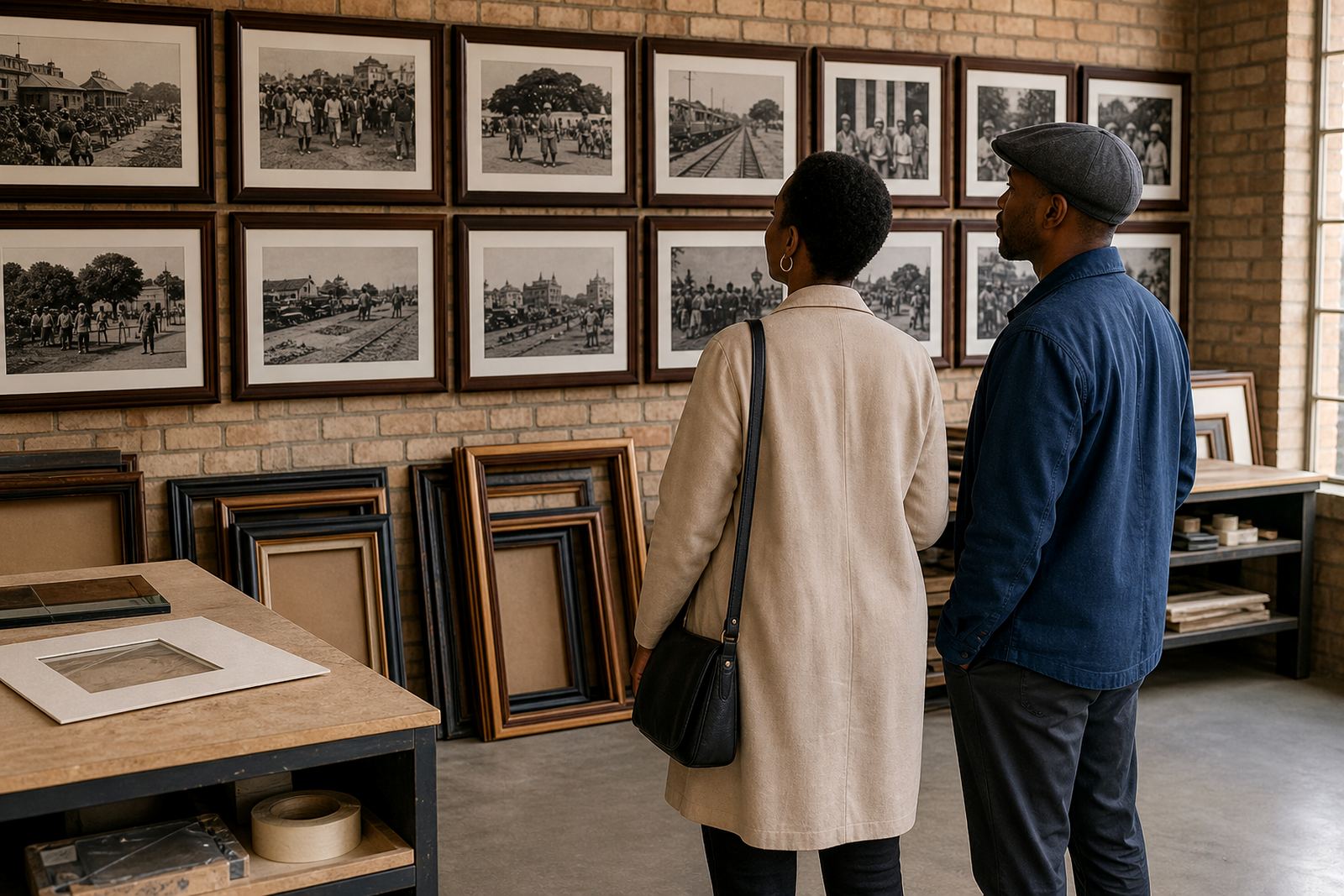
The project came from a community venue in Soweto, Johannesburg that wanted to turn a blank interior wall into a respectful display of local photographs and printed stories. The space is used for meetings, small gatherings and visitor visits, so the frame work needed to look neat in daytime light and still hold together well under regular use.
The brief was simple on paper but detailed in practice. The client wanted a mix of portrait and landscape images, consistent sight lines, and a finish that felt thoughtful rather than overdone. They also needed the display to cope with dust, changing foot traffic and the kind of knocks that happen in a busy shared space.
- Client type: community venue and local heritage group
- Location: Soweto, Johannesburg
- Display type: framed photographs and printed captions
- Wall use: meetings, visitors and community events
Measuring the wall and setting the format
Before cutting anything we measured the wall carefully and mapped the layout on paper. The team checked the wall width, the available height above furniture, and the viewing distance from the main standing area. That mattered because a display like this has to read well from across the room, not only up close.
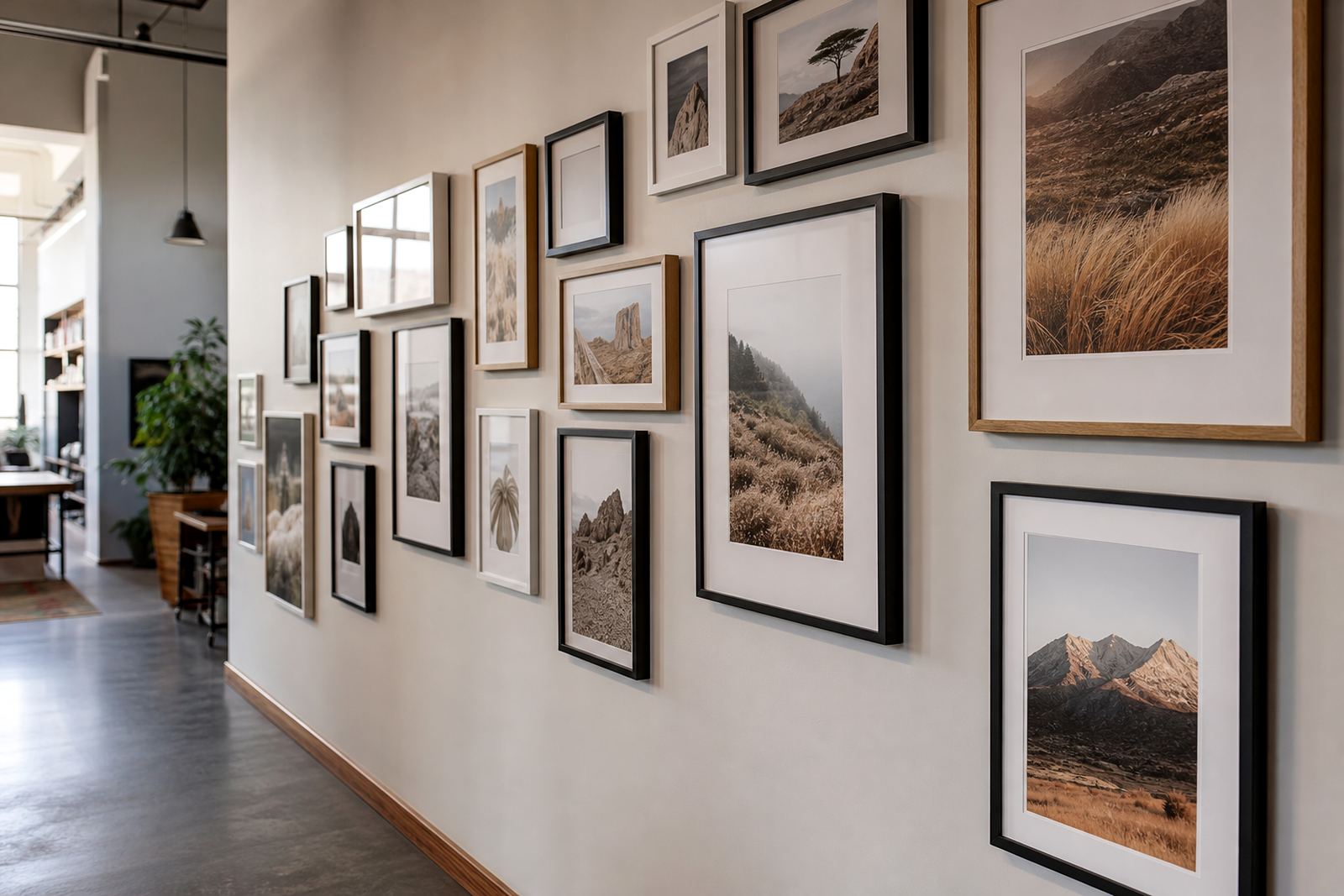
We worked with a balanced grid that allowed each image room to breathe. The photographs varied in size, so we standardised the outer frame lines and adjusted the mounts to keep the set visually calm. The final arrangement used a mix of 12 and 16 mm mounting gaps, with consistent frame face widths for a cleaner finish.
- Layout method: measured grid with even spacing
- Frame face widths: 20 mm and 30 mm profiles
- Mount openings: matched to each image size
- Glass choice: clear glazing for indoor viewing
What we supplied for the display
We supplied custom frames, ready-made frames where sizes allowed, precision mount cutting and hanging hardware suited to a public interior. Because the venue gets long hours of natural light, we selected glazing that would keep the photographs visible while reducing the chance of surface marks during cleaning. The print surfaces were checked before framing so each image sat flat and square.
To keep the display practical, we used materials that could be maintained without special handling. The backing boards were cut to size, the corners were checked for right angles, and each unit was assembled for secure wall hanging. A few images were also reframed to improve how they sat with the rest of the series, so the final wall looked like one group rather than a patchwork.
- Custom frames for key feature photographs
- Ready-made frames for standard sizes
- Mount cutting for uniform presentation
- Frame repairs and reframing where needed
- Gallery hanging fittings for safe wall mounting
Installation over two working weeks
The full job ran over two weeks from final approval to installation. Week one was spent on measurements, frame selection, mount approval and production. Week two covered final assembly, quality checks and delivery to site. We arranged the hanging so the wall could be installed without disrupting the venue for long periods, which mattered because the space was still in use.
The wall was installed in sections to keep the spacing accurate. We levelled each row, checked the alignment between groups, and made sure the lower frames had enough clearance for cleaning and daily traffic. Where the wall surface varied slightly, we adjusted the fixings so the line stayed true. It took patience, but the result was worth it.
- Project duration: 2 weeks
- Delivery: grouped and wrapped for safe handling
- Installation method: section by section hanging
- Final check: level, spacing and safe fixings
The result on the wall
The finished display gave the venue a stronger sense of place. The photographs now read as a single community story, with enough space between them for each image to carry its own weight. Visitors could move along the wall and take in the sequence easily, while the venue team had a display that felt ordered and simple to maintain.
The client wanted something respectful, not flashy, and that is exactly what the frame set achieved. The colours in the photographs stayed true, the mounts gave each print clean edges, and the overall wall looked settled into the room. It also helped that the installation was planned around the natural light in Soweto, so the display stayed legible through the day without harsh reflections.
- Better visual flow across the full wall
- More consistent presentation for mixed image sizes
- Safer and neater hanging for a public space
- Easy to dust and maintain during normal use
What we would repeat on the next project
If we were doing a similar community display again, we would keep the same process: measure first, agree the spacing early, and use a small sample section before production begins. That approach saves time later and avoids last minute changes once the frames are on site. It also helps when the client is choosing between a few possible finishes.
For a project like this, the most important thing is to respect the content. Good framing should support the photographs, not compete with them. We would use the same approach again for a school, church, heritage group or community hall anywhere in Johannesburg, Pretoria, Midrand, Cape Town or Durban, with the spec adapted to the wall and the local conditions.
- Start with a measured wall plan
- Approve one sample finish before full production
- Use uniform sight lines across mixed formats
- Choose hanging hardware matched to the wall type
Key facts
| Project type | Community photo display for a Soweto venue |
|---|---|
| Location | Soweto, Johannesburg |
| Timeline | 2 weeks from approval to installation |
| Core services used | Custom framing, mount cutting, reframing, gallery hanging |
| Display finish | Mixed portrait and landscape frames with clear glazing |
| Key result | A respectful wall display that is easy to maintain and read |