
Start with the canvas size and stretcher depth
The first thing to check is the actual size of the canvas, not just the image area. Measure the full stretched piece from edge to edge, then note the stretcher depth, because that affects how the frame sits and whether the front of the canvas will be flush, recessed, or proud of the frame line.
For homes in Johannesburg, Pretoria, Cape Town, Durban and Midrand, the right finish often depends on the room. A living room canvas may need a neat timber look, while a gallery piece may need a cleaner shadow line. Coastal humidity in Durban can also affect timber movement and surface condition, so the material choice matters.
- Measure width and height in millimetres.
- Check stretcher depth, especially on thicker artist canvases.
- Confirm whether the edges are painted, wrapped, or left raw.
- Look for any bowing, dents or loose corners before framing.
Choose the right framing method for the finish you want
Not every canvas needs glass. In many cases, the canvas is framed open, which means the artwork remains exposed while the frame gives it structure and a finished border. For some works, especially smaller pieces or delicate mixed media canvases, glazing may be considered, but this must be checked carefully to avoid contact with the paint surface.
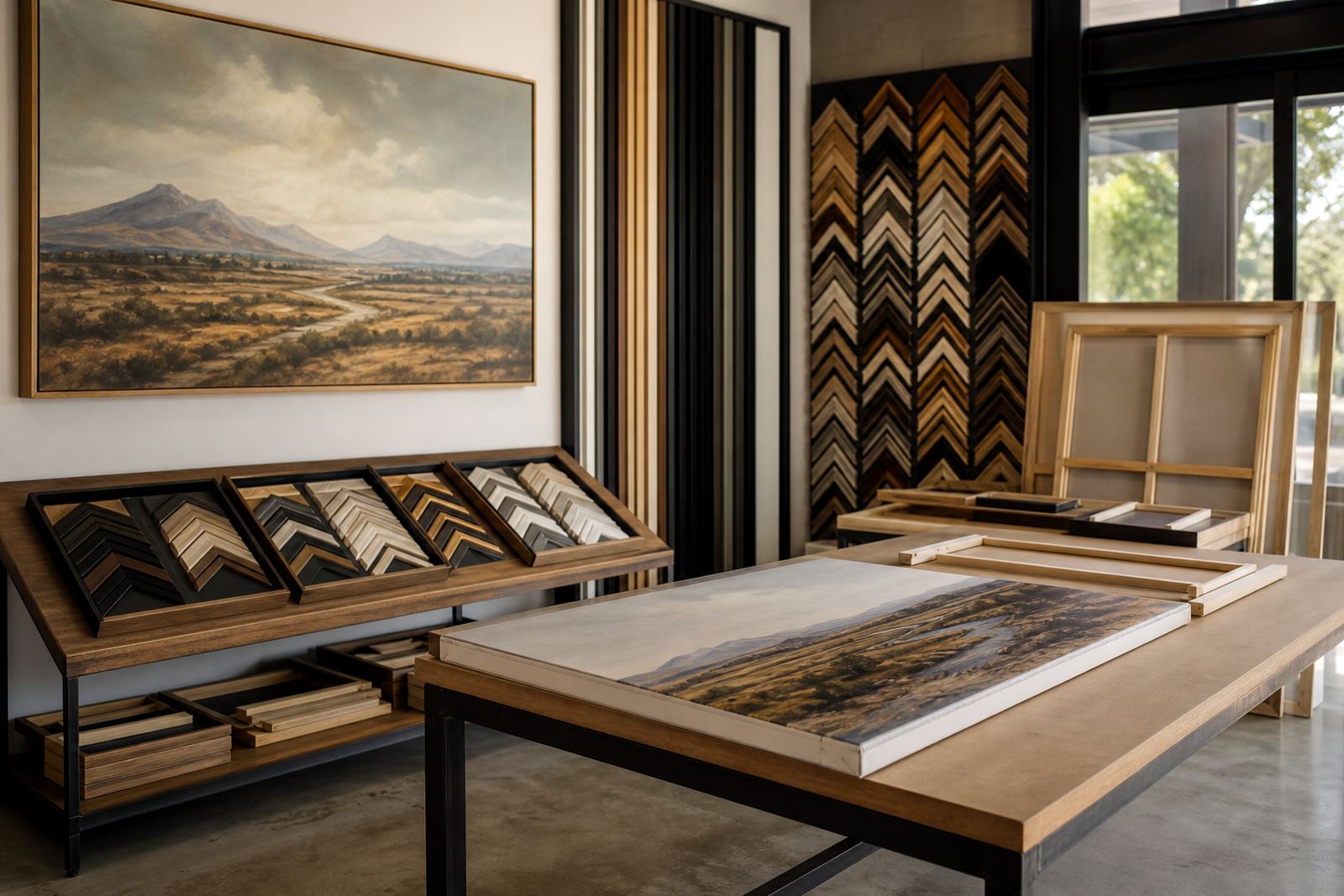
At Bright Frames in Parkhurst, we often guide clients through three common approaches. A float style leaves a slim gap around the canvas for a modern look. A wrap finish hides the stretcher edges with a deeper frame. A shadow box style gives more depth and works well for thick stretched pieces or textured art.
- Float framing for a clean, contemporary effect.
- Deep frame wrapping for thicker canvases.
- Shadow box framing for extra depth and visual space.
- Glazing only where the artwork and surface allow it.
If the canvas is for a gallery wall, consistency is important. Matching sightlines, frame widths and corner detail can help a series of works sit together properly. If the canvas is for a home passage or lounge, the frame can be chosen to tie in with existing furniture, floor tones or nearby artworks.
Check the canvas before any framing work begins
Before any cutting or fitting starts, inspect the canvas closely. A good framer will look at the corners, stretcher bars, surface tension and any areas where the paint may be fragile. If there are chips, tears or loose edges, those issues should be sorted first, because frame work on a damaged canvas can make later repairs harder.
We also check for old hanging wire, worn staples and anything that may cause trouble during installation. In some cases, a canvas may need reframing rather than a new frame, especially if the existing support is warped or the finish no longer suits the space.
- Check for loose staples or lifted corners.
- Inspect for cracks in the paint layer.
- Confirm the canvas is square before measuring the frame.
- Decide whether the work needs repair before framing.
Plan the frame style for home, office or gallery display
A canvas for a Sandton boardroom will not always need the same treatment as a family portrait in Rosebank or a large abstract for a Cape Town apartment. The surrounding space should guide the choice of profile, colour and finish. A narrow black frame often works well for photography on canvas, while natural timber tones suit warmer interiors and softer art.
For commercial spaces and galleries, the frame should support the artwork without competing with it. In these cases, we usually recommend simple profiles and accurate mitres. If the canvas is going into a passage, stairwell or reception area, practical concerns such as glare, dust and maintenance should also be taken into account.
- Match the frame to the room and wall colour.
- Keep gallery pieces simple and even.
- Use deeper profiles for large or heavy canvases.
- Think about light, glare and cleaning access.
How the stretching and fitting process works
If the canvas still needs stretching, it must be pulled evenly over a clean stretcher frame before any finishing work begins. The tension should be firm but not over-tight, because over-stretching can stress the paint layer. Once the piece is square, the frame is measured and cut to suit, with allowance made for joins, rebates and the way the canvas sits inside the profile.
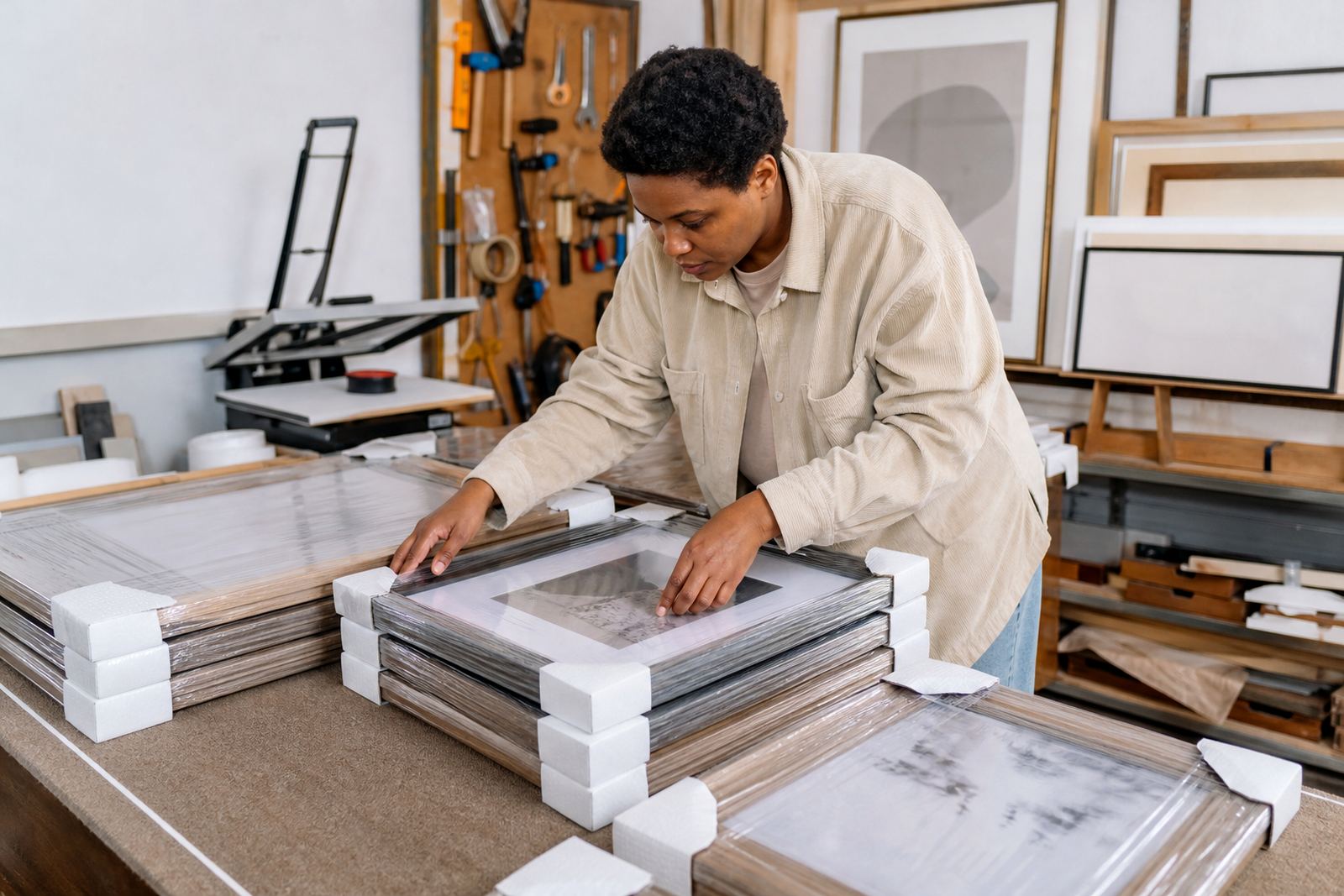
When the frame is fitted, we check that the canvas is centred and that the edges are not rubbing against the wood. For canvases moving between Johannesburg, Pretoria and other areas, safe packing is also important. A framed canvas should be protected at the corners and face during collection and delivery, especially in wet weather or when handling multiple works at once.
- Stretch evenly on all sides.
- Keep corners square during fitting.
- Allow space so the canvas does not touch the frame in a way that marks the surface.
- Use proper packing for transport and installation.
Hanging and care after framing
Once the canvas is framed, hanging it properly matters just as much as the frame itself. A large artwork needs the right support for the wall type, whether that is brick, drywall or a stud wall. In South African homes, this is especially important where walls vary from room to room. If the piece is going into a gallery or office, the hanging line should be level and consistent with other works nearby.
After installation, keep the canvas out of direct harsh sunlight where possible. Dust lightly with a clean dry cloth around the frame, but avoid pressing on the canvas surface. If the building has load shedding or fluctuating humidity, especially in coastal areas, it is worth checking the frame and hanging fixings every so often.
- Use the right wall fixings for the wall type.
- Keep the top line level and consistent.
- Avoid direct heat and strong sunlight.
- Check hanging points after seasonal changes.
What to prepare before bringing in your canvas
To save time, it helps to bring a few details with you or include them in your enquiry. That makes it easier to suggest a suitable finish, estimate materials and plan the work properly. If the canvas is part of a pair or series, bring the full set so the proportions can be matched.
Bright Frames serves clients from Parkhurst and across South Africa through our enquiry form, with support for Johannesburg, Pretoria, Sandton, Rosebank, Midrand, Cape Town and Durban. If you are not sure whether your canvas should be framed, stretched again or repaired first, we can talk you through the options and keep the process practical.
- Artwork size in millimetres.
- Photos of the front, sides and back.
- Where the canvas will hang.
- Any concerns about damage, fading or old fittings.