

Choose the right proportions for the certificate
Certificates usually look strongest in a frame that gives the document breathing room. The aim is not to crowd the page, but to keep the layout formal and balanced. A narrow border can suit a simple award, while a wider mat board works well for graduation certificates, professional registrations and presentation pieces that need a more ceremonial feel.
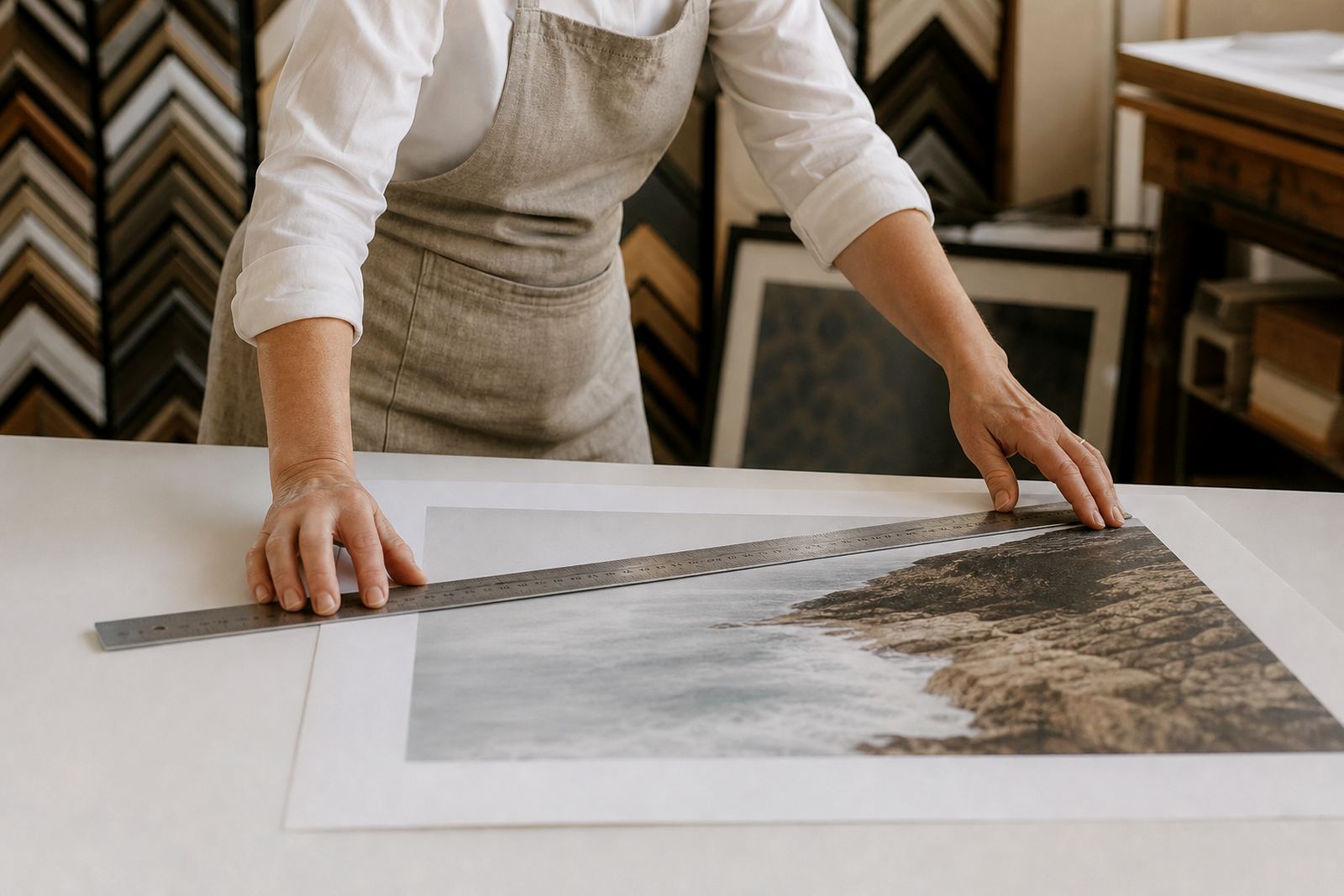
Measure the certificate first, then check whether it is standard A4, A3 or an unusual size. Many customers bring documents from schools, professional bodies or events with slightly different dimensions, so it helps to confirm the exact size before choosing the frame. In our Parkhurst studio, we often see certificates that look too small in a frame because the opening was cut without checking the full print area. That is where the right margins make all the difference.
- Check the paper size, not only the printed image.
- Allow enough border so signatures and seals stay visible.
- Keep the frame shape suited to the certificate, portrait or landscape.
- If the document is older, measure it carefully before any cleaning or mounting.
Pick a finish that suits the document and the room
The frame finish should support the certificate rather than compete with it. For formal offices in Sandton, Rosebank or Midrand, black, white and natural timber tones are often a good fit. In a home study or passage wall, a warmer timber finish can soften the presentation without losing the professional look. If the certificate will hang near bright windows or under strong downlights, it is worth considering a finish that does not show glare too easily.
Humidity also plays a part, especially for clients along the coast in Cape Town or Durban. A certificate framed with stable backing and proper sealing is less likely to ripple over time. If the piece will be displayed in a reception area with load-shedding interruptions and warm indoor temperatures, ask about materials that hold up well in changing conditions.
- Use a frame colour that matches the space, not just the document.
- Keep decorative details subtle for formal certificates.
- Consider where the frame will hang before choosing glass and backing.
- For coastal homes, ask about moisture-sensitive materials.
Mounting a certificate without damaging it
Most certificates should be mounted in a way that keeps the paper flat and secure, while allowing for future removal if needed. This is especially important for original documents, signed awards and framed pieces that may need to be updated later. A good mount should not warp the sheet or leave visible pressure marks.
We usually recommend methods that support the document at the edges and keep the face clean. For valuable certificates, avoid tape or sticky adhesives that can stain the paper over time. If the paper is textured, embossed or has a wax seal, the mounting method needs a bit more care so the surface stays intact. Pieter and the framing team will check how the paper behaves before cutting any mount board.
- Do not fold, staple or pin the certificate.
- Keep the document free from glue marks and heavy adhesives.
- Ask for a removable mounting method where possible.
- Make sure seals, stamps and signatures remain visible.
Glass, glare and protection in South African conditions
Glass choice matters more than many people expect. A certificate in a sunny office near a window can become hard to read if glare is too strong. In that case, a clearer, lower reflection option may be worth considering. For a frame displayed in a hallway, boardroom or reception area, the finish should allow the text to be seen properly from a standing distance.
Protection is also important. Dust, handling and changes in temperature can affect the paper over time, especially in busy homes or offices where the frame may be moved during renovations or repainting. If you are framing a certificate for a gallery wall or a client-facing area, it is worth choosing materials that protect the paper while still giving a clean presentation. In our studio we check the light levels and the wall position before making the final recommendation.
How to prepare the certificate before bringing it in
A little preparation saves time at the studio. Bring the certificate flat, in a folder or envelope, and avoid rolling it unless there is no other option. If the document has been stored in a humid room or has a slight wave, tell us before framing so we can assess it properly. That is common with papers kept in filing cupboards, old drawers or offices that get warm during power cuts.
It also helps to bring any instructions about where the frame will hang. A certificate for a home entrance in Pretoria may need a different finish from one going into a professional office in Johannesburg or a gallery wall in Cape Town. If the frame is for a gift, let us know the occasion and the type of document so we can guide the size and style.
- Keep the certificate flat and clean.
- Bring any original folder, cover or presentation sleeve if relevant.
- Tell us if the document is old, fragile or textured.
- Let us know where it will hang and what wall colour is nearby.
What to expect from a certificate framing order
When you come to Bright Frames, we talk through the document, the room and the look you want to achieve. Sipho Maseko and the team work with customers across Parkhurst, Johannesburg, Pretoria, Midrand, Sandton, Rosebank, Cape Town and Durban, so we know that certificate framing is often about both presentation and practicality. Some customers want a clean office display, while others want a more personal frame for a study or family wall.
Once the details are confirmed, we help with the frame style, mount cut and protection options. If the certificate needs to be matched with an existing series of awards, we can keep the look consistent. If it is part of a larger wall with photographs or artwork, we can suggest proportions that sit neatly alongside the other pieces. Collection and delivery can also be arranged, which is useful for clients managing multiple frames or a busy office schedule.
For many customers, the final result is simply this: a certificate that reads clearly, hangs straight and looks properly finished, not tucked away in a drawer where it gets forgotten.