
Start With the Wall, Not the Frame
Before you choose a hook or screw, check what the wall is made of. Brick, concrete, plasterboard and hollow partition walls all need different fixings, and using the wrong one is the main reason frames slip, tilt or pull out over time.
In Johannesburg homes you often find solid brick or plaster over brick, while newer offices and apartments may have lightweight partition walls. In coastal areas like Durban and Cape Town, humidity can also affect some wall plugs and backing materials, so it is worth choosing fixings that hold up well in changing conditions.
- Tap the wall lightly to hear if it sounds solid or hollow.
- Check for hidden pipes, cables and services before drilling.
- Match the fixing to the wall, not just to the size of the frame.
- For very old walls, test a small spot first so the plaster does not crumble.
Measure Twice Before You Lift a Drill
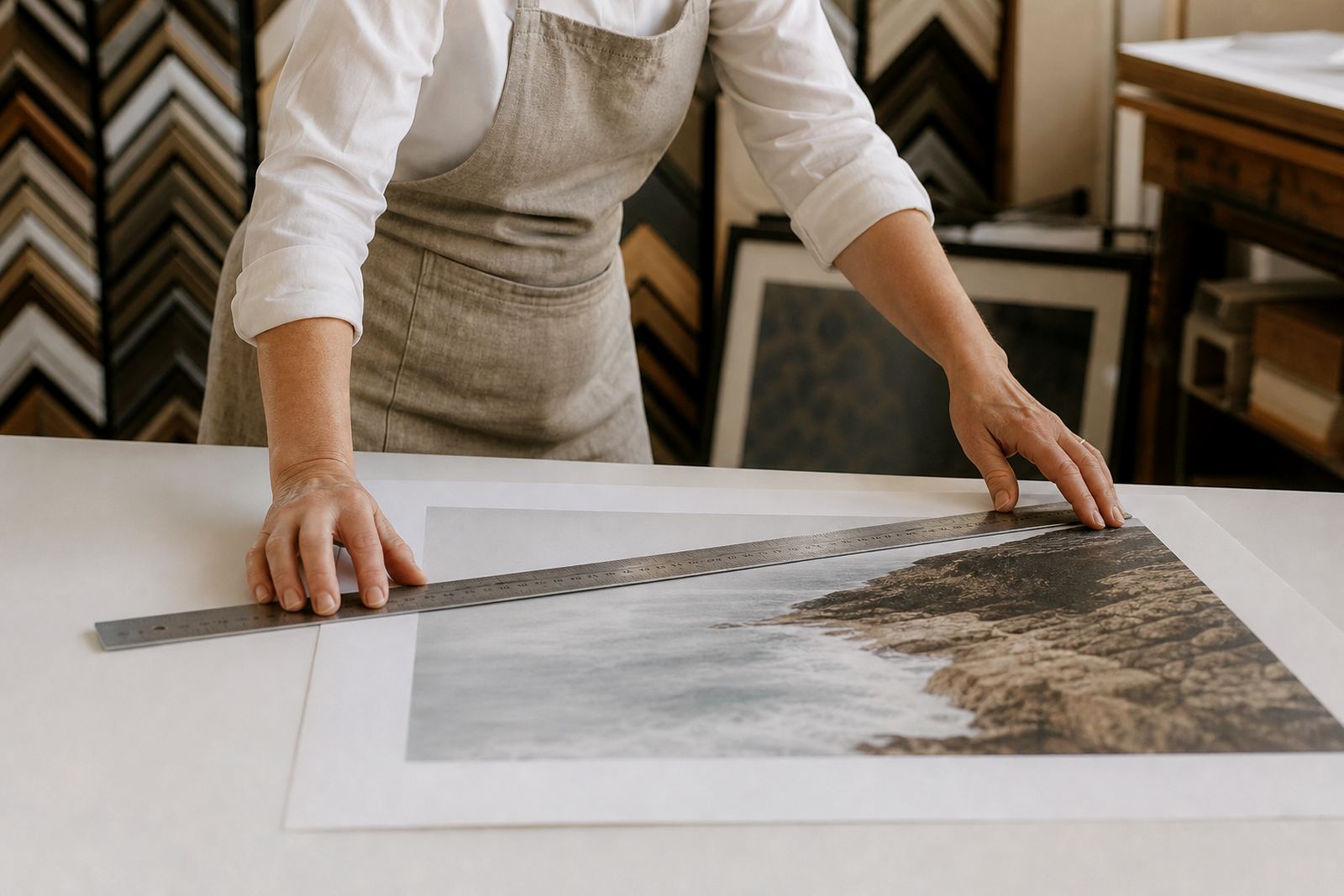
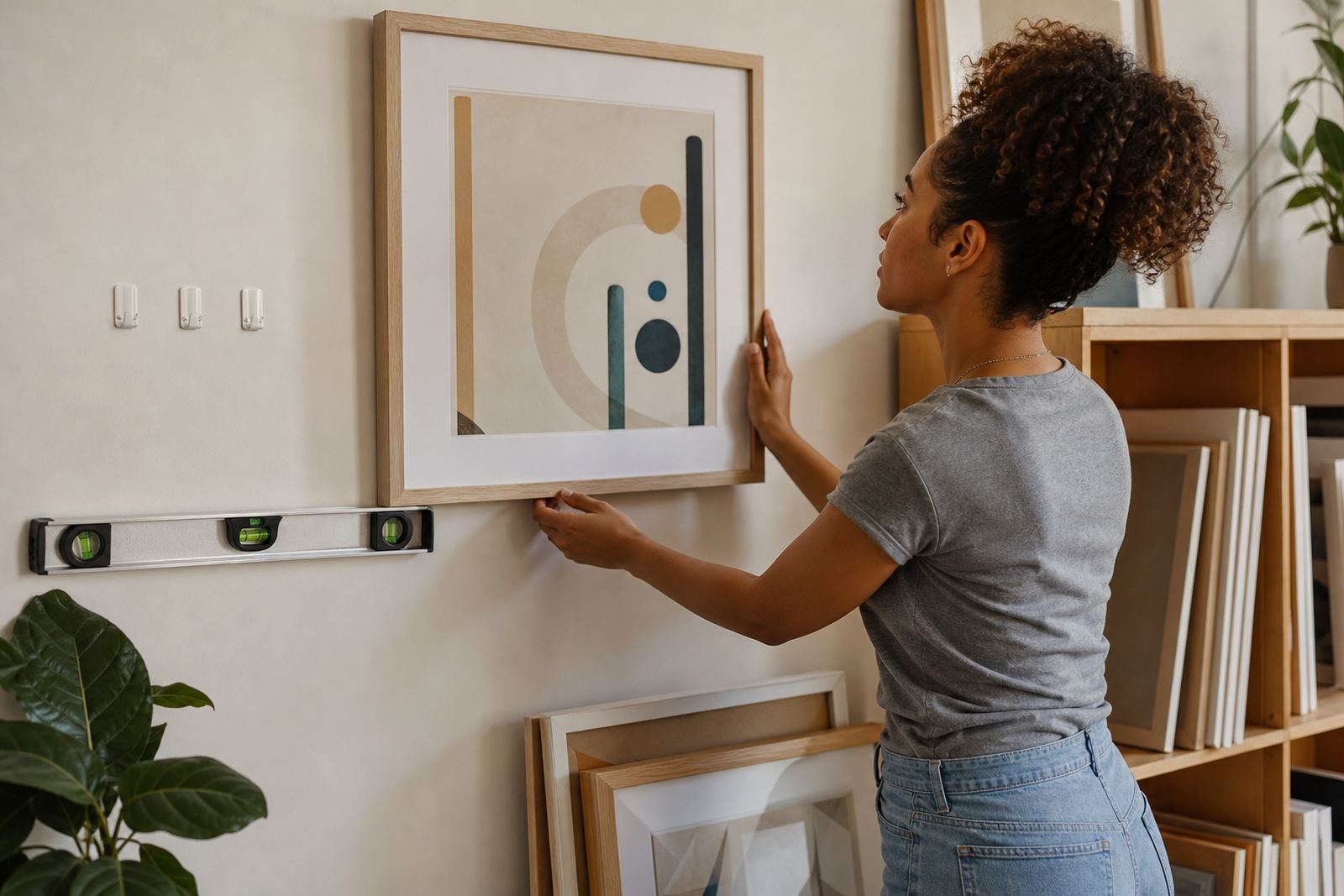
Accurate placement makes a frame feel balanced in a room. A picture hung too high, too low or slightly off-centre can spoil the whole wall, even if the frame itself is well made. Use a tape measure, spirit level and pencil marks, and step back more than once before drilling.
For homes with high ceilings, such as older houses in Pretoria or gallery spaces in Sandton, the eye line may need adjusting. In a family lounge, the centre of the artwork is usually set around eye level for seated and standing views, but a narrow passage or stairwell may need its own logic. Take your time, because a few millimetres can be the difference between a clean finish and a crooked line.
- Mark the top edge and centre point of the frame.
- Use masking tape if the wall surface marks easily.
- Measure the distance between hanging points on the frame.
- Check the level before making the final hole.
Choose Fixings That Suit the Weight
A small ready-made frame may only need a simple picture hook, while a large framed artwork with glass and backing board can need two fixings or a heavier-duty anchor. The more weight the frame carries, the more important it is to spread the load correctly.
As a rule, never rely on thin pins or small plastic fittings for large pieces. If you are hanging a mirror frame, a stretched canvas or a deep timber frame, the load should be supported properly so the frame does not tilt forward. In homes that experience load-shedding and temperature changes, materials can move slightly, so it helps to use fixings that stay firm over time.
- Light frames: small hook, nail or wall anchor where suitable.
- Medium frames: screw-in hook or stronger wall plug.
- Heavy frames and mirrors: two-point support or specialist heavy-duty fixings.
- On plasterboard: use fixings rated for hollow walls.
Keep the Backing, Glass and Wire in Good Order
Safe hanging is not only about the wall. The frame itself needs to be sound. A loose wire, split corner, damaged backing board or cracked glass can put extra pressure on the hanging points and make the piece unsafe to use.
Before mounting, turn the frame over and inspect the fittings. If the wire is frayed, the D-rings are loose or the backing has shifted, sort that out first. For older frames or pieces that have been moved between homes, it is often sensible to recheck the whole structure before putting it back on the wall. That is especially useful for artwork that has travelled between Midrand, Pretoria and the coastal areas, where handling and climate can vary.
- Check that screws are tight and hardware is not rusted.
- Make sure the hanging wire sits below the top edge but not too slack.
- Replace cracked glass before mounting the frame again.
- Use felt pads or bumpers to keep the frame flat against the wall.
Hang in Busy Areas With Safety in Mind
Some spots need extra care. Hallways, staircases, children’s rooms, reception areas and gallery walls all see more movement, so a frame that is even slightly loose can become a problem. In public spaces, use fixings that allow for both security and easy maintenance.
If you are hanging above a couch, bed or console, make sure the piece cannot be knocked by a door swing or by people walking past. For galleries and commercial interiors, spacing matters as much as fixing strength. A properly aligned wall creates a calm viewing line and reduces the need to keep shifting pieces later on.
- Avoid placing heavy frames above beds where headboards do not protect the wall.
- Keep frames clear of door openings and narrow walkways.
- In gallery settings, mark hanging heights before drilling multiple points.
- For stairwells, plan the angle and sight line from both top and bottom views.
When to Call for Framing and Hanging Support
Some jobs are easy enough to do at home, but others are worth handing over to a professional. Large artwork, valuable originals, mirrors, damaged walls and gallery installations all need a steadier approach. If the wall is uneven or the item has unusual dimensions, getting the right support first saves time and avoids costly mistakes.
Bright Frames works with homes and galleries across Johannesburg, Pretoria, Midrand, Sandton, Rosebank, Cape Town and Durban. From custom framing and reframing to glass replacement, mount cutting, canvas stretching and gallery hanging, the aim is to make sure each piece is not only well presented but properly secured too. Personal service matters here, because the best result usually comes from matching the frame, the wall and the room rather than forcing a one-size-fits-all fix.
If you are unsure about a wall, a fixing or the weight of a piece, it is safer to ask before drilling. A good installation should sit square, hold firm and stay that way.