
Start With the Piece, Not the Frame
Bring in the artwork, photograph, certificate, jersey, mirror or print first. The object itself tells us what kind of frame and mount it needs. A fragile watercolour needs different support to a bold poster, and a canvas stretcher is handled differently from a textile or medal display.
Before you visit the Parkhurst studio, note where the piece will hang, the wall colour and whether the room gets strong sun or coastal humidity. Homes in Johannesburg often need protection from dust and daily handling, while clients in Cape Town and Durban may want extra care for moisture and sea air. That simple information helps us steer the order in the right direction from the start.
- Bring the item if you can, or clear photos if it is already installed.
- Measure the outer size and the visible area if it is already mounted.
- Tell us where it will hang or stand and whether it needs glass.
- Share any deadlines for gifting, exhibitions or handover dates.
Choose the Look and the Level of Protection
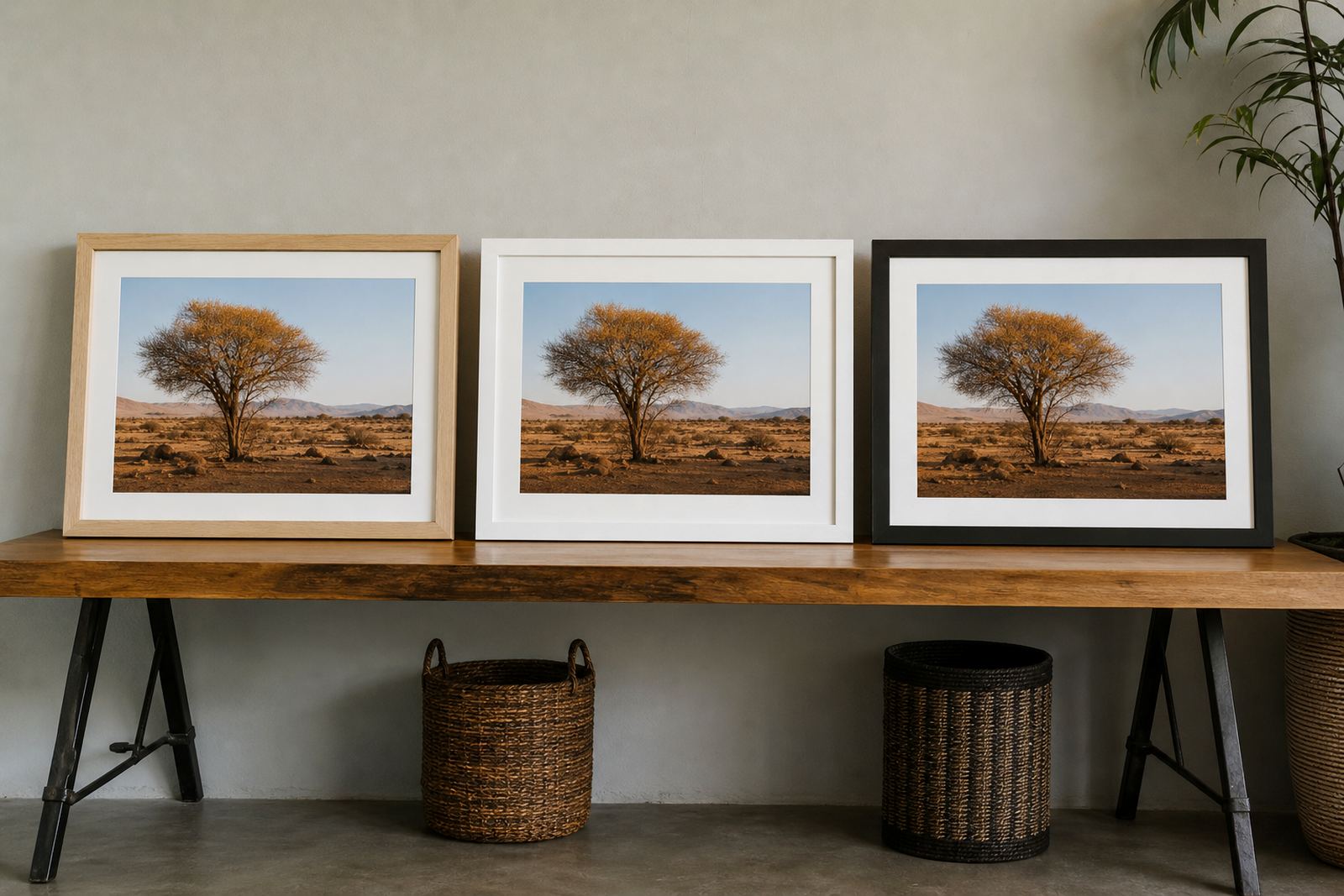
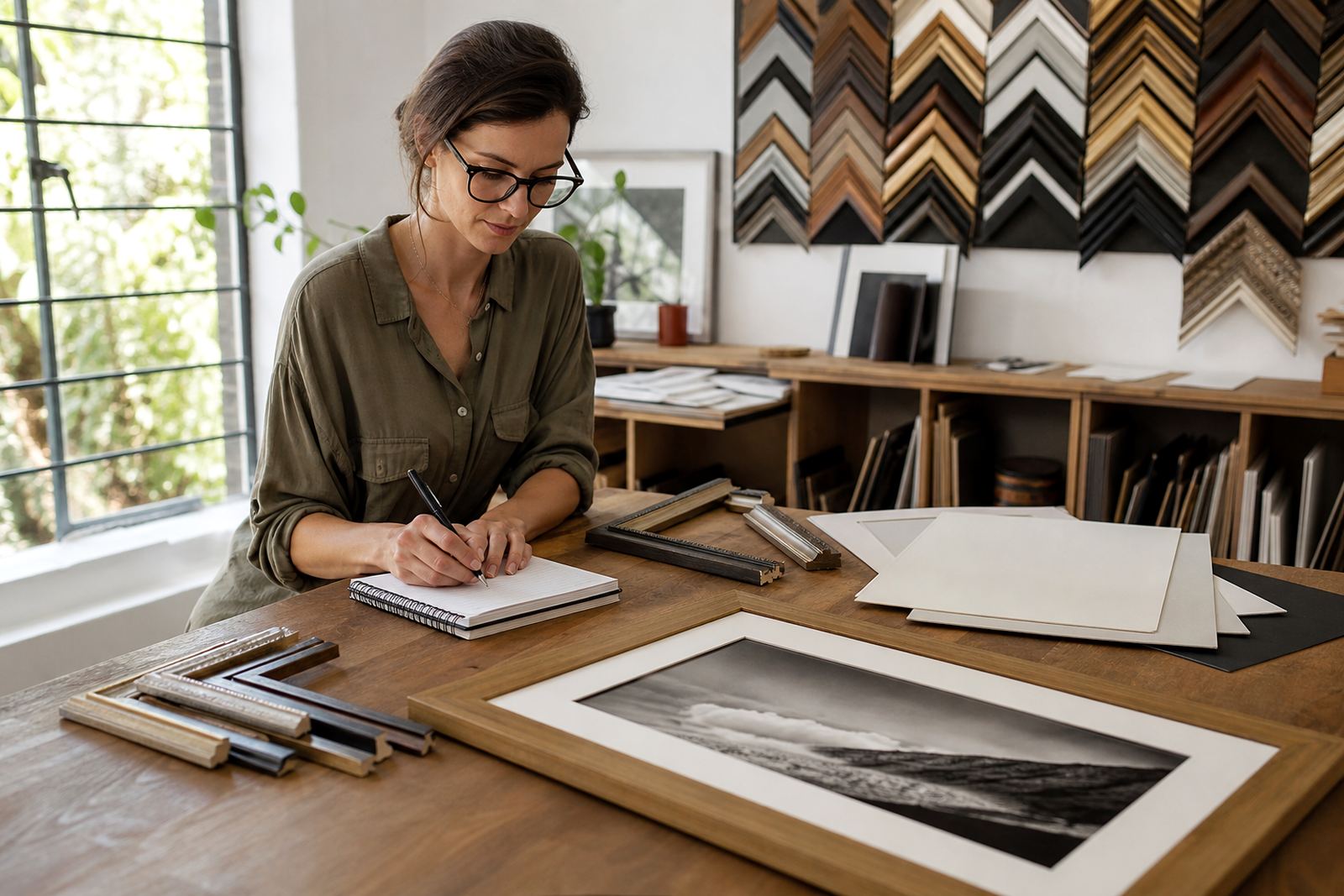
Once we understand the piece, we look at style. Some clients want a slim modern edge, others prefer a warmer timber feel or a wider gallery profile. The right choice depends on the artwork, the room and how much attention you want the frame to draw. A good frame should support the work rather than fight it.
We talk through the practical options as well, including standard glass, UV-protective glass, mount colour, backing board and spacing. For galleries and collectors, the finish can make a big difference to how consistent a wall of work looks. For family photographs and keepsakes, the aim is usually a neat display that feels personal and lasts for years.
- Frame profile: slim, classic, wide or gallery style.
- Finish: painted, stained or natural timber look.
- Mount colour: neutral, bright or matched to the artwork.
- Glass choice: standard, anti-glare or UV protection.
How Measurements Are Taken and Confirmed
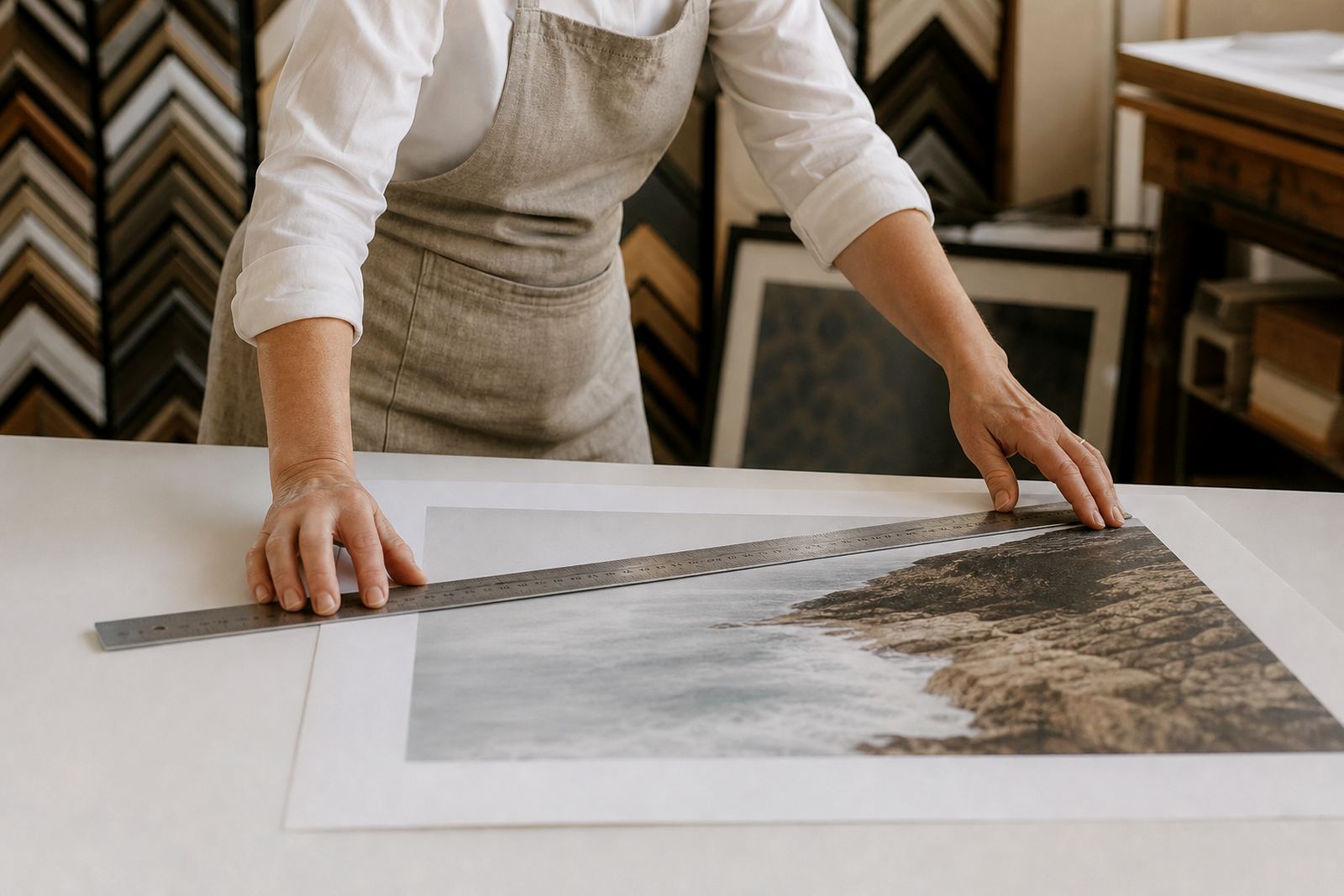
Accurate meauring is one of the most important parts of a custom order. If the piece is being reframed, we check the artwork size, the visible image area and the space needed for mounts or spacers. If it is a mirror or canvas, the outer dimensions and fixing points matter just as much as the front view.
We confirm everything before cutting starts. That includes the exact size, the frame style, the mount opening and any extra fittings needed for hanging. If a piece is being sent to Pretoria, Midrand, Sandton, Rosebank, Cape Town or Durban, the measurements are still checked the same way so the finished item arrives ready for installation. This step saves time, avoids errors and keeps the order clean and tidy.
- Check width and height in millimetres where possible.
- Confirm whether the size is the artwork itself or the finished frame.
- Note any uneven edges, previous damage or fragile corners.
- Ask about hanging weight if the item will go on drywall or brick.
What Happens in the Studio After Approval
Once the order is approved, our framing team cuts the materials, prepares the mount and assembles the frame to the correct size. If the order includes canvas stretching, frame repairs, reframing or glass replacement, those steps are handled before final assembly. Gallery work often needs extra care with alignment so the presentation stays straight and professional.
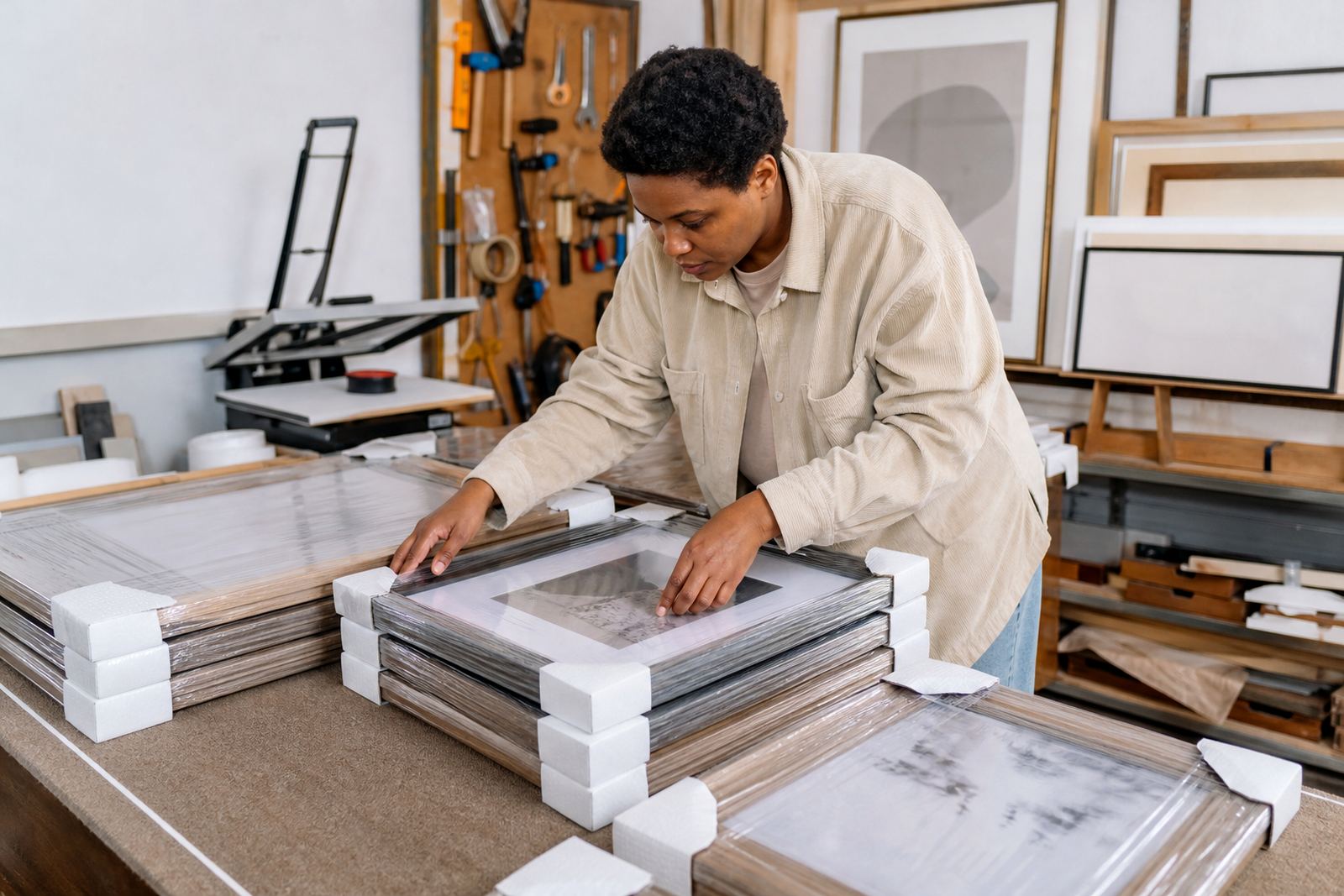
For larger pieces, we check stability, corners and backing before it leaves the studio. If the frame is going into a home with load-shedding related movement around torches or temporary lighting, or into a gallery with regular handling, we can advise on safer placement and installation. The aim is a frame that looks good and holds up well in daily use.
Collection, Delivery and Installation Planning
When the frame is ready, you can collect from the Parkhurst studio or arrange delivery where suitable. For clients across Johannesburg, Pretoria, Midrand, Sandton and Rosebank, delivery is often the easiest option for larger or more delicate items. Cape Town and Durban orders are handled with careful packing so the frame arrives in good condition.
If the work needs hanging, installation should be planned before the frame leaves the studio. That matters for heavy mirrors, framed art in stairwells and gallery walls that need a specific layout. If you are managing a home install yourself, it helps to have a level, wall plugs and the right fixings ready before collection.
- Confirm the final size against the wall space at home or on site.
- Check access through doors, lifts and narrow passages.
- Keep hanging hardware and a level on hand for installation day.
- Ask if the item should be handled by two people for safety.
A Simple Checklist Before You Place the Order
Good custom framing is about detail, not guesswork. The best orders arrive with a clear idea of the piece, its purpose and the space it will live in. That helps us recommend the right materials and avoid costly rework later.
If you are not sure where to begin, our design consultation can guide the choices. Bring the item, or bring photographs and the measurements you have. From there, we help you settle on a frame that suits the work and the room without overcomplicating the process.
- What is being framed?
- Where will it be displayed?
- Do you want the frame to stand out or sit quietly in the background?
- Is the piece a gift, a sale item or for long-term home use?
- Do you need mount cutting, reframing, glass replacement or mirror framing too?