

Start with the right position on the wall
Where you hang a framed piece matters as much as the frame itself. Keep items away from direct sunlight, damp corners, open windows and heat sources such as heaters, kettles in staff kitchens, or walls that get full afternoon sun. In Johannesburg and Pretoria, strong summer light can fade prints quickly, while in Durban and Cape Town coastal humidity can affect paper, mounts and backing boards over time.
For offices and busy homes, place framed work where it will not be knocked by doors, trolleys or chair backs. If you are hanging in a passage or reception area, check that the frame sits level and has enough clearance for cleaning. A little planning now saves repairs later, and keeps the piece looking neat for years.
- Avoid direct sunlight where possible.
- Do not hang above stoves, basins or geysers.
- Keep frames clear of damp walls and leaking windows.
- Use the correct hook or bracket for the frame weight.
Clean the glass gently and dry
For framed items with glass, use a soft microfibre cloth and a small amount of glass cleaner sprayed onto the cloth, not directly onto the frame. This reduces the risk of liquid running under the edge and marking the mount or artwork. Wipe in light strokes and dry the surface immediately. If the glass is dusty, brush it first with a clean dry cloth so grit does not scratch the surface.
Do not use rough cloths, strong chemicals or abrasive pads. These can damage the finish on the frame, especially on painted, foil or timber styles. If the piece has been installed in a restaurant, clinic or retail space, clean it more often because airborne grease and dust build up faster than in a home.
- Spray cleaner onto the cloth, not the glass.
- Use a dry edge to buff out streaks.
- Never soak the frame or mount.
- Keep water away from corners and joins.
Look after timber, metal and painted finishes
Different frame finishes need different care. Timber frames should be dusted regularly with a soft dry cloth. If there is a stubborn mark, use a barely damp cloth and then dry the surface straight away. Metal frames can be wiped the same way, but avoid any harsh polish that may dull the finish. Painted frames need extra care because sharp knocks can chip the surface and expose the base material.
In coastal areas, mild cleaning and regular checks are worth the effort because salt in the air can settle on surfaces. In dry inland areas, dust can gather quickly, especially near roads and building sites. A quick wipe every few weeks is usually enough to keep things in good condition.
- Dust regularly rather than waiting for build-up.
- Use minimal moisture on any finish.
- Watch for chips on corners and edges.
- Store spare pieces in a dry place if not in use.
Handle framed pieces with two hands
Always lift framed items with two hands, one on each side, and keep them upright. Do not carry a frame by the hanging wire or top edge. This puts pressure on the joints and can loosen the backing over time. If the piece is large or heavy, ask someone to help, especially for gallery walls, stairwells or high placements.
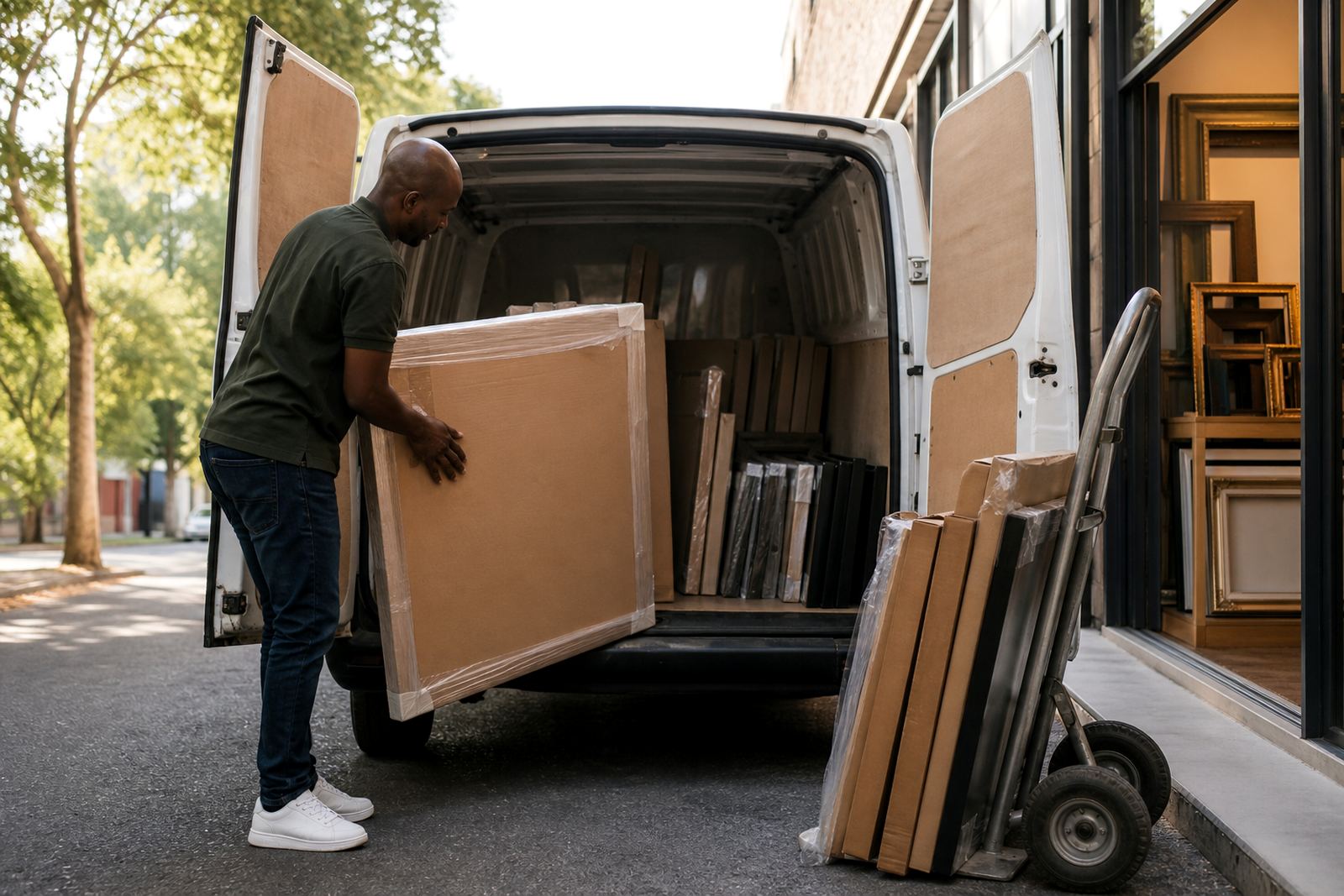
When moving a framed artwork between rooms or locations, wrap it in clean paper or a soft blanket and keep it flat in the vehicle. Avoid placing other items on top of it. Sudden stops on the N1, M1 or local routes can shift the load and crack the glass or mark the surface. If the frame has been recently installed, check that all fittings are secure before leaving it unattended.
- Hold the frame on both sides, not by the wire.
- Carry large pieces with a second person.
- Protect corners during transport.
- Keep frames upright and stable in the vehicle.
What to do if glass fogs, cracks or loosens
If the glass becomes foggy, cracked or loose, stop cleaning it and inspect the frame carefully. A cracked pane can worsen with vibration or small knocks. Loose backing, sagging mounts or shifting artwork can also let dust and moisture inside. If you notice movement inside the frame, do not open it unless you know how the piece was assembled. Opening it the wrong way can damage the artwork or the surrounding moulding.
For mirrors and framed items in busy commercial spaces, small faults should be dealt with quickly. Reception areas, hotels, studios and retail floors often have more movement around the walls, so fittings can work loose over time. Early attention is usually the cheaper fix.
- Stop using the piece if the glass is cracked.
- Check for movement in the backing or fittings.
- Keep loose pieces away from children and pets.
- Arrange repair before the problem spreads.
When to get professional help
Some jobs are best handled by a framing specialist, especially if the item is valuable, sentimental or unusually sized. This includes water-damaged artwork, torn mounts, stretched canvas that has sagged, mirrors that need safe refitting, and older frames with worn joints. Professional attention can also help when you are preparing work for a gallery wall, office fit-out or presentation where the finish must be neat and secure.
If you are unsure about cleaning a piece, moving it, or rehanging it after renovations, ask for guidance through the enquiry form on the contact page. A careful check can prevent avoidable damage, and it often saves time later. In our experience, a small repair now is far easier than replacing a whole frame after a knock or moisture issue.
- Use a specialist for valuable or delicate items.
- Ask for help after water exposure or impact.
- Get advice before rehanging after building work.
- Do not force fittings that feel tight or brittle.